Anthropic Raises $81 Billion Ahead of IPO
Anthropic completed a stock market debut on Wednesday valued at approximately $81 billion, a world record, ahead of the first trades scheduled for Thursday noon on the Nasdaq under the symbol ANT. The developer of Claude has about $200 billion in cash, but its commitments to suppliers exceed $900 billion over the next 19 years, primarily to develop data centers.
Local Residents Contest Anthropic's Construction Projects
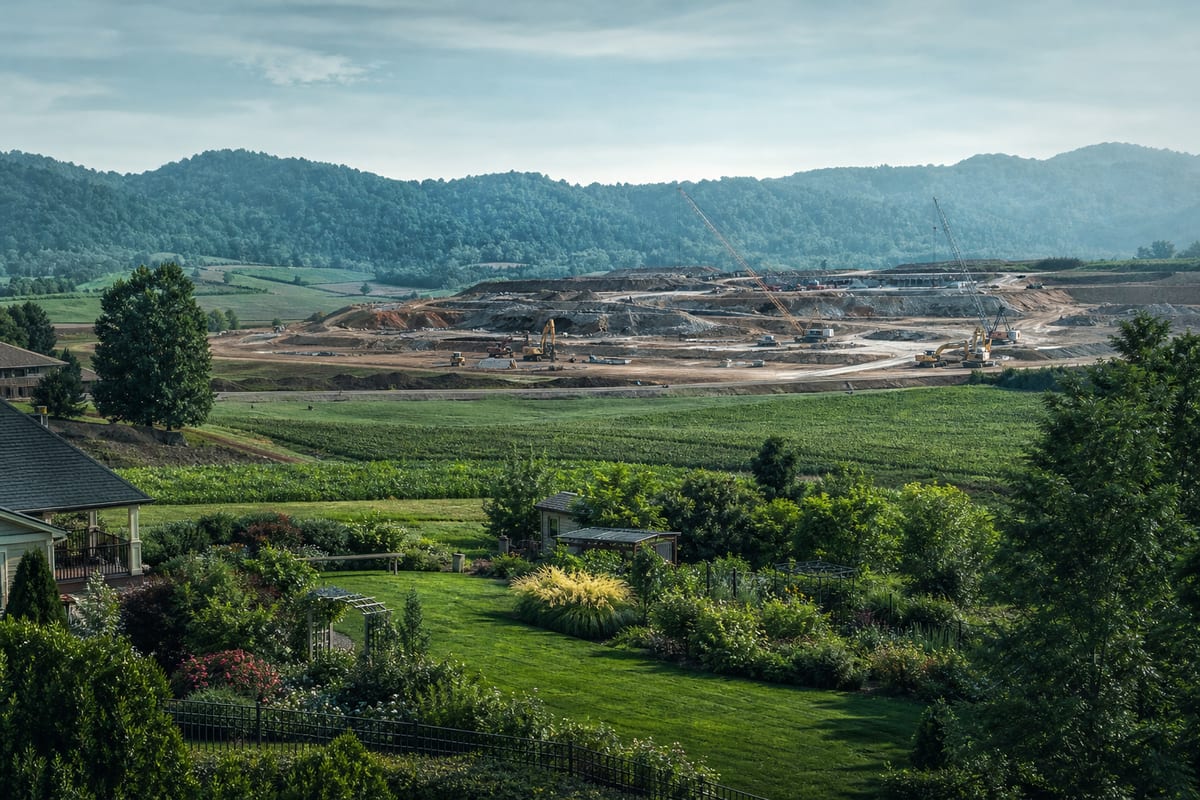
In West Virginia, neighboring gardens to the site being developed by Nscale for Anthropic were flooded as extreme rains coincided with leveling work. Nscale claims to have restored the area and acquired certain properties at prices above market value. Elaine Matheny, a community spokesperson and member of Mason County United, an organization of 70 people opposing the project, is calling for alternative site choices that are not dictated solely by profit. She contests the use of farmland for Claude and questions who benefits from AI.
Opponents also raise concerns about electricity expenses, construction traffic, housing, pollution, and the lack of local economic benefits. Environmental activists further criticize Anthropic for not committing to renewable energy for its facilities and for failing to report on its environmental impact. In Mississippi, Yolanda Daniel, a member of the coalition of homeowners Environmental Advocates Mississippi, accuses the company of socializing costs while reserving profits for private interests. She is seeking to block the commissioning of a center set to open next year across from her home.
In a recent poll, American voters overwhelmingly opposed data centers, as mobilizations against the projects continue. Obtaining new permits in the United States is expected to be very difficult, according to Tomasz Tunguz, a general partner at the investment firm Theory Ventures. He believes that resistance could push Anthropic and other companies to favor centers abroad, which would come with additional costs, risks, and complexities.
Founders Retain Majority Voting Power
The public benefit corporation (PBC) status allows Anthropic to consider the societal consequences of its decisions alongside shareholder interests. Its IPO is the largest conducted under this status. Some organizations, including National Nurses United, have called on pension funds to stay away from the operation, accusing these companies of harming communities and concentrating wealth and power.
Anthropic argues that part of its public benefit will come from its employees and early investors, who could become very large philanthropists. Employees who contribute their shares to one of the philanthropic funds proposed by the company also transfer their voting rights to Dario Amodei, CEO of Anthropic. He and his co-founders already collectively control the majority of shareholder votes, a concentration that some investor observers warn against.
Le brief IA que les pros lisent chaque soir
Les 7 actus IA du jour, décryptées en 5 min. Gratuit.
Inclus dès l'inscription : notre sélection des meilleurs guides & comparatifs IA.
Choisissez votre rythme
Gratuit · Pas de spam · Désabonnement en 1 clic
Cash Reserves Accompany Massive Losses
Among tech giants, only Alphabet has cash reserves greater than those of Anthropic. Some financial analysts downplay the gap between its available resources and its commitments by citing last quarter's revenue: $17 billion, representing an increase of over 1,100% year-on-year. The number of clients spending six figures annually has increased twelvefold compared to the previous year. Tunguz has a particularly favorable view of the IPO prospectus.
Operating losses are decreasing, but Anthropic remains deeply in the red: cumulative losses this year through September exceed $104 billion, primarily due to the accounting treatment of stock-based compensation. Including private share sales, the funds raised exceed $107 billion. The previous world record for fundraising belonged to SpaceX, with $75 billion in June.
Anthropic's initial valuation is around $1.5 trillion, compared to $1.8 trillion for SpaceX, the rocket manufacturer led by Elon Musk, whose activities extend beyond AI. OpenAI, for its part, was valued at $1.25 trillion in its ongoing funding round. Anthropic reportedly attempted to secure more but was unsuccessful.
The results of the recent midterm elections in the U.S. have increased the likelihood of new regulations regarding emerging technologies. Concerns are also growing around the debt used to finance AI data centers. Following the sudden departure of Jensen Huang from Nvidia's leadership, the possibility of a withdrawal of investments from that company is an additional cause for concern.
Amodei Prioritizes Safety Over Electricity
During a live-streamed meeting with investors last week, Amodei identified the development of safety mechanisms as the main constraint on deploying models. He emphasized the need to keep agents under control. He places this challenge ahead of the electricity supply for data centers, which many other AI companies present as their primary obstacle.
The CEO stated that he delayed a new model earlier this year to protect the public from potentially dangerous technology, despite the commercial risk. In this San Francisco company with 5,300 employees, he also mentioned seeking to recruit candidates committed to the public good to maintain a safety culture. This selection process leads, he admits, to forgoing other qualified profiles and represents a short-term cost.
Researcher Jacob Coxon resigned from Anthropic in September, citing his fear that humanity could disappear within a few years without greater efforts to maintain human control over the models. More recently, he indicated he was considering returning to the company, believing he could exert more influence on safety there.
Anthropic Surpasses OpenAI in the Stock Market
Anthropic becomes the first company exclusively dedicated to the development of generative AI to go public. Its founders, engineers, and executives left OpenAI during the pandemic nearly six years ago due to strategic disagreements. The companies have been competitors since then. OpenAI was initially set to enter the market before its rival, but executive departures, shifting priorities, and legal challenges hindered that plan.
The dispute between Anthropic and the U.S. Department of Defense this year regarding the usage limits of Claude does not appear to have significantly impacted its growth. Amodei and Sam Altman of OpenAI attribute investors' long-term optimism to a growing demand for AI models.
Brief IA — L'actualité IA en français
L'essentiel de l'actualité de l'intelligence artificielle, décrypté et expliqué chaque jour.