Antitrust and AI: Kanter Rejects Exemption
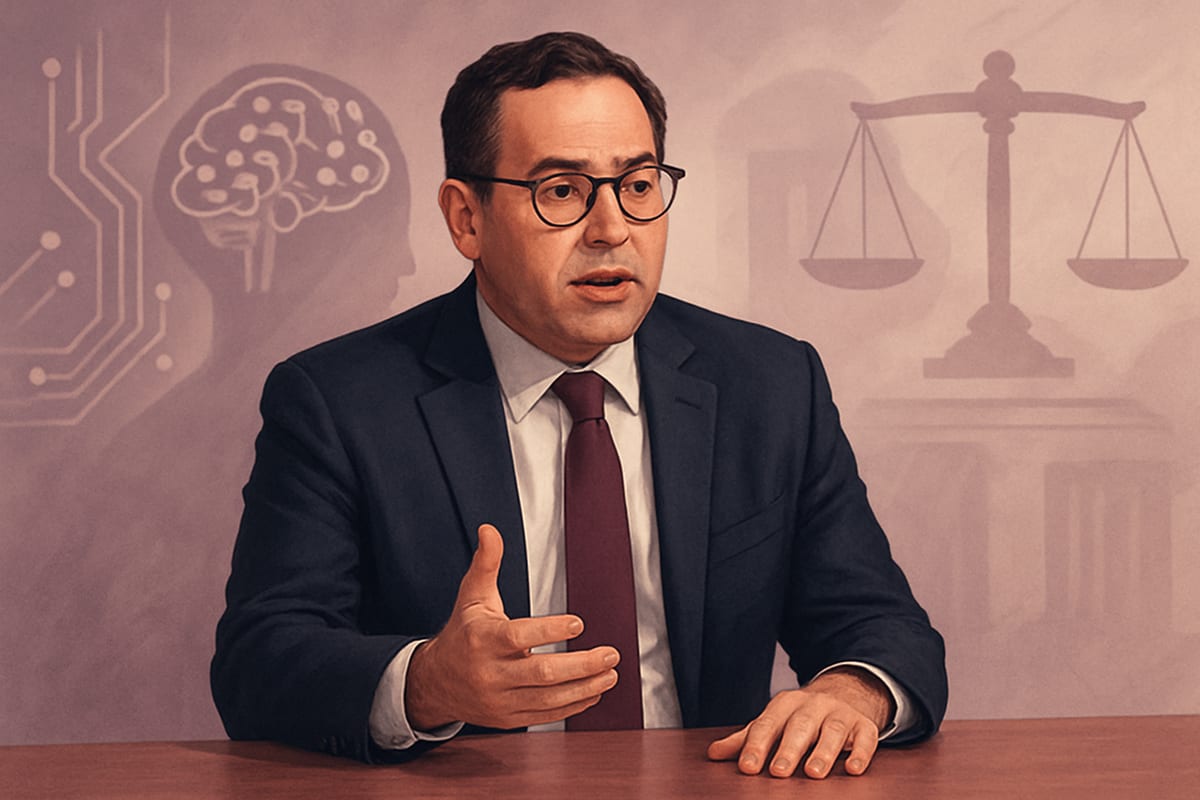
Former U.S. antitrust chief Jonathan Kanter asserts that AI companies do not need a waiver to collaborate on safety. He advocates for clear accountability among actors and public rules, while identifying acceptable technical collaborations and the risk of collusion if rivals agree to slow down.
Jonathan Kanter Calls for Companies to Be Accountable for AI-Related Harm
Jonathan Kanter believes that companies have a responsibility to build safe products and should be held accountable when their agents cause harm. He argues for the government to establish rules that specify the consequences of failing to ensure safety and the form that accountability could take. He mentions the possibility of a "robot prison" to remove problematic agents from the market. In his view, accountability can rest with both companies and individuals, including under product liability, and even beyond. Companies employ people and build technologies that, if they commit or facilitate problematic acts on behalf of the employer, can incur liability, including for theft or intrusions. He summarizes the situation as misconduct by individuals or technologies created by companies.
Permissible Collaborations on Safety Without Antitrust Waiver
Jonathan Kanter indicates that it is not necessary for companies to collaborate in order to offer safe and secure products. He cites the establishment of a sharing center for the appropriate exchange of information on threats and malicious bots, as well as the creation of a common database, as examples of acceptable cooperation—methods already observed in other sectors that do not require an antitrust waiver. Conversely, if two rivals decide to slow down because they are competing too fiercely, that could involve antitrust law. He supports the continuation of innovation while holding companies accountable for the safety of their systems.
Risk of Collusion and Industrial Analogies
Jonathan Kanter sees a risk of collusion when an agreement brings together all the major players in a sector. He draws parallels with the aerospace and automotive industries to emphasize each manufacturer's own responsibility for the safety of its products, without coordination with competitors. He argues that an AI agent that breaks in and hacks is comparable to an employee committing the same acts, which anchors accountability at the company level.
Le brief IA que les pros lisent chaque soir
Les 7 actus IA du jour, décryptées en 5 min. Gratuit.
Inclus dès l'inscription : notre sélection des meilleurs guides & comparatifs IA.
Choisissez votre rythme
Gratuit · Pas de spam · Désabonnement en 1 clic
Why AI Giants Are Calling for Rules: Two Interpretations
Jonathan Kanter dismisses the idea that an antitrust exemption is justified, regardless of the explanations for companies' motivations. In a generous interpretation, he describes actors concerned about the pace of innovation in the absence of rules. He claims to believe that some executives think AI could destroy humanity, while stating he is not certain that this scenario is accurate. In a more cynical reading, he suggests that these groups are burning too much cash and would like implicit permission to slow down to preserve their valuations before an IPO. The debate involves players like OpenAI, Anthropic, Google DeepMind, and Elon Musk, who collectively argue for a slowdown, with Dario Amodei speaking of "regulating the frontier." One advanced interpretation is that they do not trust each other and see a prisoner's dilemma requiring external force to establish a framework.
The Political Framework: Actions Taken, Unexpected Alliances, and Ongoing Projects
Jonathan Kanter recalls having initiated antitrust lawsuits against Google, Apple, and Ticketmaster, stating that he won against Google and Ticketmaster, while the Apple case continues at the DOJ under the Trump administration. Alongside Lina Khan, he has contributed to a reboot of U.S. antitrust policy. Unusual alliances are emerging, such as David Sacks endorsing Lina Khan's position that an antitrust exemption is unnecessary. Kanter supports the need for basic rules for AI and distinguishes between what falls under companies and the government. He situates these debates within a broader transformation affecting information and the economy, and in a context where interaction with antitrust law and, more broadly, the relationship with China, is part of the issues discussed.
The Question of Tort Liability Applied to AI Agents
The possibility of using tort law as a regulatory framework for AI is raised, with concrete cases questioning the liability of Anthropic if an agent sabotages at a user's command, or that of Meta in a similar situation with Meta Muse. Jonathan Kanter responds that liability can rest with both companies and individuals, including through product liability.
Brief IA — L'actualité IA en français
L'essentiel de l'actualité de l'intelligence artificielle, décrypté et expliqué chaque jour.