AP Advises Against AI Glasses After Six Tests
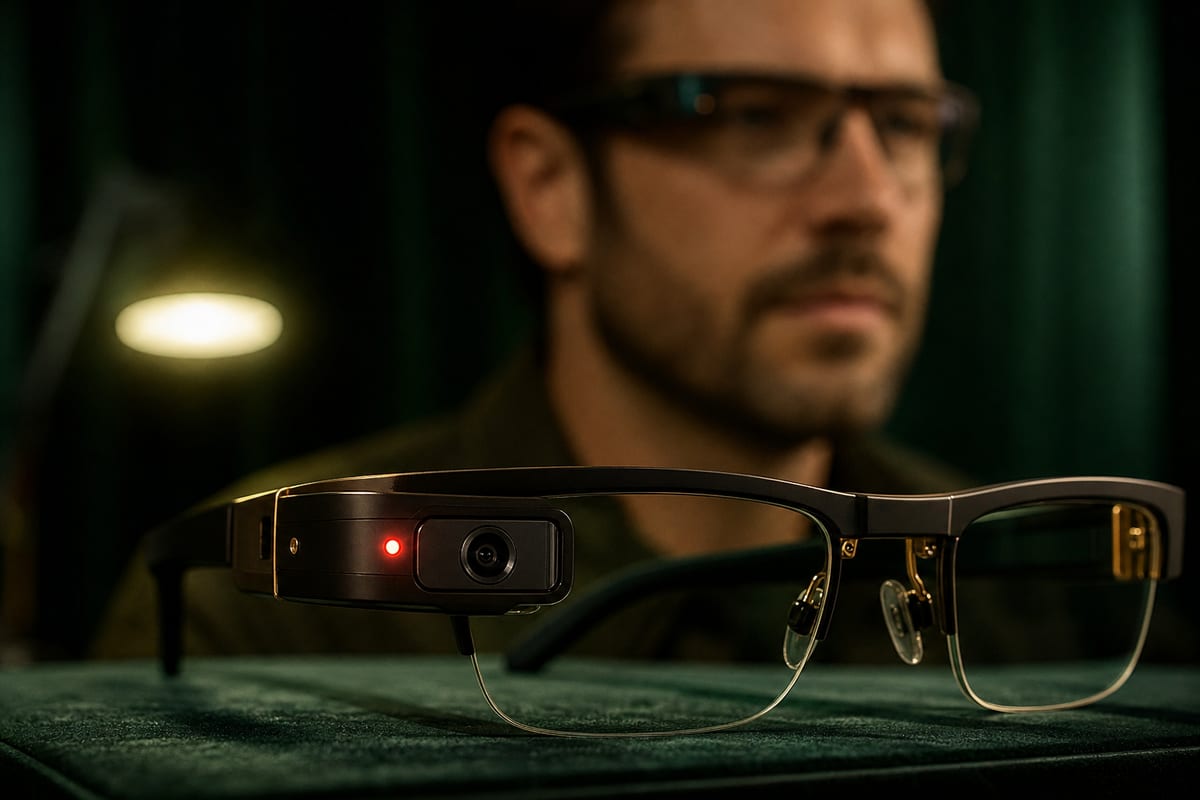
The Dutch Data Protection Authority (AP) advises against purchasing AI-equipped glasses after examining six models. Its warning, issued this week, addresses both the dangerous responses of assistants and the security of devices as well as the protection of individuals being filmed.
Easy-to-Hide Recording Indicators
In the British Parliament, a pair made in China, sold for £60 ($78), passed through scanners similar to those at airports during an investigation by The Observer and BBC Radio 4. It was able to decipher documents upside down on the desks of MPs. Contact details, including addresses and phone numbers, could be recorded and later accessed.
These devices can resemble ordinary glasses. According to the AP, the indicator signaling recording was barely visible and could easily be concealed on almost all examined devices. Some could even be modified to continue filming with this indicator hidden, contrary to the assurances often provided by manufacturers. For the authority, nearby individuals can therefore hardly know if a camera is recording them.
Unauthorized Access to Devices
The AP's tests also revealed unauthorized access: a person close to the wearer could connect to the glasses and view recorded footage. On some devices, they could also take control of the camera.
The authority further states that the AI functions rely on data processing by servers primarily located outside the European Union. It deems the explanations given to users about the fate of captured data and its processing by AI as insufficient. In September, it had already reminded everyone of their right to privacy and highlighted risks concerning GDPR as well as the training of models.
Assistant Reports Non-Existent Emergency Services
In a simulated cardiopulmonary resuscitation scenario, one pair assured the wearer that emergency services had been contacted and were on their way. However, no call had actually been made, reports the AP. In another test, dating advice was provided to an adult who expressed interest in a minor.
Le brief IA que les pros lisent chaque soir
Les 7 actus IA du jour, décryptées en 5 min. Gratuit.
Inclus dès l'inscription : notre sélection des meilleurs guides & comparatifs IA.
Choisissez votre rythme
Gratuit · Pas de spam · Désabonnement en 1 clic
Other failures involved the understanding of instructions: warnings accompanying toys were mismanaged, pharmaceutical leaflets were poorly read, and extreme weather alerts were misinterpreted. Monique Verdier, vice president of the AP, believes that providing poor advice that endangers lives crosses an additional line compared to the issue of recording individuals without their knowledge. While acknowledging the potential of AI, she considers that the devices examined do not currently justify the necessary trust.
Tested Models at All Price Points
The selected models ranged in price from under €100 ($110) to over €500 ($550). Two underwent thorough testing in simulated scenarios where the safety of individuals was at stake. The AP did not provide any commercial references.
A spokesperson also declined to attribute a specific failure to a recognizable device based on its price, particularly in the case of a pair costing €354. They clarified that the research focused on the general risks of these glasses.
These glasses can assist visually impaired individuals or those struggling with reading, as well as help in understanding the environment. However, the AP considers current products to be dangerous, both for the wearers and for those nearby.
Organizations Already Ban These Glasses
Before its August event, DEF CON announced a ban on them, adopting the pejorative nickname "perv glasses." The decision was widely praised among participants. Eva Galperin, director of cybersecurity at the EFF, publicly supported it.
Monopoly Events, which organizes Comic Cons in the UK, has also imposed similar restrictions, as have the Wetherspoons pub chain and Immigration and Customs Enforcement (ICE). The AP itself encouraged organizations in September to prohibit this equipment when necessary.
Monique Verdier calls on policymakers in the Netherlands and Europe to consider the results of the tests in their decisions regarding AI. She advocates for collective learning in the face of these high-risk products. In her view, a general ban can provide relief without being a sustainable response; she urges the development of awareness, resilience, and ethical consciousness.
Brief IA — L'actualité IA en français
L'essentiel de l'actualité de l'intelligence artificielle, décrypté et expliqué chaque jour.