Apple Accelerates on Agentic Siri Under the Leadership of John Ternus
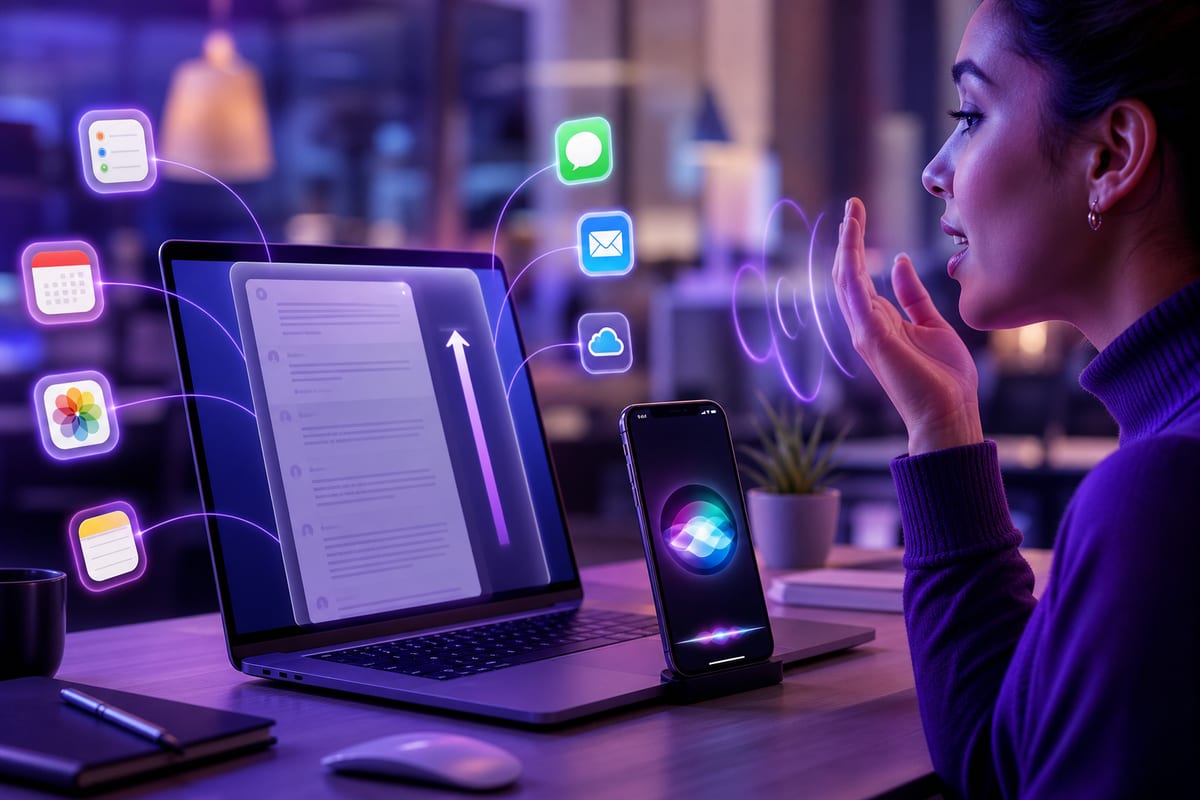
Apple is reportedly accelerating its AI strategy, driven by John Ternus, with the goal of equipping Siri with agent capabilities. Amid software delays, unmet promises, and privacy trade-offs, the iPhone ecosystem could evolve without immediate disruption.
Usage and Activation Choices Still Under Discussion
If Siri were to become a competitive agent, some users might forgo applications like ChatGPT or Claude on their Apple devices. This scenario remains unlikely in the short term, as the gap with offerings from OpenAI and Anthropic is still significant, but it is not out of the question as public criticism of AI and privacy concerns grow. Users who value Siri's discretion may not accept features similar to ChatGPT or Claude unless they are offered on an opt-in basis. Currently, Siri's AI sensitivity is limited to what is visible at the moment, such as the portion of a long email displayed after manual scrolling. An agentic Siri could, in the long run, scroll through an entire message and extract the sought-after information.
Privacy, AI Criticism, and Apple's Position
Apple's slower pace in AI is seen by some as beneficial to its reputation, as criticisms emerge against features deemed unnecessary or mediocre. Some users decry AI-related bloatware, while hardware prices rise to incorporate these functions during a memory shortage. Apple's privacy-focused approach is appreciated and distinguishes it from more data-hungry personal agents, such as Meta's Muse agent, or systems like Gemini that utilize more data at the expense of privacy. If Apple continues its advancements in AI, the company could develop more secure internal versions of certain features, in line with its commitment to data protection.
Le brief IA que les pros lisent chaque soir
Les 7 actus IA du jour, décryptées en 5 min. Gratuit.
Inclus dès l'inscription : notre sélection des meilleurs guides & comparatifs IA.
Choisissez votre rythme
Gratuit · Pas de spam · Désabonnement en 1 clic
Software Roadmap: Promises and Shortcomings
For now, Siri AI still does not allow for advanced actions within applications. Apple indicated in 2024 that third-party applications could develop plugins and pathways via Siri, to provide the assistant with more detailed access to both internal and external applications. During the launch of the first beta version of iOS 27.3 last week, Apple again mentioned these features. In the short term, internal pressure should primarily help realize these existing promises. After two years of promoting Siri AI, Apple has delivered an improved voice assistant rather than a product labeled as revolutionary, which may indicate a user expectation for more advanced features.
Competition Among Agents and Hardware Dynamics
Siri, in its current version, does not reach the capabilities of more autonomous agents capable of organizing tasks, using the computer, or producing advanced code. Solutions like OpenClaw and Anthropic's Claude Code are considered highly functional, while Google’s Gemini Spark has yet to reach that level. Apple is seen as slower than its competitors in software, while other players are already realizing agent functions at varying paces. Meanwhile, AI companies are developing their own hardware; the combination of agent software and devices designed from the ground up around assistants capable of seeing, remembering, and acting could diminish Apple’s historical advantages.
Internal Push Towards an Agentic Siri
John Ternus is said to have urged Apple to accelerate its AI strategy, including the transformation of Siri into an agent. The revamped Siri is presented as an enhanced voice assistant with useful features. The automatic correction of weak passwords by Siri AI is cited as an example of agentic behavior, even though AI-generated passwords have their own limitations. This direction sets the stage for a more proactive Siri, the extent of which will depend on the advanced functions still awaited.
Brief IA — L'actualité IA en français
L'essentiel de l'actualité de l'intelligence artificielle, décrypté et expliqué chaque jour.