Apple fears irretrievable secrets embedded in AI
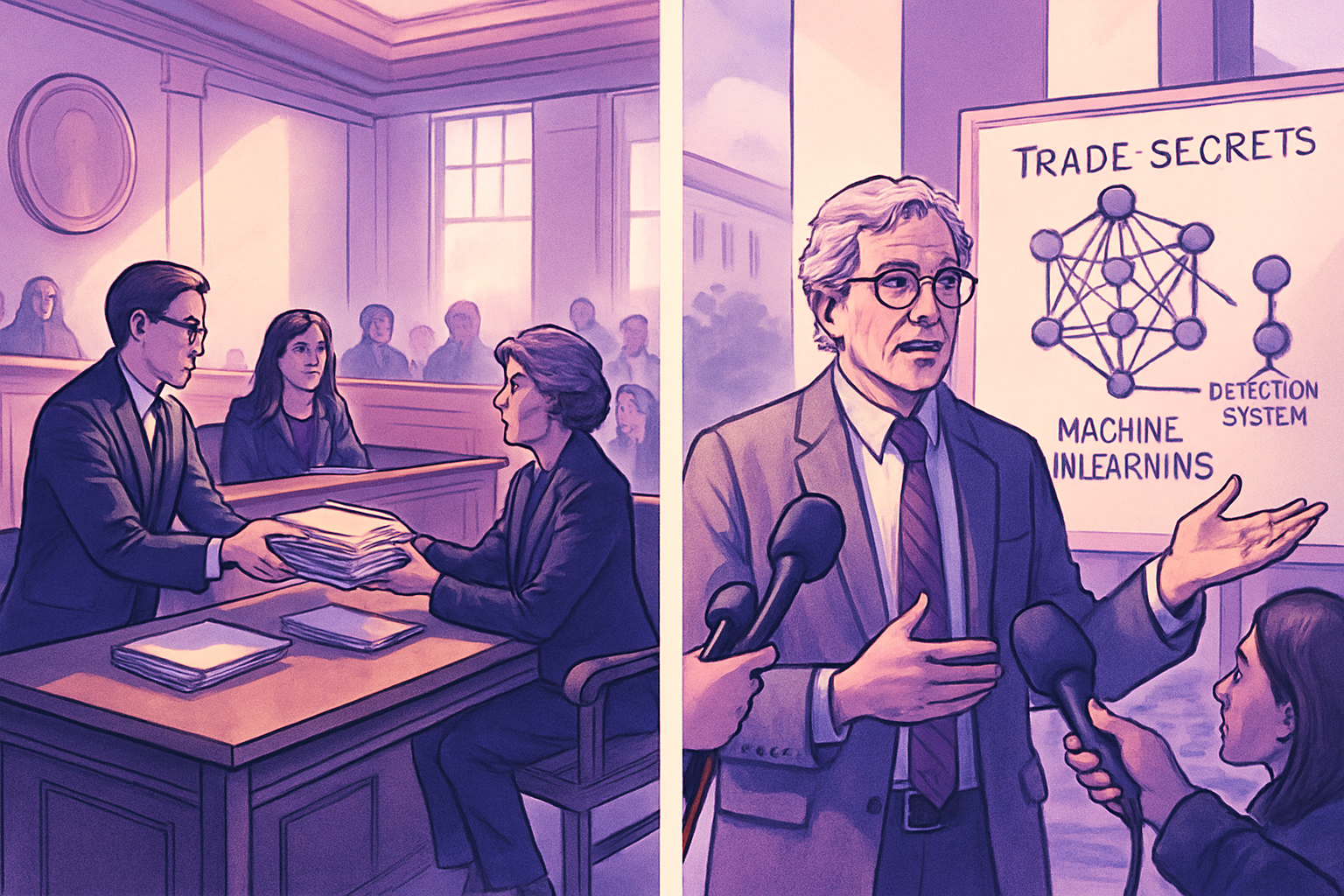
In its lawsuit against OpenAI, Apple warns of the risk of "irreversible uses" when trade secrets are absorbed by agents or AI models. Legal experts mention traditional remedies, but researchers describe technical limitations to the "unlearning" of models.
Removing a secret from a model may require extensive unlearning
Sijia Liu, a computer science professor at Michigan State University, explains that removing sensitive information used to train or fine-tune an AI model requires a distinct process, often very resource-intensive. He notes that it is difficult to measure the influence of a piece of data and that the ability to delete must be precisely defined. If a sensitive file is merely stored in a repository used by an AI, deleting it may suffice. Liu also proposes implementing a detection system to flag sensitive requests or exchanges between agents and trigger an immediate shutdown, while emphasizing that this is not true unlearning, but a more practical solution. According to him, AI could thus multiply the risks of losing control over trade secrets.
Apple describes a risk of "irreversible" uses and urges swift action
Apple asserts that the integration of trade secrets into AI agents or models can lead to irreversible and widespread uses. The company adds that these breaches are difficult to undo and require a swift investigation. It expresses these concerns in a filing that emphasizes the potential irreversibility and technical complexity, a point also raised by experts. While the continued use of confidential information by a competitor is not new, AI raises the question of regaining control once secrets are incorporated into a system.
Le brief IA que les pros lisent chaque soir
Les 7 actus IA du jour, décryptées en 5 min. Gratuit.
Inclus dès l'inscription : notre sélection des meilleurs guides & comparatifs IA.
Choisissez votre rythme
Gratuit · Pas de spam · Désabonnement en 1 clic
The law offers existing remedies, according to a Rutgers professor
Camilla Hrdy, a law professor at Rutgers, observes that employees already carry their knowledge with them and that their integration into AI systems can lead to a loss of control, a situation she considers new. However, she believes that there is no need at this stage to create new legal tools. Existing remedies include injunctions to cease the use of secrets, prohibitions on their disclosure, and protective measures. Damages can be assessed based on actual losses incurred or, in some cases, through royalties paid to the harmed company.
Ongoing proceedings: Apple sues OpenAI, xAI case dismissed
Apple has filed lawsuits against OpenAI, accusing former members of its staff of exploiting its trade secrets. In an additional memorandum submitted on a Monday to support a request for expedited discovery, Apple states that a former collaborator allegedly used these secrets during their time at OpenAI and mentions the use of AI agents to learn how to perform simulations, asserting that these elements go beyond mere document theft. Meanwhile, xAI has accused OpenAI of poaching staff to appropriate Grok's technology, claiming that a former engineer, Xuechen Li, retained the entire source code of xAI in their personal cloud, with a connected ChatGPT account as the source and possible access for OpenAI to these files. A judge dismissed xAI's complaint in June.
Leak scenarios: integration into models and databases queried by AI
Several scenarios illustrate how trade secrets can spread: an employee transferring confidential information to a competitor and integrating it into an AI agent or model, or secrets placed in a knowledge base that an AI could query at the request of colleagues. The continued use of confidential data by a competitor is an old problem, and legal remedies exist, but integration into AI systems adds a specific complexity.
Brief IA — L'actualité IA en français
L'essentiel de l'actualité de l'intelligence artificielle, décrypté et expliqué chaque jour.