Apple and OpenAI: A Battle for the Technological Future
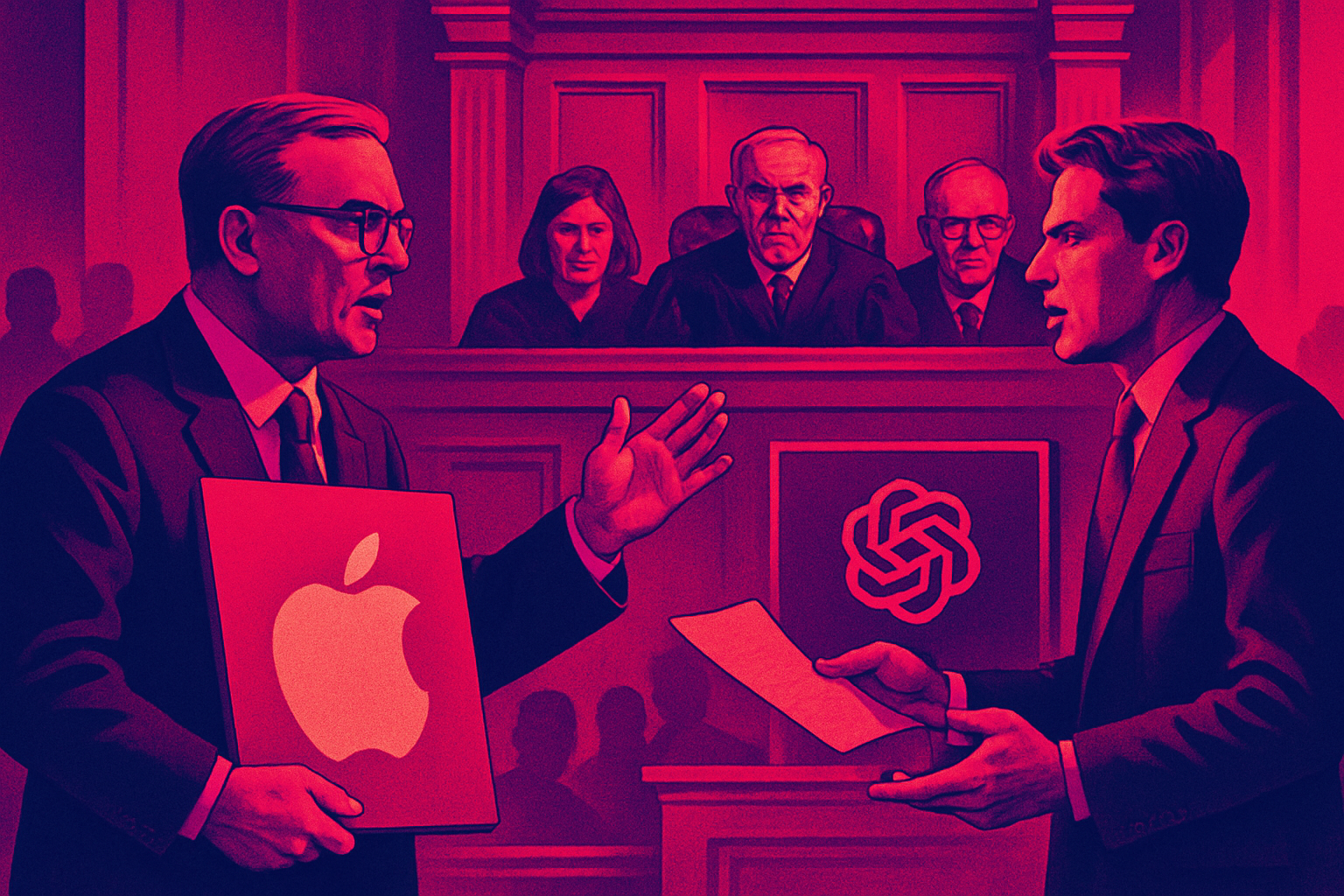
Apple Accuses OpenAI of Trade Secret Theft
Apple has launched a legal offensive against OpenAI, accusing it of attempting to seize its trade secrets. According to Apple, several former employees allegedly downloaded sensitive documents from its servers, documents related to the manufacturing of its hardware products. OpenAI, for its part, denies these allegations, although its official response to these claims is not yet known.
A Context of Recurring Litigation for Apple
This is not Apple's first legal conflict. The Cupertino firm has a long history of courtroom battles, having previously faced giants like Microsoft and Samsung. OpenAI, on the other hand, is still in a growth phase and does not have the same experience or financial resources as these behemoths. The company is still burning cash and seems somewhat disoriented as it tries to compete in both enterprise and consumer markets.
Serious Allegations
Hayden Field, an artificial intelligence journalist for The Verge, highlights the seriousness of the accusations made by Apple. A former employee of the company allegedly solicited confidential information during job interviews, asking candidates to provide hardware samples for demonstrations at OpenAI. Intellectual property experts note that this type of litigation is common, but it is rare for it to involve two companies of this scale. Apple has previously pushed the boundaries of copyright in the 90s and patents in the 2000s, demonstrating its determination to protect its innovations.
Le brief IA que les pros lisent chaque soir
Les 7 actus IA du jour, décryptées en 5 min. Gratuit.
Inclus dès l'inscription : notre sélection des meilleurs guides & comparatifs IA.
Choisissez votre rythme
Gratuit · Pas de spam · Désabonnement en 1 clic
Financial Implications for OpenAI
The crucial question is whether OpenAI will be able to resolve this conflict through a financial settlement, as Microsoft and Samsung have done in the past. Apple has the resources to engage in a lengthy legal battle, but OpenAI, which is considering an IPO, may not have the same financial capacity to face potential compensation.
Key Figures Involved
Among the key figures in this case, Tang Tan, former vice president of the Apple Watch, is now leading the hardware department at OpenAI. He is accused of orchestrating the collection of trade secrets during job interviews. Additionally, Jony Ive, former iconic designer at Apple, is currently collaborating with OpenAI. His relationship with Apple is strained, and he has publicly expressed his dissatisfaction on several occasions.
A Lawsuit with Major Consequences
This lawsuit between Apple and OpenAI could have significant repercussions for the artificial intelligence industry. The tensions between these two tech giants raise crucial questions about the management of trade secrets and competition in an ever-evolving sector. This case could very well redefine the rules of the game for companies seeking to protect their innovations while remaining competitive.
Brief IA — L'actualité IA en français
L'essentiel de l'actualité de l'intelligence artificielle, décrypté et expliqué chaque jour.