Aschenbrenner Invests in Physical Intelligence
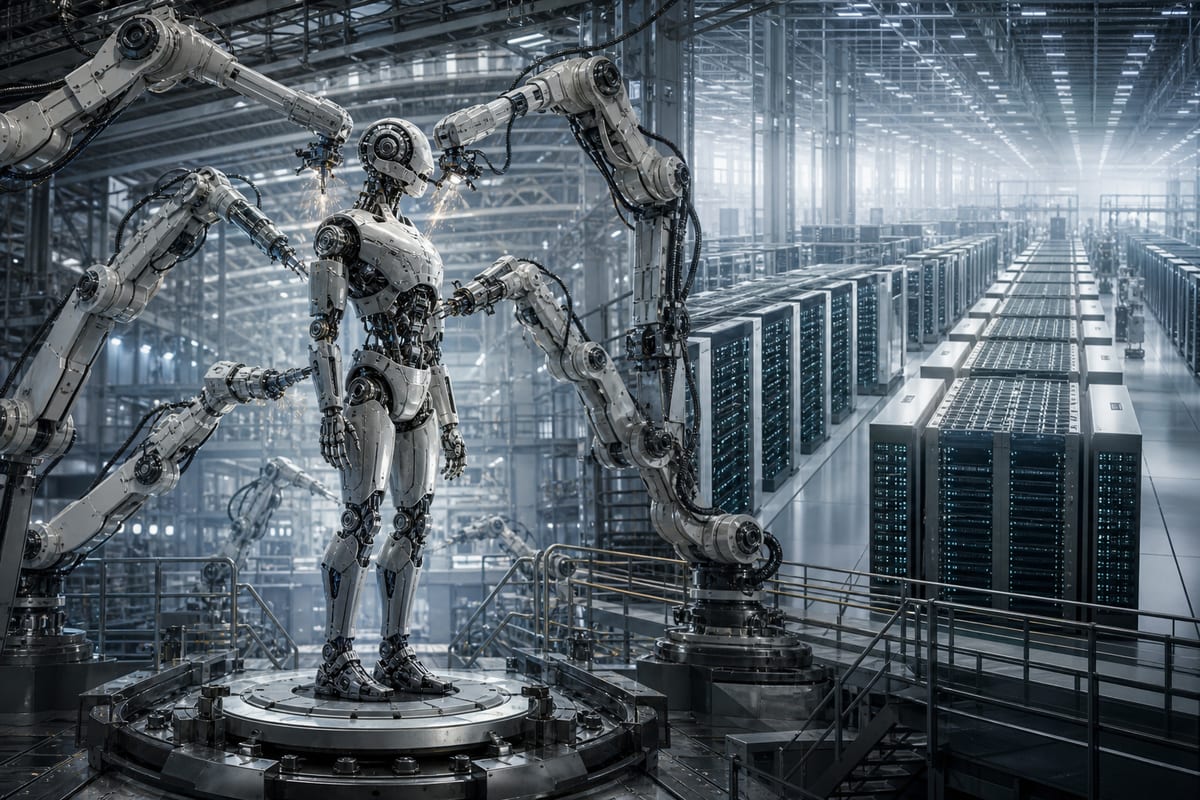
Leopold Aschenbrenner's Situational Awareness fund invested in Physical Intelligence this spring, which raised approximately $1 billion in May. The AI-focused manager anticipates a breakthrough in intelligent robots possibly by the end of next year. This timeline remains contested by robotics specialists.
Physical Intelligence Facing Well-Funded Competitors
Lux Capital co-led the funding round for Physical Intelligence alongside Situational Awareness. The young company counts among its co-founders Lachy Groom, a former Stripe employee, as well as robotics researchers Karol Hausman, Chelsea Finn, and Sergey Levine. It also enjoys support from Jeff Bezos and OpenAI. Last month, it was discussing funding based on a valuation of $20 billion.
The startup is up against well-funded competitors. In October, it was reported that FieldAI was raising funds based on a valuation of $10 billion. Skild AI, valued at over $14 billion, is already providing its robotic software to more than 60 clients. Additionally, Situational Awareness holds a significant stake in Anthropic, betting on the contributions of generalist models to robotics.
Advances in Models and Limitations of Data
For Aschenbrenner, the main bottleneck does not lie with the machines: remotely operated by humans, they could already perform most physical tasks. Instead, he identifies the challenge in the capabilities of the models required for autonomous execution. According to him, specialized systems are now acquiring certain tasks in a matter of days, compared to several months previously, and can adapt to activities as well as to unfamiliar robotic bodies. He likens this stage to GPT-3 in 2020.
The manager also finds the robotic capabilities of OpenAI and Anthropic's models encouraging, even without training specific to this field. He predicts that specialized job learning through demonstrations and feedback will soon emerge, akin to that of entry-level employees. Conversely, experts believe that generalist robots will arrive much later than their promoters suggest.
The AI brief the pros read every evening
The 7 best AI stories, the essentials in 5 min. Free.
Included when you join: our pick of the best AI guides & comparisons.
Choose your rhythm
Free · No spam · Unsubscribe in 1 click
Reliability in an unpredictable physical environment remains a major challenge. Robots do not have access to a corpus comparable to the Internet for training language models; several billion dollars are being invested to collect this physical data. Ken Goldberg, a roboticist at UC Berkeley, doubts that current methods will lead to generalist robots, even if the data were to become unlimited.
The Fund Looks Beyond Models
Situational Awareness is expanding its research to the robotics supply chain and is beginning to identify investment opportunities in public markets. For Leopold Aschenbrenner, the deployment of billions of robots is becoming an increasingly significant component of the fund's allocation. He predicts that this theme will gain even more importance next year.
However, the fund nearly faced collapse this summer. Its manager detailed his bet in a 167-page letter to investors, which was leaked to the press before being published online by a stock analyst. This move reflects a growing interest in Silicon Valley for the physical applications of AI, fueled by cheaper hardware, recruitment challenges, Chinese competition, and more efficient models.
Elon Musk also emphasized on Saturday the need to precisely choose the timing of investments. While sharing the idea that superintelligence and robots will far exceed human activities, he highlighted the considerable weight of this timing in financial decisions.
From Factories to Asteroids: Aschenbrenner's Projects
The manager's scenario combines the manufacturing of additional robots, the construction of factories, and the establishment of data centers. He envisions a cycle in which AI designs chips, while robots build the computing facilities whose processing power would drive new advancements in AI. He compares this potential expansion to the growth of computing infrastructure following ChatGPT.
According to him, robotic construction sites could significantly lower costs and make industrial installations possible in deserts, in the ocean, or off Earth. He even envisions asteroid mining by robots in the early 2030s. In this scenario, the newfound abundance of gold would lead to a drop in its price.
Brief AI — AI news in French
The essentials of artificial intelligence news, decoded and explained every day.