Astrolab to Send First LLMs to the Moon in 2026
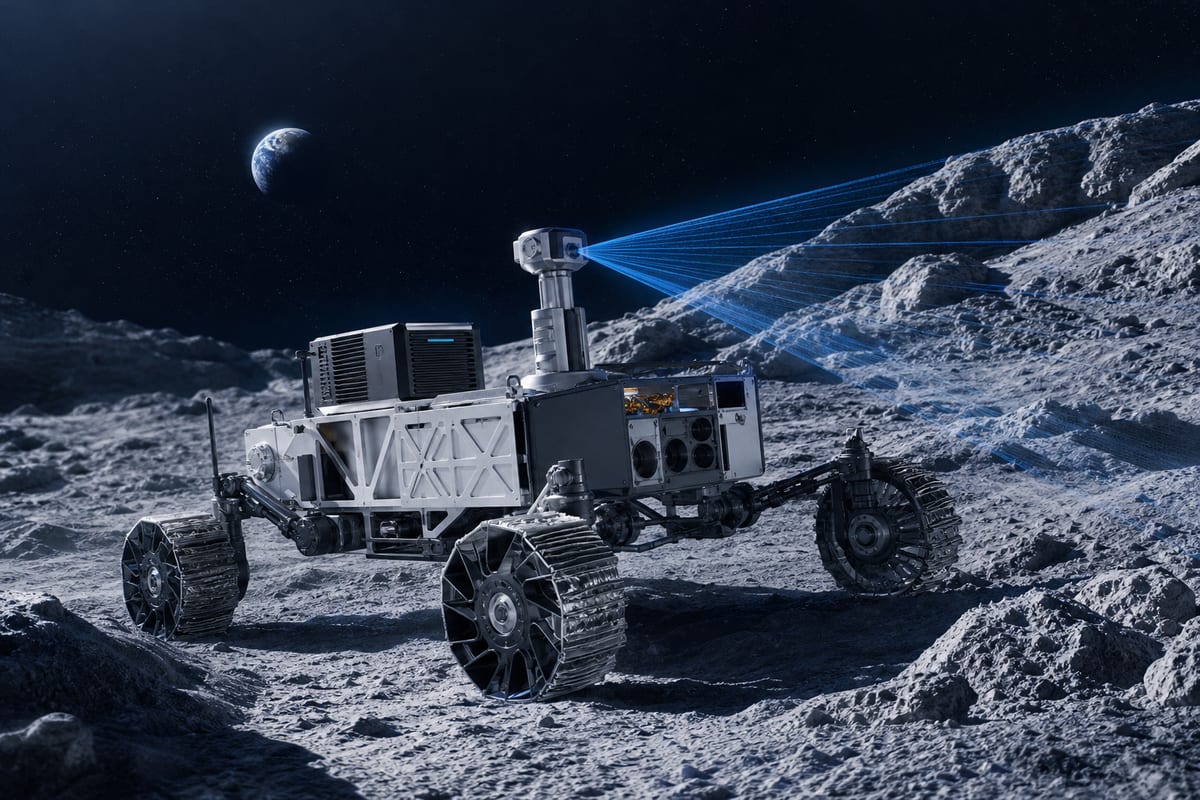
A rover from Astrolab is set to carry an HPE computer to run language models directly on the lunar surface. This initiative builds on tests conducted aboard the ISS but will have to contend with extreme temperatures, increased radiation, and reliability requirements emphasized by specialists.
Tougher Conditions than the ISS and a Mission Limited to 10 Days
HPE expects that the computer aboard FLIP will operate throughout the mission, which is scheduled for 10 days, according to Scott Wiest. Francisco Cordova points out that while the ISS is already an extreme environment, the Moon is even more so. On the station, the temperature is around 20 °C, while near the lunar south pole it can reach 80 °C in sunlight and drop to -200 °C in the shade, where the rover will search for water ice. Radiation on the lunar surface is nearly three times more intense than on the station, which benefits from the Earth's magnetic field. Spaceborne-4 will maintain a software-protected architecture and will use the rover's radiators to dissipate heat.
Embedded LLMs to Analyze and Filter Data In Situ
The mission plans to run specialized LLMs to validate their reliability in the lunar environment. These models will analyze data from cameras and lidar to secure navigation and condense information to be transmitted back to Earth. This usage relies on a high-performance computer from HPE, touted as the first to run LLMs on the lunar surface, equipped with a 64-bit CPU and a GPU for parallel computing.
A Promise of Autonomy Against Communication Delays
Project advocates argue that LLMs could enhance autonomy and reduce the impact of limited communication links with Earth. Mark Fernandez notes that communication delays can reach 20 minutes to Mars and recalls the past loss of Soviet rovers attributed to these delays. Francisco Cordova believes that missions will increasingly rely on AI to make decisions in environments inaccessible to humans. Conversely, Roser Almenar warns against potentially inaccurate or misleading outputs and emphasizes that in space, a small error can have serious consequences.
Le brief IA que les pros lisent chaque soir
Les 7 actus IA du jour, décryptées en 5 min. Gratuit.
Inclus dès l'inscription : notre sélection des meilleurs guides & comparatifs IA.
Choisissez votre rythme
Gratuit · Pas de spam · Désabonnement en 1 clic
Orbital References and Technical Choices for Reliability
HPE has tested its Spaceborne range on the ISS, with three computers, including Spaceborne-2 and Spaceborne-3 launched in 2021 and 2024. In 2025, these systems ran Llama 3.2 as part of the Space Llama initiative, which helped astronauts accelerate their work and crew decision-making. To manage radiation without hardened hardware, HPE relies on monitoring software that detects disturbances from charged particles and reduces the power and frequency of the computer as needed. Mark Fernandez highlights the absence of redundancy and possible maintenance in orbit, justifying intensive checks, and notes that each computer has exceeded two years of operation aboard.
Schedule, Payloads, and Mission Framework for FLIP
The launch of FLIP to the Moon is scheduled for November 2026, with an AI computer in its cargo hold. The rover, for FLEX Lunar Innovation Platform, weighs 480 kg. It marks the beginning of a series of vehicles ordered by NASA from Astrolab, including future buggies for Artemis. Designed with deformable wheels for lunar terrain, FLIP aims for a survival time of at least 150 hours during the night. It will carry 20 scientific payloads, including a 3D lidar mapper and a sensor to measure helium-3 in the regolith. In terms of robotic autonomy, other missions have paved the way: Chang’e-6 utilized AI algorithms to navigate the far side in 2024, while Curiosity and Perseverance have been traversing pre-programmed routes for years, with computers comparable to late 1990s laptops.
Brief IA — L'actualité IA en français
L'essentiel de l'actualité de l'intelligence artificielle, décrypté et expliqué chaque jour.