Aviva: AI to Combat £230 Million in Fraud
Aviva Deploys AI to Combat Massive Fraud
Aviva, one of the leaders in insurance, recently revealed that it has uncovered a record amount of £230 million in fraudulent claims. To tackle this growing threat, the company has decided to rely on artificial intelligence (AI) tools to detect and prevent these sophisticated acts of fraud.
The landscape of fraud has evolved, and fraudsters are now equipped with a new generation of technological tools. In this environment, AI is used not only to defend against fraud but also to commit it. Historically, the insurance industry has always faced opportunistic dishonesty, such as exaggerated claims for minor damages. However, according to Aviva, the nature of these deceptions is becoming increasingly complex and difficult for the human eye to detect.
To respond to this threat, Aviva has chosen to fight fire with fire by deploying its own AI to identify these elaborate patterns.
AI-Powered Insurance Fraud Factories
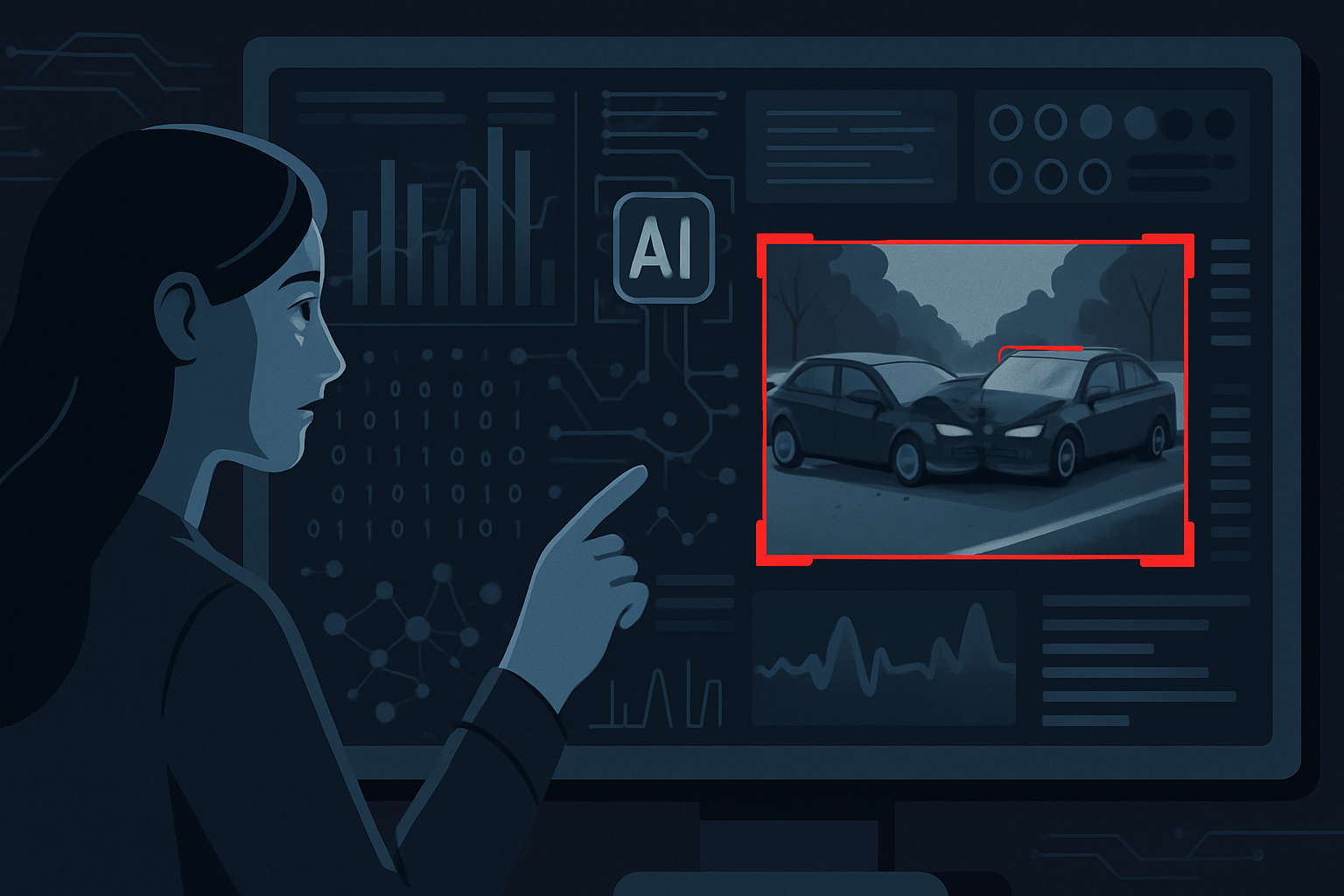
Aviva has found that fraudsters are now using AI to create convincing fakes, including car accident scenes. These images are not just clumsy retouches but detailed and plausible representations that can easily deceive a claims manager overwhelmed by a heavy workload.
The same generative AI tools are also used to produce fake documents, ranging from invoices for fictitious repairs to baseless medical reports. Fraudsters no longer need to rely on a network of corrupt garages or healthcare professionals to support their stories. A simple subscription to an AI service and a bit of imagination are all that's needed. AI takes care of the rest, producing documents that appear official and can pass a superficial inspection.
Thus, an individual or a small group can now generate the necessary evidence for dozens of high-value claims without ever leaving their office. The question then arises: how do you validate reality when it can be so easily and cheaply fabricated?
Aviva's response has been to build an AI-powered defense system capable of operating at the same scale and speed as the threat. While the company is discreet about the exact architecture of its system, it is possible to infer the necessary capabilities of such a system.
Le brief IA que les pros lisent chaque soir
Les 7 actus IA du jour, décryptées en 5 min. Gratuit.
Inclus dès l'inscription : notre sélection des meilleurs guides & comparatifs IA.
Choisissez votre rythme
Gratuit · Pas de spam · Désabonnement en 1 clic
At the heart of this AI detective is large-scale pattern recognition. The AI filters millions of data points from current and past claims, learning what a legitimate claim looks like—and, more importantly, what it does not look like.
When a new claim arrives, the system cross-references all available information. Do the damages in the photo match the physics of the described accident? Do the timestamps on the documents make sense? Has this license plate appeared in other suspicious claims? Are the repair costs indicated on the invoice consistent with thousands of other similar repairs in the database?
This is a level of forensic analysis that would be impossible to perform manually on each of the thousands of claims filed every day.
From Organized Crime to Exaggerated Claims
It is crucial to note that this fight is not solely about organized criminal gangs. A portion of that £230 million figure comes from what the industry calls "claim inflation."
Claim inflation is a more common form of fraud where insured individuals or service providers inflate the bill. For example, a garage might add unnecessary repairs to a quote, or an individual might exaggerate the value of stolen items during a burglary.
Here again, AI proves to be a powerful tool. By analyzing vast datasets on repair costs and market values, the system can immediately flag when a quoted price is an outlier. It can compare the cost of a spare part from one garage with the average of hundreds of others in the same area for the same make and model.
Aviva's AI is not designed to systematically deny claims but to act as an augmentation tool for their human investigators. The AI acts as a filter, sifting through the noise to highlight the most likely cases of fraud. This "human-in-the-loop" approach is essential to ensure fairness and prevent the system from becoming a black box making decisions without oversight.
What Aviva is doing offers a potential pathway for any customer-facing business in the age of generative AI. The same technology that creates these threats is also the most effective means of combating them.
As it becomes easier to forge everything from identities to invoices, the only viable defense is an intelligent system capable of learning, adapting, and detecting deception at a scale that humans cannot match.
Brief IA — L'actualité IA en français
L'essentiel de l'actualité de l'intelligence artificielle, décrypté et expliqué chaque jour.