Azure to Host Cerebras' CS-3 in 2027
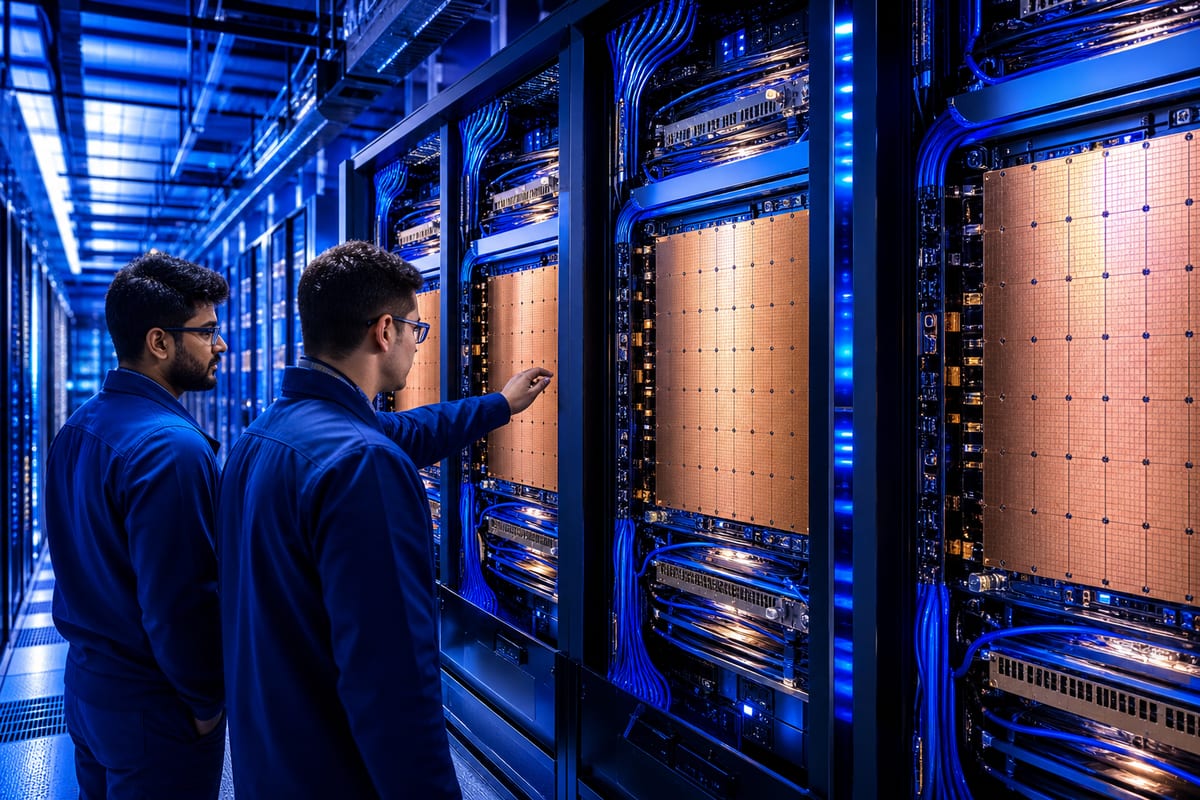
Cerebras has officially announced an agreement with Microsoft to offer its CS-3 systems on Azure, following partnerships with AWS and Oracle. The cloud option is set to launch in 2027 and is based on a quarter that exceeded expectations. However, adoption will depend on porting costs, with initial revenues not expected until the first quarter of 2027.
2027 Timeline, Software Porting, and Uncertain Adoption
Initial revenues from the partnership with Microsoft are not expected until the first quarter of 2027, when CS-3 instances are scheduled to commercially launch on Azure. This future availability does not eliminate software hurdles: teams that have developed their models on CUDA will need to adapt their pipelines and recompile their code using the Cerebras SDK. This engineering work represents a fixed cost that could negate the pricing advantage on intermediate projects. Cloud providers are signing multiple contracts to secure their supplies, which does not guarantee that customers will shift their workloads to this offering. Profitability will be assessed through trials measuring effective throughput against GPUs on the same datasets at commercial launch. On the business side, growth in the core segment has slowed compared to the 103% recorded in the second quarter, while the stock price has dropped about 47% since the IPO in May. Andrew Feldman, who leads the company, is exploring various financing solutions to meet demand.
Rental via Existing Cloud Contracts, Without Server Purchases
The agreement with Microsoft, which adds to those established with AWS and Oracle Cloud, is set to open an AI computing option starting in 2027. IT departments will be able to access these capabilities through their existing cloud commitments, without negotiating dedicated hardware contracts or tying up capital in server rooms. Cerebras favors indirect distribution through major cloud providers. For buyers facing GPU supply delays, this offering expands the available options in the cloud.
Le brief IA que les pros lisent chaque soir
Les 7 actus IA du jour, décryptées en 5 min. Gratuit.
Inclus dès l'inscription : notre sélection des meilleurs guides & comparatifs IA.
Choisissez votre rythme
Gratuit · Pas de spam · Désabonnement en 1 clic
CS-3 on Azure: Wafer-Scale Chip and Targeted Uses
The integration on Azure relies on a different architecture than traditional GPU clusters. The CS-3 system etches a single processor on an entire wafer, featuring 900,000 specialized cores and 44 GB of integrated SRAM. The proximity of memory to computing power helps avoid slow data transfers, which should accelerate both the training of large language models and batch processing of AI agents. In the Azure offering, CS-3 instances are intended to complement clusters equipped with Nvidia H100 and H200, focusing on specific use cases rather than replacing all GPUs. In contrast, current AI servers assemble multiple GPUs connected via a network, with HBM memory on each card and a CUDA software ecosystem; porting to CS-3 involves compilation through the Cerebras SDK. GPU clusters are currently used for versatile training and inference.
A Quarter Above Expectations and Raised Targets
Cerebras reported quarterly revenue of $230.9 million and an adjusted profit of $0.12 per share for the third quarter of 2026, while the consensus anticipated a loss of $0.14. This figure also surpasses the $214.7 million projected by analysts. Revenue from the core segment increased by 70% year-over-year, reaching $135.7 million. For the fourth quarter, the company forecasts revenue between $310 and $330 million and a gross margin of 47% to 49%, exceeding a consensus of $271 million and a 42.1% margin. In October, Cerebras announced an agreement with Microsoft to integrate its chips on Azure, and a CS-3 integration is also scheduled with a third hyperscaler. Management highlights the ability to deliver at scale and a significant improvement in operational profitability.
Brief IA — L'actualité IA en français
L'essentiel de l'actualité de l'intelligence artificielle, décrypté et expliqué chaque jour.