Blackstone downplays AI debt despite tensions
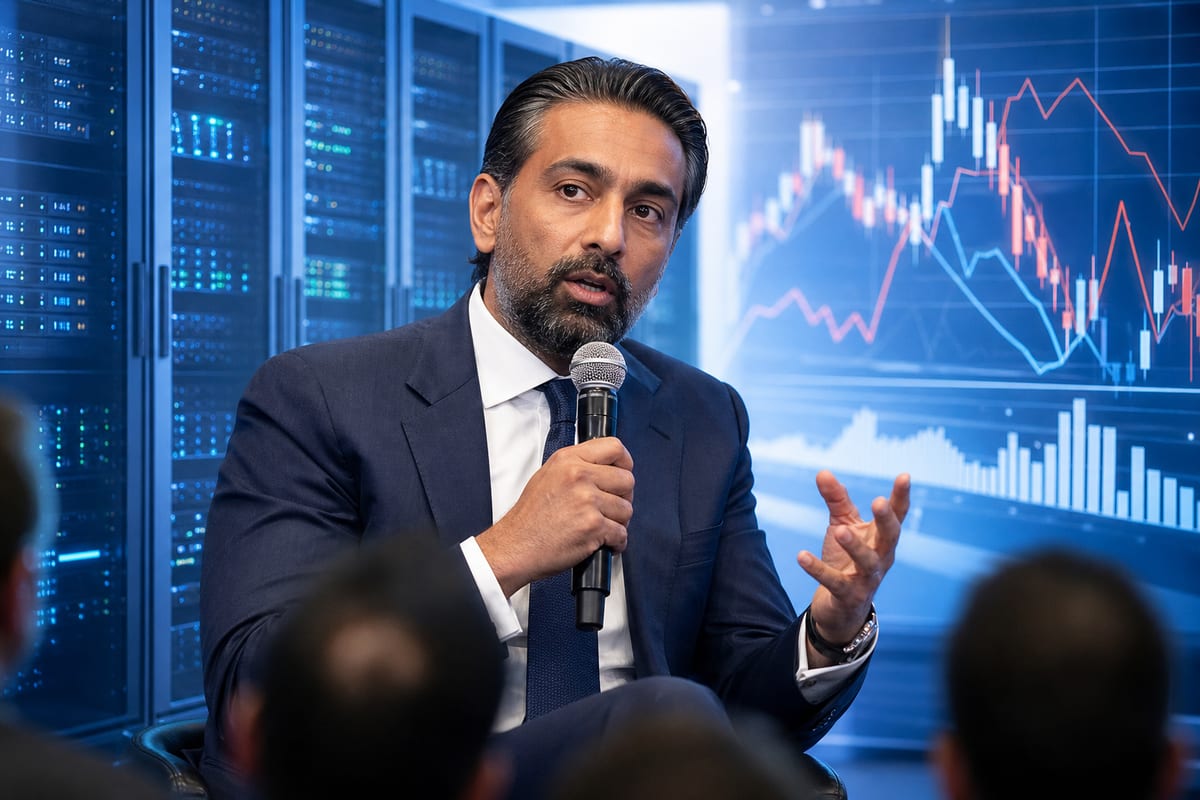
Choppy market, rising spreads, aborted IPO: AI infrastructure financing takes a hit from returning volatility. Jas Khaira assures, however, that most debts are backed by hyperscalers and investment-grade clients. Blackstone continues to inject capital into neo-clouds while financing AI adoption in its portfolio companies.
Rising Spreads, Falling Stocks, and Canceled IPOs
Jas Khaira notes an expansion of credit spreads, with additional premiums applied beyond already elevated rates to finance AI. According to him, the cost of capital for pricing the debt of companies like Meta or Microsoft has widened, even for highly profitable groups. In this context, CoreWeave's stock has dropped more than 20% in recent days, and Firmus has canceled its planned IPO on the ASX, which aimed for a valuation of around $30 billion. Khaira believes the operation did not succeed because the market was not there at that price and sees a market searching for the right level for neo-clouds as rates rise. In the background, interest rates climbed in September, with inflation signals exceeding expectations suggesting higher borrowing costs, while an influx of debt offerings for AI infrastructure weighs on credit.
Soaring Debt but Risks Considered Contained by Blackstone
In recent weeks, the scale of debt accumulated by neo-clouds has raised concerns, especially as CoreWeave's debt now approaches $50 billion. Brad Gerstner believes that securing GPUs is no longer sufficient after it allowed for cheap debt acquisition. Despite these signals, Khaira emphasizes that AI companies still lack computing capacity and that this demand continues to drive the construction of data centers. He downplays the risk of a widespread credit crisis and reminds that the majority of centers are built for hyperscalers, with debts backed by highly solvent companies.
The GPU-Backed Loan Model and Client Contracts
Blackstone has established a financing structure that allows for massive lending to neo-clouds supported by venture capital. The analysis focuses on committed client contracts and GPUs used as collateral. The first agreement of this type occurred in 2023 with CoreWeave, shortly after the surge in demand post-ChatGPT. At that time, CoreWeave was generating about $30 million in revenue with minimal profitability while seeking a $2.3 billion loan. CoreWeave secured this financing by collateralizing a vast array of Nvidia GPUs, with Nvidia also among the investors, and Blackstone was reassured by the presence of contracts with major clients such as Microsoft. This setup was then replicated to grant several billion dollars in additional debt to CoreWeave and other neo-clouds, with Khaira highlighting the importance of client solidity, such as Microsoft or Meta, as a primary risk factor.
Le brief IA que les pros lisent chaque soir
Les 7 actus IA du jour, décryptées en 5 min. Gratuit.
Inclus dès l'inscription : notre sélection des meilleurs guides & comparatifs IA.
Choisissez votre rythme
Gratuit · Pas de spam · Désabonnement en 1 clic
Iconic Transactions: Crux AI, Etched, and Firmus
BXN1 has participated in several transactions related to computing, including Crux AI, a neo-cloud launched with Google to market custom TPUs, for which Blackstone committed to invest $5 billion. The firm has also supported Etched, a four-year-old chip company. Earlier this year, Blackstone co-led a $10 billion credit facility for Firmus, an Australian GPU provider, alongside Coatue.
Financing Infrastructure and Adoption in Investments
Blackstone is positioning itself on two fronts: IT infrastructure and operational adoption of AI. Earlier this year, the company launched BXN1 in San Francisco under the leadership of Jas Khaira, who moved from New York to spearhead these initiatives. Khaira emphasizes a need for higher capital than in previous tech cycles and Blackstone's ability, with $1.3 trillion under management, to offer debt and equity structures and focus on financing computing. He also states that Blackstone is the largest owner of computing resources outside of hyperscalers. Meanwhile, the $1.5 billion joint venture "Ode with Anthropic," formed with Anthropic and Hellman & Friedman, is deploying engineers to integrate AI into operations, starting with the 280 companies in its portfolio. Khaira mentions a real but uneven return on investment, and an adoption that could follow a sawtooth model. Neo-clouds, which lease GPU infrastructure for AI, remain at the heart of this dynamic.
Brief IA — L'actualité IA en français
L'essentiel de l'actualité de l'intelligence artificielle, décrypté et expliqué chaque jour.