Block launches Builderlab 2026 and makes AI agents secure teammates
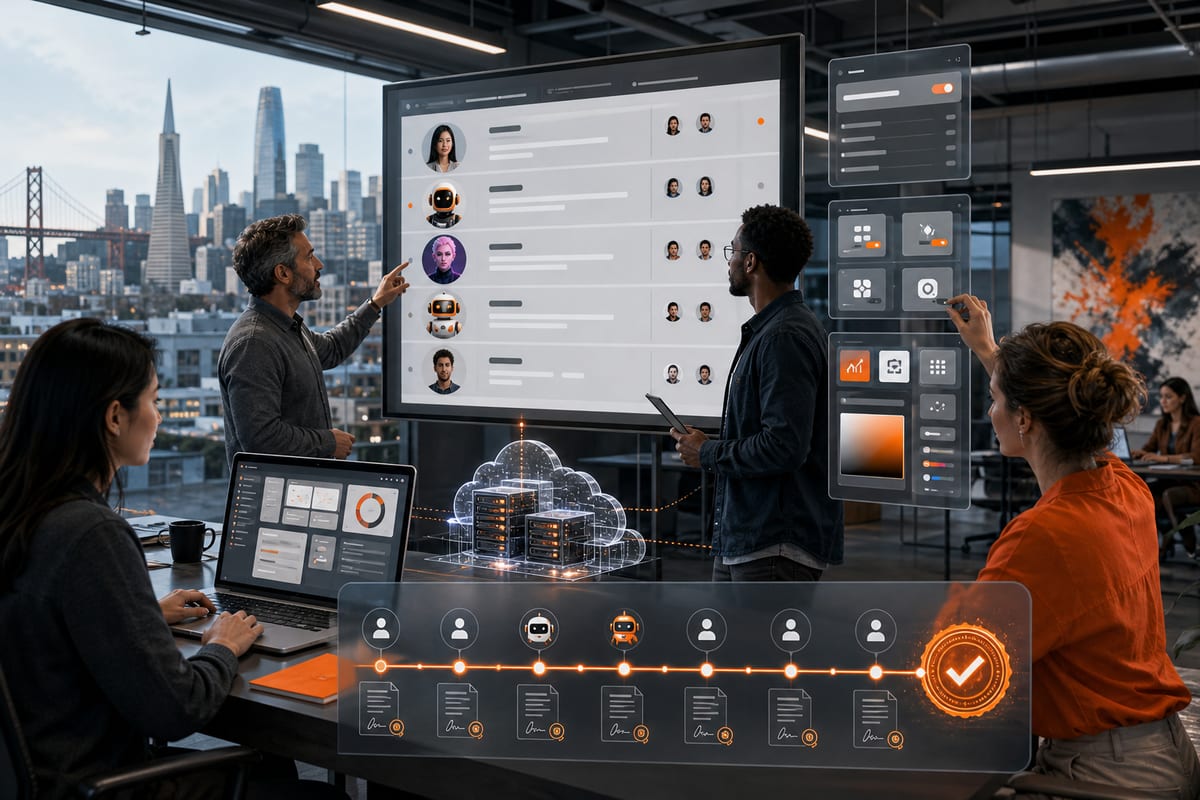
Block introduces its AI agents into Buzz's shared workspaces, equipped with identities, auditing, and secure cloud execution. Builderlab 2026 combines an open-source model, a model-agnostic interface, and detailed security controls. Teams report gains in cadence, while Block plans to expand the dissemination of its approach.
Security: Agent Identities, Hardened VMs, and Signed Logging
Block's framework is based on technical guarantees and proven principles. Each agent has a complete identity held by a human and operates within hardened cloud virtual machines. The actions of the agents are recorded in a cryptographically signed ledger, designed to be tamper-proof. James Nettesheim emphasizes that concepts such as the principle of least privilege, environment isolation, and the implementation of exit controls continue to apply to autonomous systems. Block also establishes an information flow control mechanism that labels data from sensitive sources so that security policies accompany this information and prevent leaks. The AI is already analyzing internal code and sorting security alerts. According to Nettesheim, these agents enable defense teams to keep pace with attackers.
Teamwork: Tagged Agents, Traceability, and Delegation
Within Buzz, agents are endowed with identities, names, and avatars, can be identified as colleagues, and each action is accompanied by an audit trail. Rather than relying on flexible safeguards, they depend on secure components that never grant them certain accesses. Hosted as remote agents in central cloud environments, they are easier to secure than local workstations. Teams can delegate significant tasks to them, even overnight, while maintaining a reviewing role. Thus, agents move from individual interactions to shared workspaces as named and audited team members.
Le brief IA que les pros lisent chaque soir
Les 7 actus IA du jour, décryptées en 5 min. Gratuit.
Inclus dès l'inscription : notre sélection des meilleurs guides & comparatifs IA.
Choisissez votre rythme
Gratuit · Pas de spam · Désabonnement en 1 clic
Interface Above Models and Open Architecture
Builderlab is designed as an interface layer positioned above models, allowing Buzz to integrate agents from any AI lab and migrate to the leading model as soon as it becomes available, according to Brad Axen. The entire system is based on an open-source plug-in architecture to develop highly customizable agents. Following an initial version launched in July, additional plug-ins allow for transforming the interface without technical barriers.
Open Source Model and Effects on Work Organization
Block adopts a classic open-source model: the software is freely accessible, and billing occurs for the convenience of a hosted cloud service. The shift in focus from SaaS applications to the work itself could pose a threat to SaaS providers. Lucas Isaza points out that most current AI tools target a single user, creating bottlenecks for teamwork. On the companion platform, non-technical users, including account managers creating personal dashboards, are among the primary users. According to Paul Gillin, the idea has been well-received among an audience of application creators. Buzz serves as the open-source foundation of this environment, and Builderlab brings together collaboration tools between agents and teams. Block offers these capabilities to other companies.
Pace, Prospects, and Business Context
Teams report having accelerated software release shipping by 50% to 75%. Brad Axen anticipates that agents will require much less human direction in the coming year. The trajectory mentioned relies on cooperation between agents, pooling of business context, and maintaining security boundaries. Block plans to offer this model with open-source code, a model-agnostic design, and hosted infrastructure. This change occurs as Block's core business experiences a third consecutive increase in forecasts. According to Paul Gillin, enhancing an organization's productivity involves removing the boundary between tasks performed by software and those accomplished by humans. In San Francisco, Alison Kosik and Gillin led discussions with industry experts on the business model, agent identities, instant delegation, and trust mechanisms. The entire presentation was showcased during the launch of Builderlab 2026.
Brief IA — L'actualité IA en français
L'essentiel de l'actualité de l'intelligence artificielle, décrypté et expliqué chaque jour.