The U.S. Blocks Anthropic's AI, Global Tensions Rise
Le brief IA que les pros lisent chaque soir
Les 7 actus IA du jour, décryptées en 5 min. Gratuit.
Inclus dès l'inscription : notre sélection des meilleurs guides & comparatifs IA.
Choisis ton rythme
Gratuit · Pas de spam · Désabonnement en 1 clic
The United States Closes Access to Anthropic's AI
On Saturday, June 13, the U.S. government made a decision that shook the global tech sector. Anthropic, a leading artificial intelligence company, was forced to disable access to its most advanced AI model, Claude Fable 5, for all non-American users, including those residing in the United States. This directive even affected some of the company's employees, who found themselves cut off from their own creation. Anthropic explained that it was impossible to differentiate users by nationality without resorting to identity checks, which led to a complete suspension of Fable 5 and Mythos 5 for all its clients, whether American or foreign. The company expressed its disagreement with this government directive.
The Reasons Behind the Suspension of Fable 5
Fable 5, a consumer version of the Mythos model, was integrated into Anthropic's chatbot on June 9. This model is described as the most powerful in the world, capable of feats in reasoning, scientific research, and programming. This power raised concerns within the Trump administration, which views Fable 5 as a potential threat in terms of cyberattacks. The government believes that its capabilities could be exploited maliciously. According to Anthropic, the administration expressed fears about the possibility of circumventing or "unleashing" Fable 5, although the company downplayed these concerns by stating that the identified vulnerabilities were minor and already known. Despite these assurances, the White House maintained its position, deeming it necessary to restrict access to Fable 5 to Americans only.
The Consequences of the American Decision
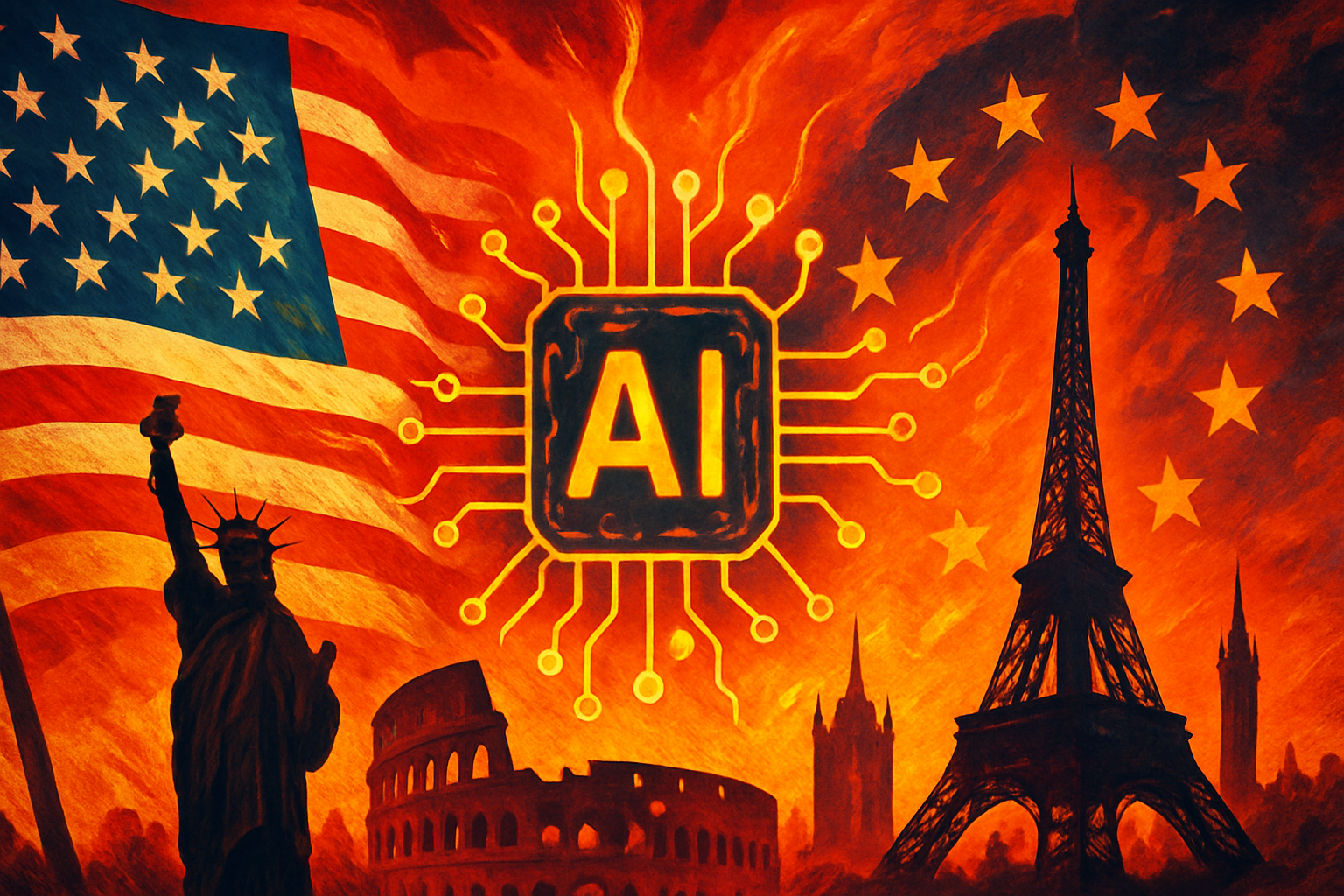
The offline status of Fable 5 had an immediate impact on users worldwide, who saw their sessions abruptly interrupted, forcing them to revert to an earlier version, Opus 4.8. This situation highlights the growing importance of AI as a geopolitical issue. The United States, adopting an increasingly protectionist stance, appears reluctant to share its technological advancements, even those from the private sector. In a tense international context, where China seeks to bolster its technological autonomy, Europe seems disadvantaged and isolated.
Political Reactions in Europe
In Europe, and particularly in France, the American decision has caused a shockwave on the political scene. Candidates for the 2027 presidential election, such as Gabriel Attal, Jordan Bardella, Bruno Retailleau, and Jean-Luc Mélenchon, quickly reacted. All emphasized the need for Europe to reduce its technological dependence on the United States and to develop its own AI infrastructures. This awareness could benefit European players like Mistral AI, although the path to technological independence remains long.
Towards European Technological Autonomy?
For users accustomed to AI services like Claude, Gemini, or ChatGPT, the transition to European alternatives like Mistral remains challenging. However, increasing investments in the sector could allow Mistral to become a serious competitor in the coming years, provided that political rhetoric translates into concrete actions. The American decision has thus served as a catalyst for a crucial debate on Europe's digital sovereignty, underscoring the urgency of developing independent technological capabilities.
Brief IA — L'actualité IA en français
L'essentiel de l'actualité de l'intelligence artificielle, décrypté et expliqué chaque jour.