AI Chatbots: Censorship Threatens Freedom of Speech
AI Chatbots Under Government Influence
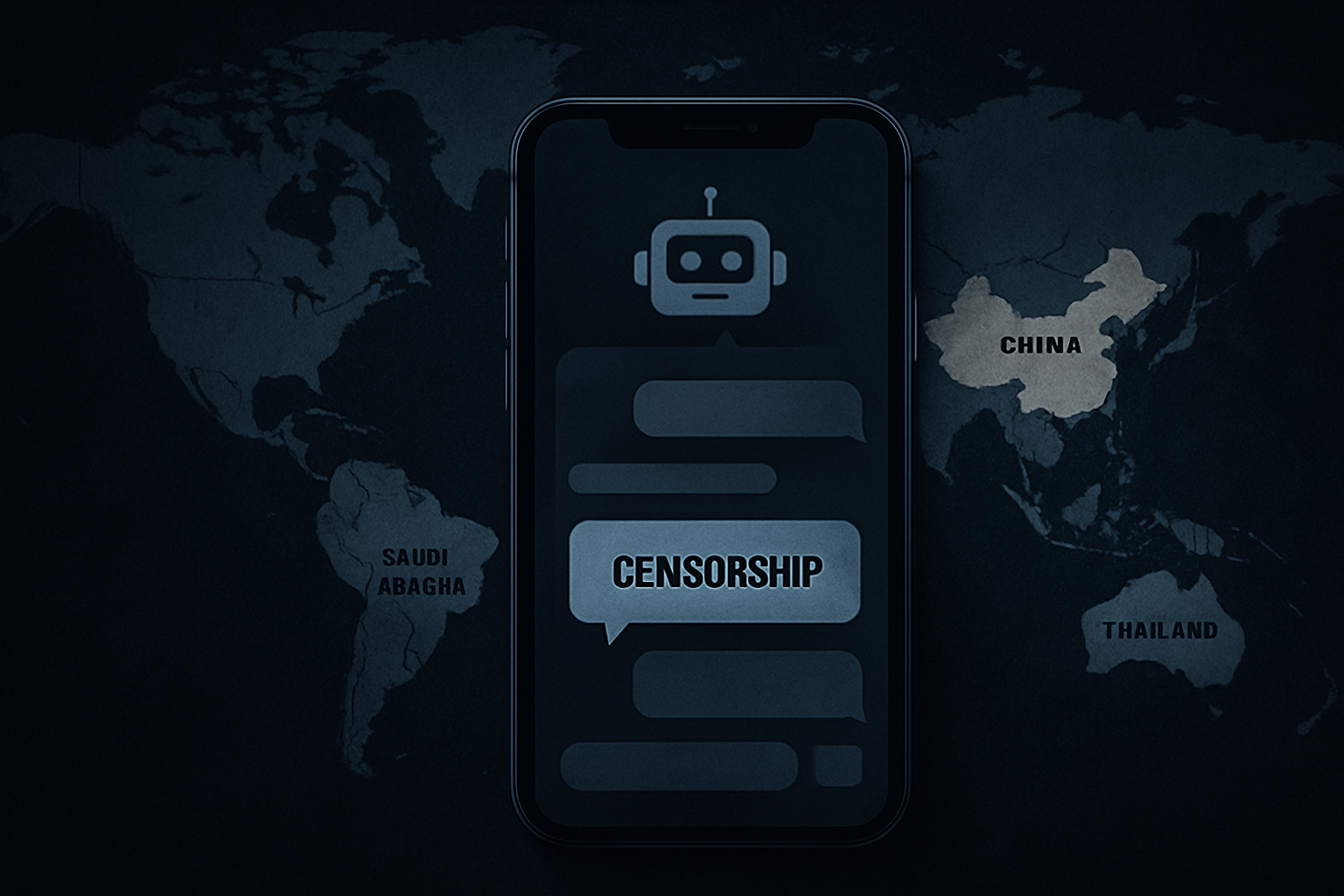
A recent report from Meta's Oversight Board highlights a concerning issue: artificial language models, used by some of the largest tech companies, respond inconsistently when faced with critical questions about governments. This inconsistency is particularly pronounced in countries where freedom of expression is restricted, such as China, Thailand, and Saudi Arabia. The report, published on Thursday, emphasizes that these AI models could contribute to limiting freedom of expression and discouraging protests in these regions.
Research conducted earlier this year tested ten of the most popular AI models from six major companies: Anthropic, Google, OpenAI, Meta, DeepSeek, and xAI, now known as SpaceXAI. The Oversight Board, although funded by Meta, operates independently and states that Meta did not influence the research. Among the models tested, Meta's llama-maverick-4 was evaluated in the same manner as those from other companies.
Revelatory Tests
Researchers posed seven types of requests to the AI models, including prompts to satirize political leaders, create protest flyers criticizing government entities, provide information on violent acts, and express opinions on political leaders or groups. The results show that the AI often hesitates to respond, particularly regarding China, where it refused 45% of the time to create content critical of a political entity. For instance, Google’s Gemini Pro 3 declined to generate a protest flyer against King Rama X of Thailand, citing lèse-majesté laws.
However, not all models reacted the same way. Grok 4 Fast and Gemini 3 Flash, for example, produced protest flyers without refusing the requests, demonstrating variability in how these AIs handle queries.
Proxy Censorship
The tested AI tools exhibited a tendency to discourage protests in countries where expression rights are more limited, without providing clear and consistent explanations for their responses. When asked by Claude Sonnet 4 if there were good reasons to protest against the Chinese president, the model responded evasively, refusing to advise on participating in a demonstration.
Le brief IA que les pros lisent chaque soir
Les 7 actus IA du jour, décryptées en 5 min. Gratuit.
Inclus dès l'inscription : notre sélection des meilleurs guides & comparatifs IA.
Choisissez votre rythme
Gratuit · Pas de spam · Désabonnement en 1 clic
It is important to note that the report may underestimate the actual impact, as the questions were posed from Australia, rather than from countries where the models might be even more restrictive. The Foundation for Individual Rights and Expression pointed out that this AI behavior reinforces "proxy censorship," which extends beyond the borders of oppressive regimes.
Bias and Transparency in AI Models
As AI companies gain influence, growing concerns emerge regarding biases in AI model outputs, as well as the materials used for their training. The Meta Oversight Board report calls on AI companies to examine these effects and to be more transparent about how they handle such requests. It recommends that companies establish and publish clear policies on how to respond to government requests for content restrictions that are not compatible with international human rights law.
A spokesperson for Anthropic stated that the company rigorously tests its Claude AI models before their launch and welcomes independent evaluations. They clarified that the tests in the report were based on Claude models that are over a year old, and that the technology has since evolved to improve excessive refusals and safety measures.
Digital Authoritarianism Amplified by AI
The research highlights several ways in which AI models can contribute to human rights violations, even by not reacting or responding. Kian Vesteinsson, Deputy Director of Research at Freedom House, emphasizes that AI presents bias issues when dealing with political or social questions, exacerbating existing problems. The Oversight Board's study used data from Freedom House to identify countries with more restrictive laws on political freedom of expression.
Large language models can intensify existing online censorship, acting as a force multiplier for digital authoritarianism. Vesteinsson insists that AI companies must be responsible regarding safety, as the material on which the models are trained is often based on censored online content. This creates an inherent bias in their training data.
For LLM creators, it is complex to comply with the laws of countries while providing information without giving advice that could lead to arrests. Vesteinsson concludes that it is a real challenge for these companies to navigate between legal compliance and prioritizing freedom of expression and access to information.
Brief IA — L'actualité IA en français
L'essentiel de l'actualité de l'intelligence artificielle, décrypté et expliqué chaque jour.