AI Chatbots and Interviews: The Silent Revolution in Recruitment
Le brief IA que les pros lisent chaque soir
Les 7 actus IA du jour, décryptées en 5 min. Gratuit.
Inclus dès l'inscription : notre sélection des meilleurs guides & comparatifs IA.
Choisis ton rythme
Gratuit · Pas de spam · Désabonnement en 1 clic
A New Era for Job Interviews
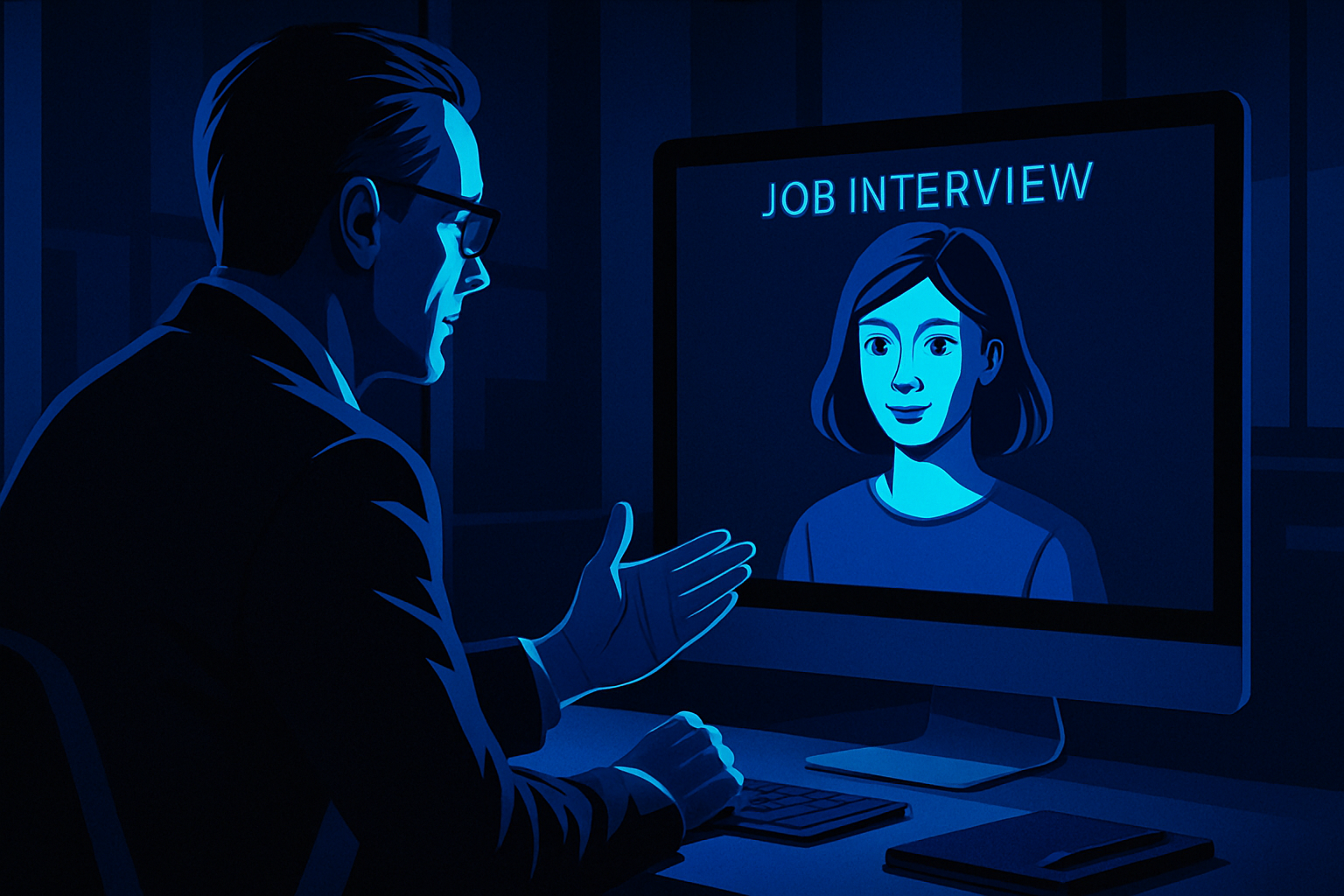
Bijo Thomas, a technology professional based in Austin, had an unusual job interview experience this spring. When he logged in for the interview, he was greeted by Sophie, an AI chatbot. Sophie, who resembled a businesswoman with her brown hair pulled back and her white blouse, conducted the interview interactively, smiling and asking follow-up questions for about thirty minutes. This realistic interaction led Thomas to secure a position as a senior AI solutions architect at Experis, a subsidiary of ManpowerGroup, after going through two additional interviews with human recruiters. He started his new role in May.
The Rise of Chatbots in Recruitment
Historically, employers have used technology to sift through resumes, but the use of AI chatbots for job interviews is an emerging trend. This approach, initially adopted for mass hiring in sectors like retail and manufacturing, is now extending to white-collar positions below the director level. Companies like Experis, Coinbase, and Zapier have quietly begun integrating this technology into their recruitment processes.
The debate is open as to whether these chatbots reduce human biases or risk alienating candidates. Kyle Lagunas, an analyst in the HR tech sector, points out that the interview is traditionally the most human part of recruitment, which may explain employers' reluctance to openly promote the use of this technology.
AI Interviews Becoming the Norm
A survey conducted in April by Greenhouse among nearly 3,000 job seekers revealed that interviews with AI chatbots are becoming increasingly common, especially in the United States. About 63% of American respondents reported having been interviewed by an AI in the past 12 months. This figure compares to 57% in Germany, 54% in Australia, 47% in the UK, and 36% in Ireland.
Companies adopting these AI interviews claim it allows them to process a much larger number of applications. This method has become particularly attractive in a context where companies receive a massive influx of resumes, often facilitated by AI tools that simplify mass applications.
A Growing Technology
According to Lagunas, the AI interview market is expanding, with at least three dozen providers offering this technology. These solutions come from startups like Ribbon and CodeSignal, as well as established companies such as HireVue. Experis's chatbot Sophie was developed in-house by ManpowerGroup.
Chatbots can take various forms, ranging from animated avatars to disembodied voices, but they all promise to facilitate the rapid sorting of a large number of candidates. For job seekers, these tools offer the flexibility to schedule interviews at any time, including weekends and nights, thereby increasing their chances of moving to the next stage.
Real-World Examples
Take Coinbase, which receives about 1.5 million applications per year. L.J. Brock, the HR director of the platform, explains that despite the size of his recruitment team, it is impossible to process such a volume of applications without the help of AI. Since the introduction of Milo, an AI interviewer, in August 2025, Coinbase has hired over 240 people who were initially filtered by this system.
On its part, Zapier began experimenting with AI interviews last fall after noticing that some job postings attracted thousands of candidates within hours. According to Tracy St.Dic, global head of talent at Zapier, this technology has allowed them to filter up to five times more candidates than usual, uncovering "hidden gems" among applicants.
Issues of Fairness and Transparency
The growing use of AI interviews raises questions about the fairness of the process. Proponents of this technology argue that it can eliminate human biases, while critics fear it may evaluate candidates based on criteria that are irrelevant to job performance, such as speech patterns or facial expressions.
The Greenhouse survey revealed that 38% of job seekers abandoned a recruitment process due to an AI interview, and an additional 12% would consider doing so. However, candidates do not necessarily perceive human interviewers as less biased, with 36% of American respondents feeling evaluated differently due to their age and 27% due to their race or ethnicity.
Towards More Transactional Recruitment
Beyond fairness concerns, AI interviews may make the recruitment process more transactional, leaving candidates with less feedback on their performance. JR Keller, a professor of human resources at Cornell University, notes that this lack of transparency can give candidates the impression that they are not being considered as individuals.
Adapting Job Application Strategies
Although the process is not always fully automated, some candidates start with an interview with a human recruiter before moving on to an AI interview. Recruiters then receive an evaluation from the chatbot, often accompanied by a numerical score, which serves as a guide to decide whether a candidate advances in the process.
To succeed in an AI interview, candidates need to adopt a different approach. Traditional techniques, such as adjusting responses based on body language or establishing rapport through small talk, no longer apply. Alan Stein, CEO of a career coaching company, advises candidates not to view these interviews as mere formalities but as opportunities to demonstrate their ability to interact with AI tools, a skill that is increasingly valued.
In conclusion, the rise of AI chatbots in recruitment is transforming hiring practices, offering both efficiency benefits and challenges regarding fairness and transparency. Candidates must adapt to this new reality to remain competitive in the job market.
Brief IA — L'actualité IA en français
L'essentiel de l'actualité de l'intelligence artificielle, décrypté et expliqué chaque jour.