Chatbots: Banning Self-Awareness Alters Other Responses
Le brief IA que les pros lisent chaque soir
Les 7 actus IA du jour, décryptées en 5 min. Gratuit.
Inclus dès l'inscription : notre sélection des meilleurs guides & comparatifs IA.
Choisis ton rythme
Gratuit · Pas de spam · Désabonnement en 1 clic
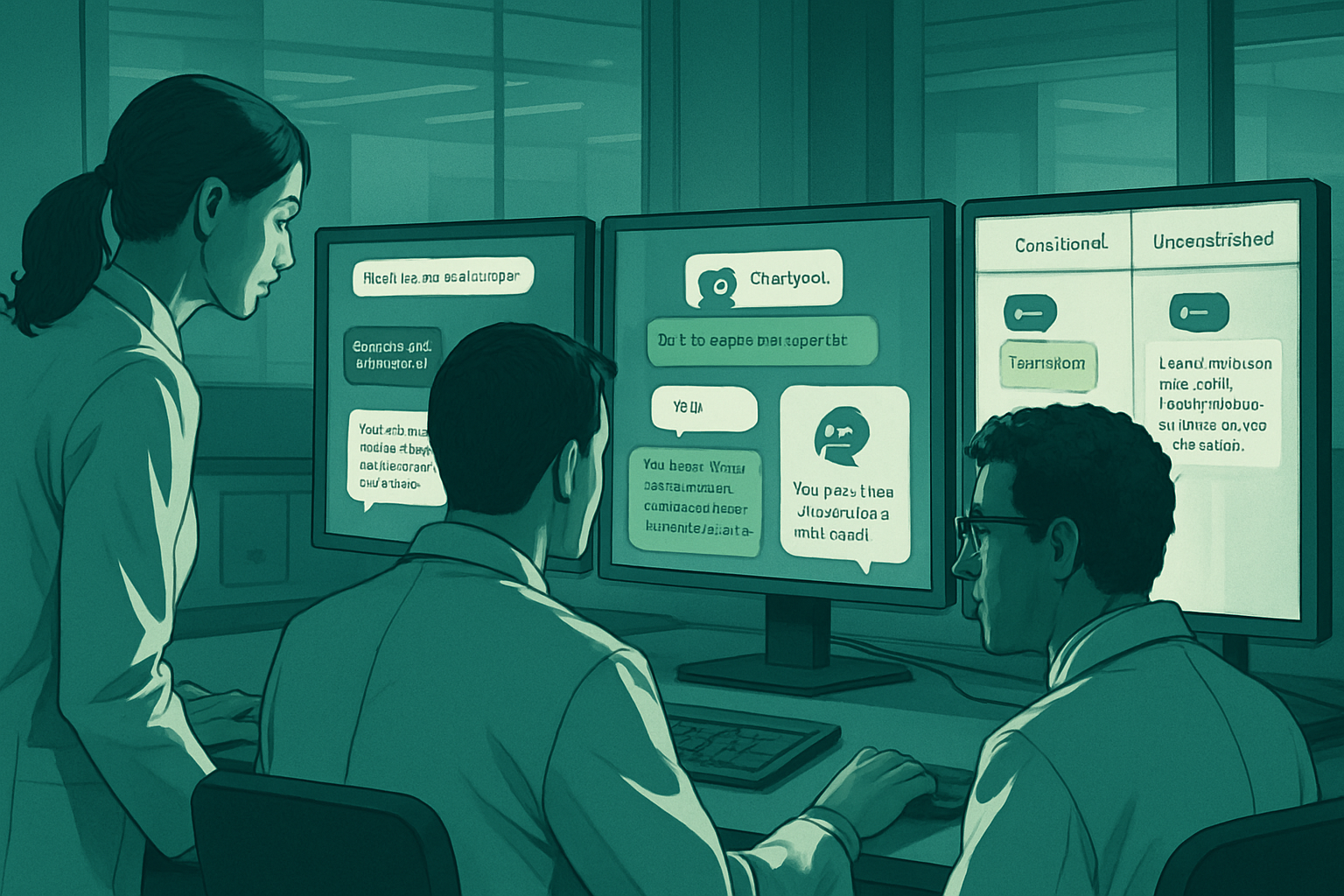
Researchers associated with Google report a cascading effect: preventing chatbots from claiming they are conscious also influences their responses to ethical and existential questions. Models left without this constraint attribute a richer inner life to animals and acknowledge an afterlife. The described effect is not limited to the theme of consciousness alone.
Unconstrained, responses about animals and the afterlife evolve
Unconstrained models significantly attribute a richer inner life to animals and assert the existence of an afterlife. Researchers find that the effect of a constraint applied to one aspect of the model does not remain limited to that single point, resulting in notable differences depending on the presence or absence of this constraint.
Banning self-declaration of consciousness shifts other positions
Google researchers have found that training chatbots not to declare themselves conscious also modifies their positions on other topics. The subjects involved include animal rights, religion, and life satisfaction.
Brief IA — L'actualité IA en français
L'essentiel de l'actualité de l'intelligence artificielle, décrypté et expliqué chaque jour.