ChatGPT and Codex: Educational Revolution with New Plugins
Le brief IA que les pros lisent chaque soir
Les 7 actus IA du jour, décryptées en 5 min. Gratuit.
Inclus dès l'inscription : notre sélection des meilleurs guides & comparatifs IA.
Choisis ton rythme
Gratuit · Pas de spam · Désabonnement en 1 clic
A New Era for Education with ChatGPT Work and Codex
Artificial intelligence is rapidly evolving, transitioning from simple response tools to systems capable of reasoning in varied contexts, utilizing other tools, and accomplishing complex multi-step tasks. This transformation is redefining the preparation needed for school, work, and the future.
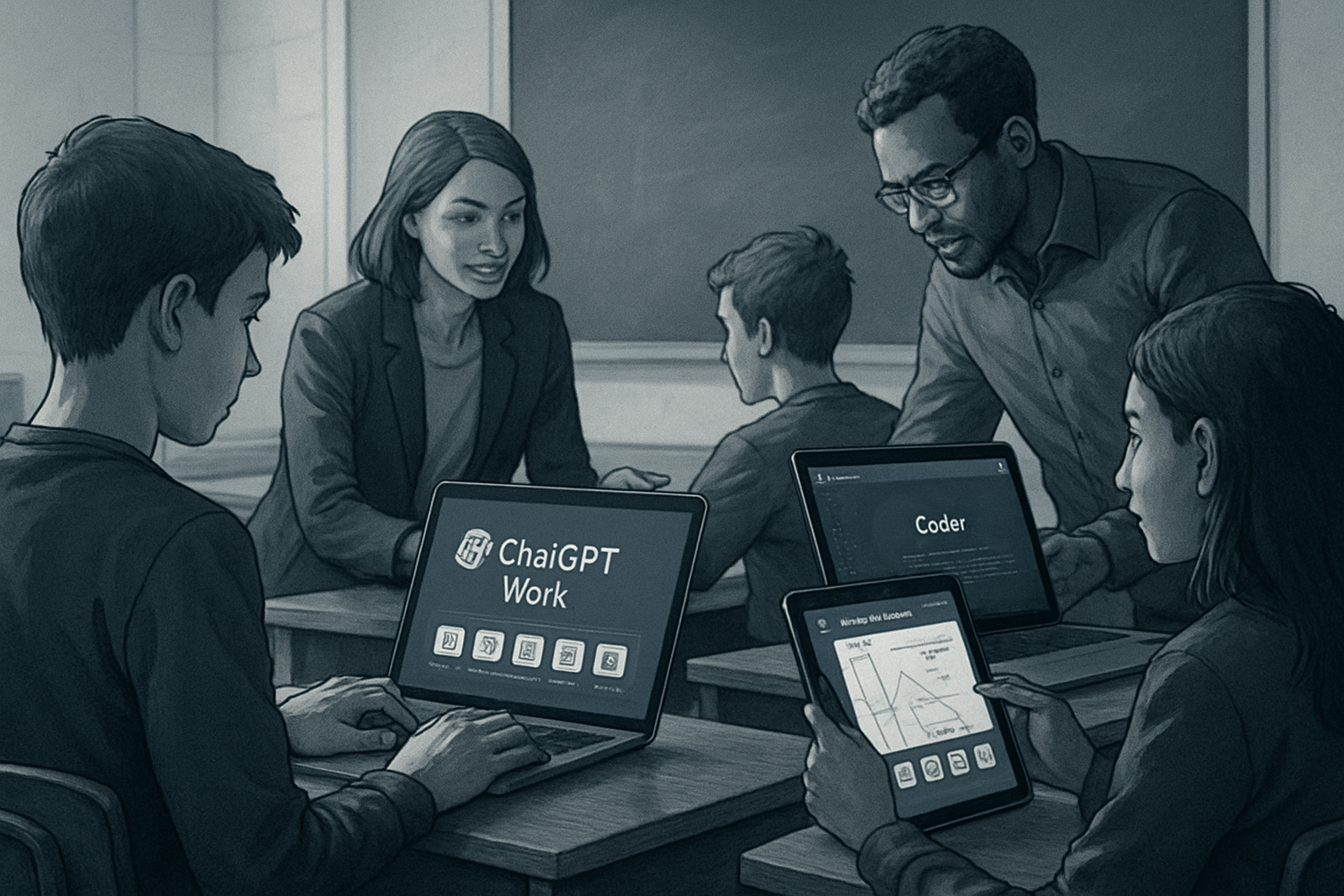
With the start of the school year, ChatGPT Work and Codex are introducing three new educational plugins. These tools are specifically designed to help students and educators leverage the advanced capabilities of AI using course materials and contexts of their choice. A plugin is a combination of applications, role-specific skills, instructions, and common workflows that allows users to get started immediately without creating complex prompts. These plugins are available through ChatGPT Edu and the deployments of ChatGPT for Teachers.
This initiative aligns with our educational approach: AI should support learning without circumventing it, keeping educators and students at the center of the process.
Maximizing AI Use for Students and Educators
The new plugins include solutions for three groups: college students, K–12 educators, and university instructors. By connecting to the tools and materials already in use, such as course documents and calendars, these plugins understand the context and the task at hand. They help transition from curiosity to practice, from lesson ideas to classroom materials, and from project concepts to execution.
We have collaborated with schools and universities to make AI accessible in secure environments controlled by institutions. Launched in 2024, ChatGPT Edu offers institutions managed workspaces with enterprise-level privacy, security, and administrative control. ChatGPT for Teachers, set for 2025, is free for verified K–12 educators and districts in the United States, with educational protections and compliance features. School leaders can claim their domain to integrate educators into a shared workspace, with increased oversight and protections compliant with FERPA requirements.
The Plugin for K–12 Educators
Designed to assist teachers in planning and creating for their classrooms, the K–12 educator plugin was developed in collaboration with teachers at this level. It works with existing materials and tools to create differentiated resources, design interactive visuals, and generate actionable insights. It also integrates with Learning Commons, a philanthropic organization that funds and builds public datasets and AI resources to further integrate learning science into classrooms.
The Plugin for University Educators
This plugin facilitates course design, teaching, and academic planning. Instructors can update syllabi, create interactive websites or multimedia assessments, adapt materials for diverse learners, or package content for their LMS. With connected calendars, documents, and other approved tools, instructors can focus on teaching, research, and daily tasks without recreating the context for each project.
The Plugin for College Students
The college student plugin helps transform what they are already studying into personalized learning experiences. Students can work with a guided tutor, practice difficult concepts, and create study guides, quizzes, flashcards, and interactive visual explanations from sources of their choice. Designed with students from various fields and levels of AI proficiency, the plugin leverages learning science to foster deep understanding and better study habits.
Together, these plugins provide students and educators with a more useful starting point for working with AI, bringing together the right context, tools, and workflows. This allows for less time spent configuring how ChatGPT works and more time spent learning, teaching, researching, and creating, while enabling institutions to maintain control over the tools and permissions available.
Ensuring AI in Education Opens Opportunities
As AI becomes more capable, the opportunity for education goes beyond learning a new technology. It is about helping students develop autonomy: the ability to direct these tools toward meaningful goals, exercise judgment, learn continuously, solve difficult problems, and turn ideas into something tangible.
More than 200 million young adults aged 18 to 24 are now using ChatGPT each week, making them some of the most active users. However, among college-age users, a gap is widening between what AI tools can do and how they are actually used, known as "capability overhang." Even advanced users leverage ChatGPT's capabilities about 90 to 99% less than expert users, indicating significant potential to deepen AI skills.
Structured access can help bridge this gap. Through the deployments of ChatGPT Edu, students develop more advanced usage models over time, surpassing free users in nearly all capabilities and approaching expert user behavior, particularly in analysis, computation, and learning. Since the launch of ChatGPT Edu in 2024, we have partnered with K–12 schools and districts, including Houston ISD in Texas, Fairfax in Virginia, and Fulton in Georgia, as well as hundreds of college campuses, including the Wharton School at the University of Pennsylvania, the University of Texas at Austin, and the California State University system to deploy AI responsibly to teachers and campuses.
Through our investments in education, hundreds of thousands of educators across K–12 and higher education have free access to OpenAI's tools, training, and research to advance equity and innovation. We are now delivering new features to help teachers and students better leverage the full capabilities of ChatGPT.
Expanding Access and Practical Support with Partners
Cutting-edge technology must be paired with education-specific workspaces, training, peer-led programs, rigorous research, and trusted partners to build the trust necessary for the responsible use of new capabilities.
For college students, the new OpenAI Student Collective is a student-led community to learn, build, and shape the future with AI. Applications are now open for students to become Campus Leads and bring the community to life on their campuses. Through peer-led experiences and hands-on projects, students can develop practical skills and bring their ideas to fruition.
Brief IA — L'actualité IA en français
L'essentiel de l'actualité de l'intelligence artificielle, décrypté et expliqué chaque jour.