ChatGPT: OpenAI's Tool Redefining the World of Work
Le brief IA que les pros lisent chaque soir
Les 7 actus IA du jour, décryptées en 5 min. Gratuit.
Inclus dès l'inscription : notre sélection des meilleurs guides & comparatifs IA.
Choisis ton rythme
Gratuit · Pas de spam · Désabonnement en 1 clic
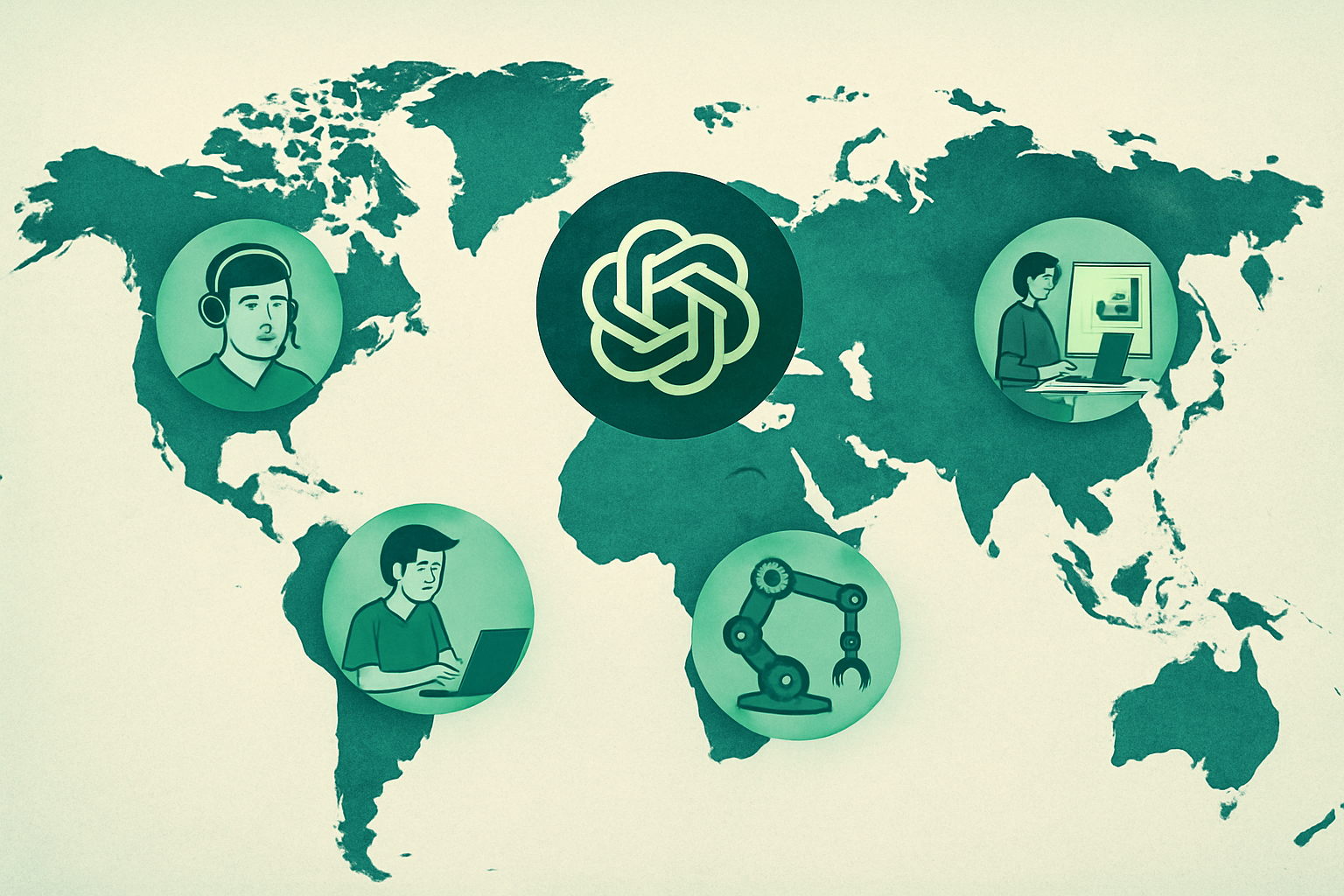
Artificial intelligence (AI) continues to transform our world, and among the notable innovations, ChatGPT stands out as a major player. Created by OpenAI, this virtual assistant based on natural language processing is rapidly establishing itself in the global technological landscape. According to data provided by OpenAI Signals, ChatGPT is now used in over 50 countries, illustrating massive and swift adoption. This phenomenon marks a significant transition towards practical and professional applications of AI, raising questions about the future of human interactions and jobs across various sectors.
Global Adoption and Usage Trends
Data from OpenAI Signals reveals a diverse adoption of ChatGPT around the globe. The United States, the United Kingdom, and Germany are among the countries where the use of this tool is highest. In contrast, in some regions of Africa and Asia, the exploration of ChatGPT's capabilities is still in its early stages. This disparity highlights not only differences in access to technology but also varying degrees of familiarity with AI. Furthermore, users are no longer limited to simple tasks with ChatGPT; they are now integrating it into more complex processes, such as report writing, data analysis, and even project management.
Impact on Work Dynamics
The growing adoption of ChatGPT has significant repercussions across many sectors. For example, in customer service, companies are increasingly relying on this tool to automate responses to recurring questions, which helps reduce costs while increasing efficiency. In the content creation sector, writers and marketers are using ChatGPT to generate ideas, write articles, or design advertising campaigns. This transformation of work dynamics also raises questions about the future of traditional jobs, as certain tasks become obsolete in the face of automation.
Reactions and Future Perspectives
Reactions to the adoption of ChatGPT are varied. On one hand, businesses and professionals see this tool as a means to enhance productivity and improve work quality. On the other hand, concerns are emerging regarding data security, intellectual property, and the impact on employment. Regulators are beginning to closely examine these issues, seeking to establish legislative frameworks that ensure ethical and responsible use of AI. In the future, it will be crucial to find a balance between technological innovation and the protection of workers' rights.
In conclusion, the growing adoption of ChatGPT represents a major issue to monitor in the months and years to come. As businesses and individuals continue to explore the capabilities of this tool, it is essential to keep an eye on the implications for the labor market, regulation, and social dynamics. Artificial intelligence, particularly tools like ChatGPT, could well redefine our way of working and interacting, making it imperative to engage in collective reflection on the ethical and practical issues that arise.
Brief IA — L'actualité IA en français
L'essentiel de l'actualité de l'intelligence artificielle, décrypté et expliqué chaque jour.