Cheshire Academy Regulates AI Use in the Classroom
Le brief IA que les pros lisent chaque soir
Les 7 actus IA du jour, décryptées en 5 min. Gratuit.
Inclus dès l'inscription : notre sélection des meilleurs guides & comparatifs IA.
Choisis ton rythme
Gratuit · Pas de spam · Désabonnement en 1 clic
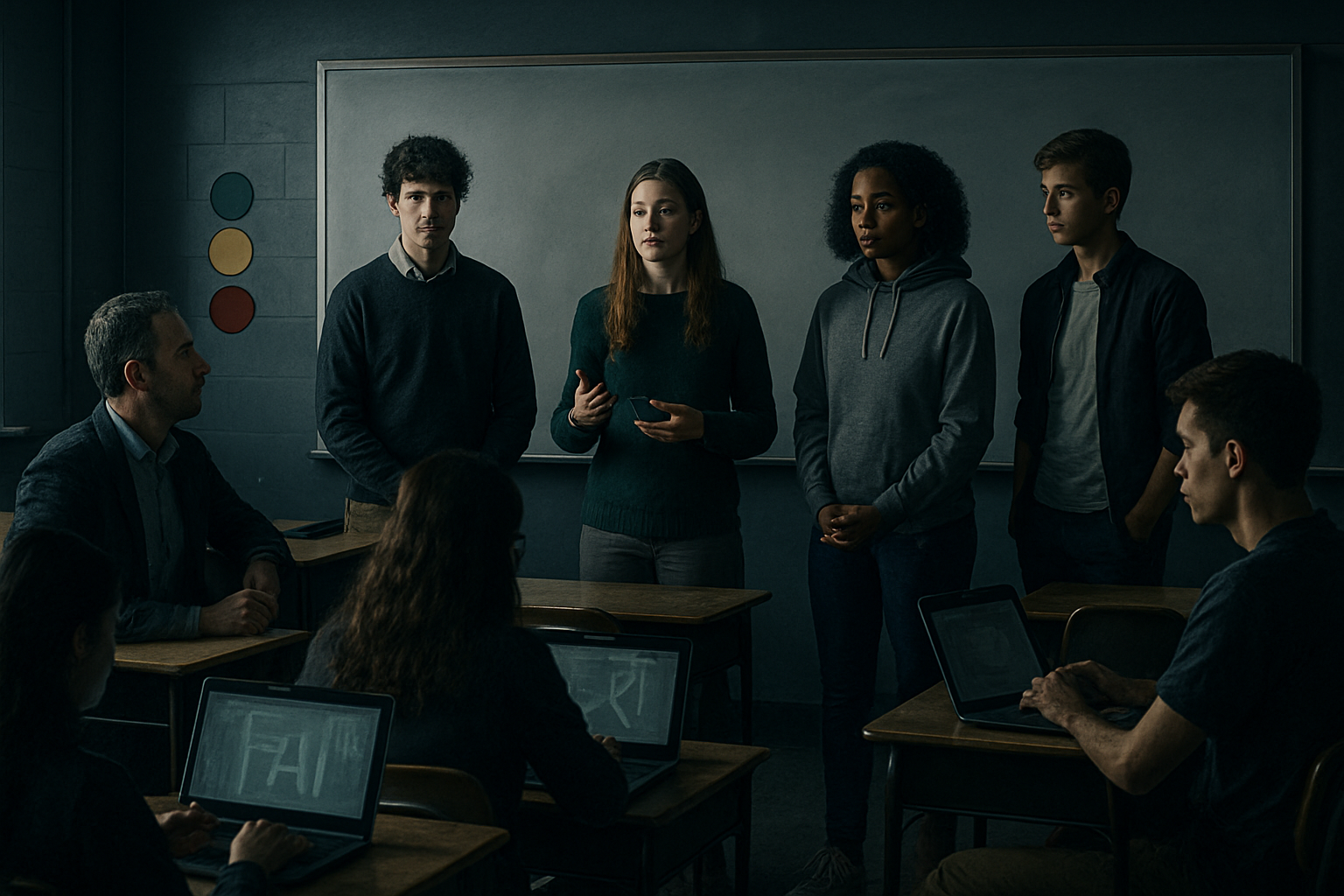
At Cheshire Academy (Connecticut), explicit rules and student-led projects frame the use of AI in the classroom. Teachers, trained in the fundamentals of AI, primarily use it to prepare lessons, while currently avoiding automated feedback for students. Choices between specialized tools like MagicSchool and generalist chatbots are made on a case-by-case basis, with an individual annual cost of just under $100 for extended access to MagicSchool. Practical guidelines are provided to prevent misuse in a context where many teachers are still searching for the right approach.
Coded Assignments and a Student Council Structure the Use
The institution continues its trials for productive AI use and is testing a program where students create materials and lead discussions around healthy uses. Dubbed the "Student Council on AI," this initiative aims to encourage students to reflect on what AI should or should not do in service of the community. In parallel, the academy has generalized practices inviting everyone to question their own use of these tools. Assignments now carry a code inspired by traffic lights: green fully allows AI, red strictly prohibits it, and yellow permits access tool by tool, for example, allowing a spell checker but not the use of a chatbot.
Preparing Lessons with AI, but Not Feedback for Students
On the advice of consultants, staff have been trained in general AI usage techniques, focusing on writing prompts and the limits to keep in mind, such as erroneous or biased responses. In practice, teachers often turn to generative AI to develop materials, whether for planning lessons or creating grading rubrics. Some are considering moving towards automated feedback, but are currently holding back due to doubts about quality, personalization, and confidentiality. More broadly, not everyone is comfortable with language models writing texts intended for students, fearing a lack of pedagogical effectiveness or accuracy.
Competing Tools and Costs: MagicSchool vs. Chatbots
Introduced to the teaching staff when generative AI became commonplace, MagicSchool is appreciated by many for the variety of its modules: generating quizzes and exercise sheets covering numerous subjects and levels, creating presentations, lesson plans, reports, and even a ready-to-use grading rubric generator. Everything goes through a single interface where prompts tailored to each task are entered: class level, number and type of questions (multiple choice or short answers), with the option to add alignment documents. The platform is available in both free and paid versions and also offers tools not focused on generating texts for students; unlimited access with complete history costs just under $100 per year for an individual plan. Meanwhile, generalist chatbots like those from Anthropic, Google, or OpenAI are deemed suitable for administrative tasks, as reflected by the fact that many teachers prefer them for these uses. Several providers are deploying functions dedicated to schools, currently with mixed results.
In French Class, Guided Reflection on the Contribution of LLMs
Miriam Przybyla-Baum, a French teacher, does not use AI herself, having nearly 30 years of content preparation experience, but she incorporates the topic into her teaching. She notes having observed attempts to shortcut through tools like Google Translate long before the arrival of ChatGPT and has built a pedagogical framework to question what AI can or cannot contribute to language learning. The first exercise involves having a language model edit an assignment, then reviewing the changes to distinguish relevant corrections from those that alter the author's voice. A second task asks students to anonymously evaluate AI-assisted papers from peers and annotate the passages they believe were generated.
Operational Guidelines Shared with Teams
Several concrete guidelines are emerging to frame practices. Students will try AI, and it is illusory to control this usage for homework; it is better to counter online misinformation and teach healthy strategies and relationships with these tools. AI effectively automates tasks but struggles with precision and voice, which necessitates caution for any text intended to be read; impressionable students might imitate careless uses seen in adults. The tool is useful for imagining lesson plans or additional exercises, especially for novice teachers, but its hallucinations make its use for final versions risky, potentially confusing students; every citation, equation, and assertion produced by a language model must be verified.
A Framework for Use in Development, Beyond the Institution
Beyond this campus, the arrival of chatbots a few years ago caught many schools off guard, giving students instant access to answers and essay writing. Teachers report being able to spot these uses, noting atypical errors or stylistic markers such as an abundance of dashes. This wave has added to already significant burdens between preparation, assessments, and corrections, while imposing an adaptation to new tools. While organizations from OpenAI to UNESCO encourage AI in the classroom, many teachers still do not see a clear path for integration. At Cheshire Academy, the choice not to impose AI on teachers, combined with varied experimentation and a reported majority adoption by the technical director, illustrates the search for a localized balance.
Brief IA — L'actualité IA en français
L'essentiel de l'actualité de l'intelligence artificielle, décrypté et expliqué chaque jour.