At NN/G, AI Assists Editing, Not Responsibility
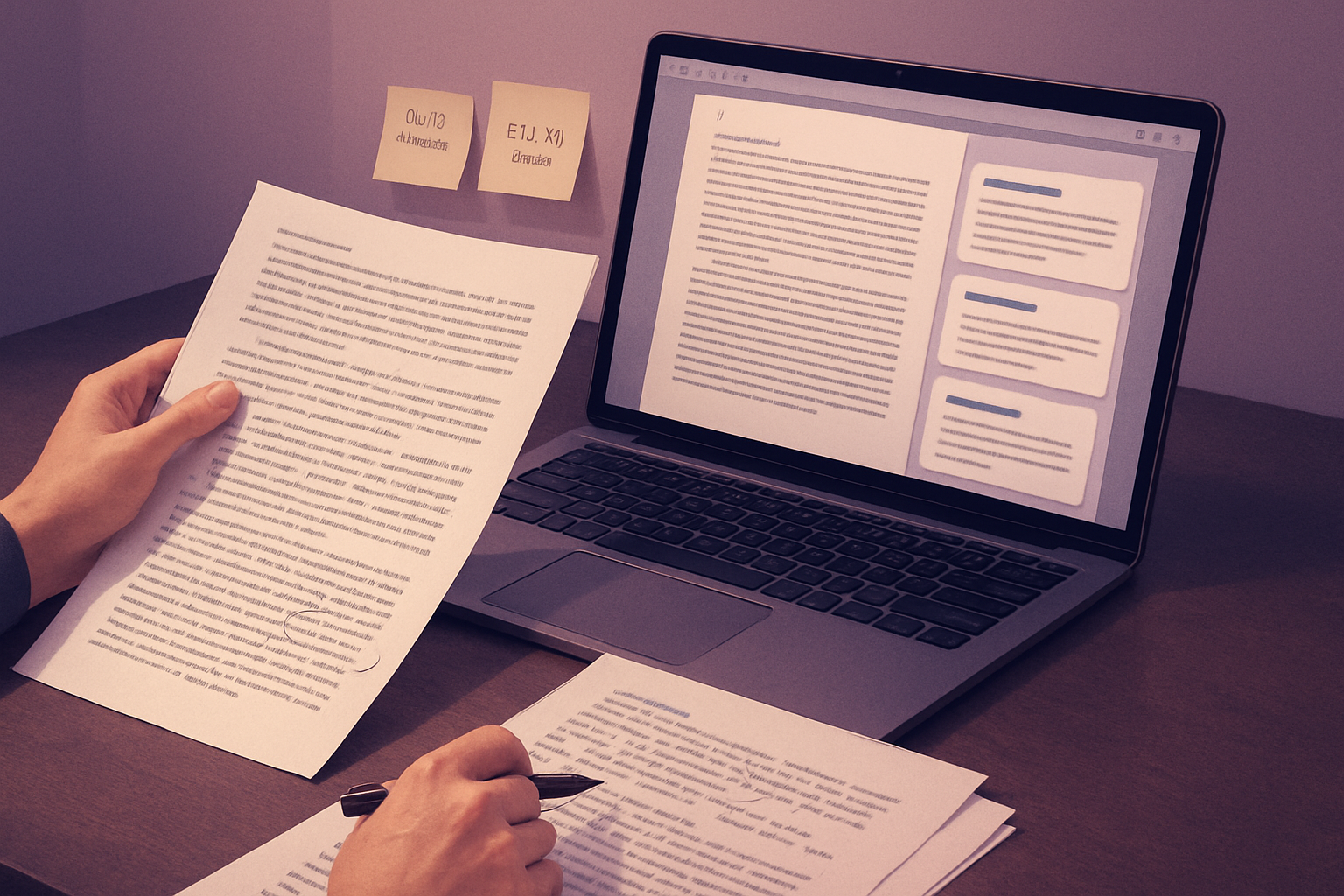
NN/G describes an extensive use of AI to accelerate rewriting, adhere to formats, and interrogate the logic of texts. However, the organization maintains a central principle: final verification and authorial decisions remain human, and AI is not credited.
Editorial Responsibility Maintained and Assumed Limits
NN/G asserts that AI can never certify that a statement is correct, and in case of an alert, the editor or author must return to the source to verify and correct if necessary. The organization does not delegate editorial responsibility to AI and does not mention it as an author. Decisions regarding the value of an idea, the strength or utility of an argument, and the attribution of the NN/G name are made by human experts, with a final check systematically performed by a human. The guiding principle emphasized is that a human expert must have done the intellectual work to understand, evaluate, and defend the article. For example, a significant portion of its AI content policy was generated by AI from an internal text, then revised and approved by humans.
A Proven Editorial Framework Unchanged by AI
The arrival of generative AI has not altered the editorial process at NN/G, which is described as rigorous and iterative. An author proposes a topic, and the team evaluates it based on several criteria: absence of duplication in the catalog, usefulness to the field, and contribution of a unique perspective or clarifying framework. Initial drafts are rarely published as is. Generally, two editors review logical coherence, UX accuracy, and text before iterating until they agree on a publishable version. An article may undergo two to three revisions or more. This approach is more akin to academic editing than blogging and applies equally to guest authors and high-ranking individuals, whether they have been with the organization for a day or twenty years. The editor notes that she has been editing NN/G articles since 2013 and that most have passed through her hands.
Clarity and Style: Copilot and Grammarly as Support, Human Judgment Decisive
The writing team collaborates with a variety of authors, often non-professional writers, and some are non-native English speakers. Before AI, significant efforts in rewriting were necessary to condense and clarify texts. Tools like Copilot in Microsoft Word or Grammarly now help express the same idea more concisely, sometimes more clearly. However, this assistance has a downside: AI can flatten nuance or obscure reasoning by shortening. It is therefore up to the editor to decide if the rewriting is genuinely superior. The editor emphasizes that, in several respects, AI has made her work easier.
Le brief IA que les pros lisent chaque soir
Les 7 actus IA du jour, décryptées en 5 min. Gratuit.
Inclus dès l'inscription : notre sélection des meilleurs guides & comparatifs IA.
Choisissez votre rythme
Gratuit · Pas de spam · Désabonnement en 1 clic
Format Constraints and Multi-Channel Reuse Partially Entrusted to AI
Each NN/G article opens with a fixed-length summary, currently limited to 160 characters, a gauge that has evolved over time. Many authors neglect precise character or space counting; AI proves effective in producing compliant summaries. Study guides and glossaries also adhere to strict formats, for example, links accompanied by a brief description in a complete sentence with an active verb, and AI is deemed effective in standardizing content. The editor also reuses ideas from self-directed courses, reports, videos, or podcasts for articles; AI then helps extract relevant information and adapt it, taking on some of the monotonous tasks.
Support for Reasoning and Verification Without Substituting Expertise
Beyond style and format, AI can assist in questioning the evidence and logic of a text, even flagging potential errors or sweeping generalizations related to studies or laws. The formulation of an opening sentence has thus been revised several times with the help of AI to reflect the specifics of European AI law. At NN/G, a human remains responsible for identifying logical issues, with possible assistance from AI. In a cited example, a draft argued that reflection should not be delegated to AI while presenting AI as a useful critical partner; when prompted, ChatGPT highlighted the tension between these positions, leading to a clarification of the final principle. The editor shares her evaluation with AI for it to challenge or enrich her thoughts, then sorts through the suggestions: some reveal gaps, others question the analysis, and several are discarded after review. The writing team does not prescribe a single method of intellectual work: reflection can also arise from a sketch, a discussion, or dictation to an AI tool; authors may discuss among peers, dictate and have AI rewrite, or use it as a critique, without replacing human expertise. Writers warn against the temptation to entrust writing and thinking to AI, and writing is presented as a time to organize ideas and identify flaws.
Brief IA — L'actualité IA en français
L'essentiel de l'actualité de l'intelligence artificielle, décrypté et expliqué chaque jour.