Chile: Marimaca Selects Lender for Copper Mine
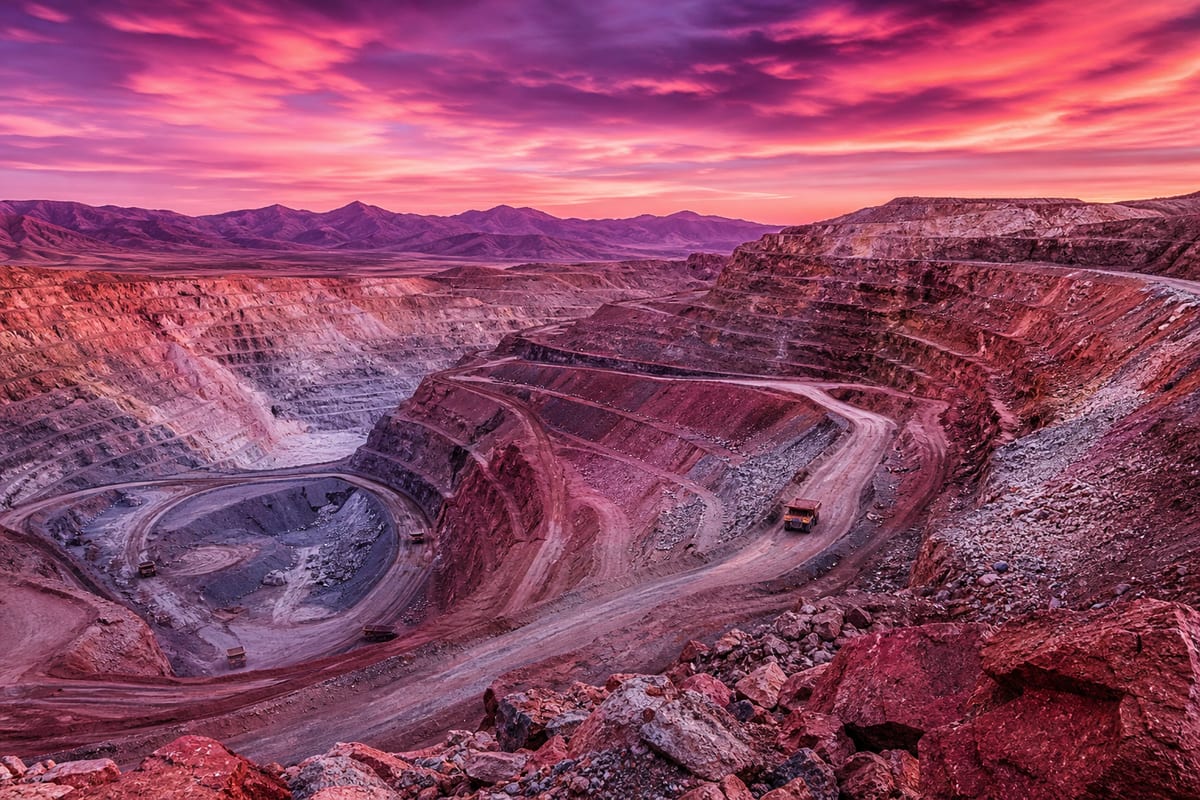
In Chile, Marimaca Copper Corp selected a preferred lender on October 28 for a $400 million loan intended for a mine expected to begin production in 2029. The project is situated in a resource-rich region sought after for data centers and electrification. Industrial capabilities, market access, and financing conditions remain crucial to realizing this potential.
Funding also depends on public policies
The World Bank anticipates a growth of 2.2% in Latin America and the Caribbean by 2026, amid persistent inflation, expensive credit, and tight budget margins. According to Luis Costa, global head of emerging markets strategy at Citi, public authorities must provide incentives from the early stages of projects. He advocates for sustainable support, as infrastructure often requires several years of development, as well as coherence between economic and budgetary policies in light of the increased market scrutiny on public finances.
In Brazil, the attraction of capital could depend on budget credibility, especially if increased public spending exacerbates pressures on debt and credit. Rafael Ch, partner and senior analyst for Latin America and emerging markets at Signum Global Advisors, warns that companies may continue to borrow at high rates in the long term despite a decrease in the benchmark interest rate. This scenario would occur if investors doubted the government's ability to stabilize public debt.
In Argentina, national elections are scheduled for October 2027, and pro-business President Javier Milei faces stiff competition for re-election. Rafael Ch believes that a tightening of monetary controls or persistent deficits could lead companies to postpone their projects, even on a profitable oil field. However, a change in administration would not necessarily threaten medium- and long-term investments: Nicolas Jaquier, a bond portfolio manager in emerging markets at Ninety One, envisions a pragmatic Peronist list that would be acceptable to the markets.
Chilean copper between mining project and production decline
Latin America and the Caribbean refined only 26% of the copper extracted from their territory in 2025, according to the IEA. Monica de Bolle, a senior researcher at the Peterson Institute for International Economics, considers the expansion of refining capacities essential to retain more value locally. She anticipates strong demand for critical minerals while advocating for measured optimism.
The AI brief the pros read every evening
The 7 best AI stories, the essentials in 5 min. Free.
Included when you join: our pick of the best AI guides & comparisons.
Choose your rhythm
Free · No spam · Unsubscribe in 1 click
The future operation of Marimaca is set to be an open-pit mine in northern Chile. Its expected annual production reaches 50,000 metric tons of refined copper.
Chile has the ore, but Cochilco, the Chilean copper commission, reports an 8.5% decline in production during the first nine months of 2026. The agency cites lower grades, maintenance operations, and operational disruptions. However, it has raised its price forecast for 2027 to $5.95 per pound, up from $5.10 previously. The state-owned group Codelco could, for its part, increase its supply, particularly through proposed public-private partnerships.
Brazil produces little rare earths
The USGS estimates Brazil's rare earth reserves at 11 million metric tons, behind China's 44 million. Brazil thus ranks second globally for these reserves. However, the estimated mining production for 2025 is only 2,000 metric tons in Brazil, compared to 270,000 metric tons in China.
The country also has a largely renewable electricity supply: these sources accounted for about 89% in 2025, according to its Ministry of Mines and Energy. Stephanie Link, chief investment strategist and portfolio manager at Hightower Advisors, believes that this composition of the electrical system is an advantage given the additional needs associated with AI and data centers.
Argentina develops its oil export routes
In Argentina, oil and gas resources are significant, but transportation facilities remain insufficient to increase volumes destined for global markets. Rafael Ch sees these infrastructures as an investment opportunity. He cites Vaca Muerta, where the quality of the wells alone is not enough to guarantee an increase in exports without pipelines or port access.
International capital markets have resumed financing Argentine drilling and pipelines. These investments have already made it possible to construct a pipeline and a port, facilities that should allow for a significant increase in crude exports. The country is developing its hydrocarbon exports and is also attracting more capital from Chevron as well as American oil businessman Harold Hamm.
Energy and copper demand is expected to rise
Goldman Sachs anticipates a 170% increase in global energy demand from data centers by 2030. In a projection presented in April, the IEA envisions global electricity consumption from these facilities rising from 485 terawatt-hours in 2025 to 950 TWh in 2030. The expansion of data centers and electrification could thus enhance the role of Latin American resources in supply chains.
For Rafael Ch, the expansion of networks sustains the demand for copper regardless of the energy sources chosen. Supply is already struggling to meet the needs of developing networks. The International Copper Study Group forecasts a 1.6% growth in refined metal demand this year, followed by a 2% increase next year.
Brief AI — AI news in French
The essentials of artificial intelligence news, decoded and explained every day.