China: Job Offers Exposed to AI Decline Further
In China, an analysis examined 10 million job postings: between July 2021 and June 2025, job offers in professions heavily exposed to AI declined by about 10 percentage points more than those in less exposed fields. Beginners and creative professions are particularly affected. However, the share attributable to AI remains uncertain in an already fragile economy.
Over 90% of the 430,000 dramas were generated by artificial intelligence
According to official figures, over 90% of the 430,000 micro-dramas produced during the first eight months of 2026 were generated by AI. These phone-targeted dramas last 90 seconds. Since February, with the arrival of video generators like Seedance 2.0, developed by ByteDance, their production requires significantly less time and money.
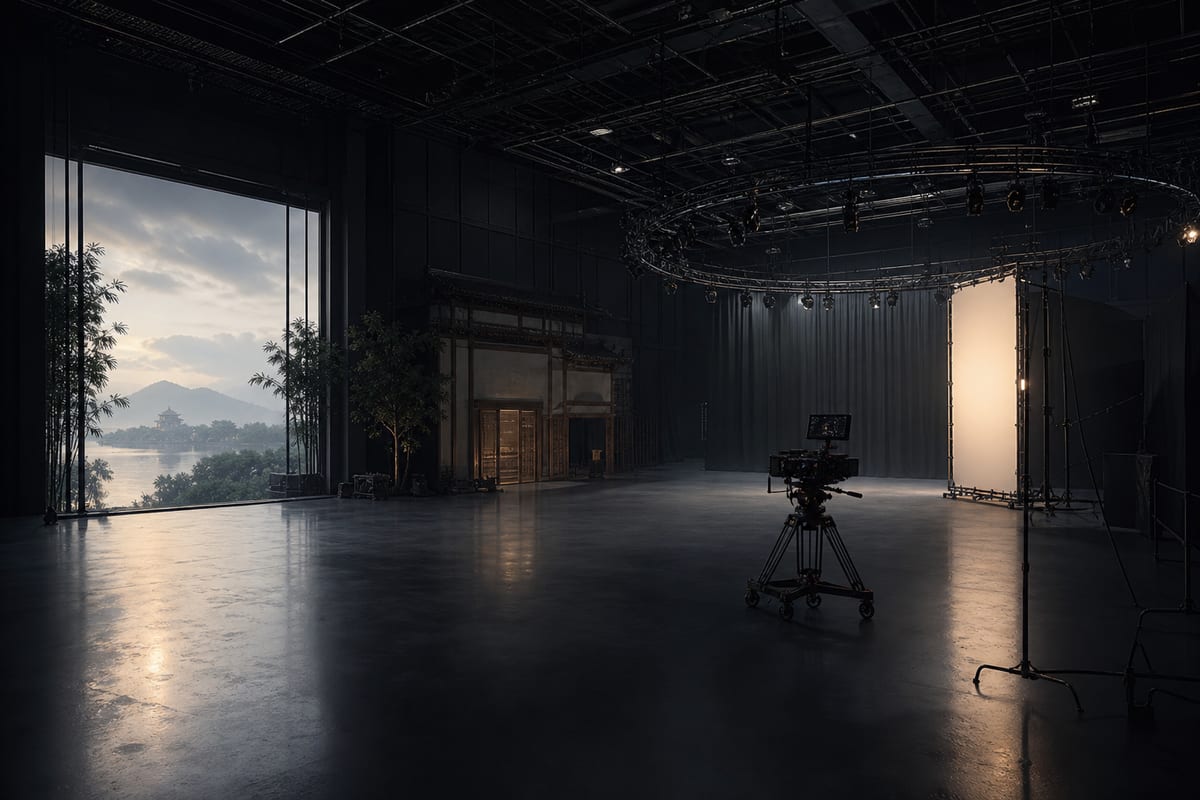
Near Hangzhou, the premises of the Linying studio, inaugurated at the end of 2023, are now largely unoccupied. Actress Zhang Ziqi, 26, states that her income has decreased by more than a third. Other actresses also report losses.
Job offers decline more in exposed professions
The overall volume of job postings published online has been halved during the three years following June 2022. This point of comparison precedes ChatGPT, launched by OpenAI, as well as the emergence of DeepSeek and Doubao from ByteDance. An index designed at Peking University measures the overlap between job tasks and AI capabilities: in almost every sector, the most affected professions show a greater decline.
This association is not enough to establish AI's responsibility. The economic contraction may have penalized office jobs more, without the specific effect of technology being clearly distinguishable.
Two independent studies conducted in China present converging results. After examining 116 million job postings, Chen Qin, a data scientist at ShanghaiTech University, estimates a net loss of new hires attributable to AI at 5.2% between 2023 and early 2026. Research involving the Chinese Academy of Social Sciences reports a 21% decrease in online job postings and an average salary reduction of 4%.
Le brief IA que les pros lisent chaque soir
Les 7 actus IA du jour, décryptées en 5 min. Gratuit.
Inclus dès l'inscription : notre sélection des meilleurs guides & comparatifs IA.
Choisissez votre rythme
Gratuit · Pas de spam · Désabonnement en 1 clic
Companies consolidate multiple professional functions
In Beijing, an internet company reportedly consolidated software development, design, and testing into a single function, according to a source. With AI, one person could now perform the work previously done by up to six people. Tencent is offering a position for an "AI Design Engineer," and BlueFocus has a position for an "AI Director."
It is reported that Chinese tech companies are avoiding presenting AI as a reason for layoffs, fearing backlash from authorities and the public. Xiaomi, Meituan, and Fliggy, Alibaba's travel branch, have denied mass layoffs. However, employees from large companies report workforce reductions since spring, reaching up to 30% in some departments.
Beijing announces a national employment survey
In June, Chinese leaders announced a national survey dedicated to the impact of AI on employment. They called for a "cautious pace" and revamped about a third of degree programs. Cai Fang, a former advisor to the central bank, believes that the country is only experiencing a "temporary slowdown" before a more pronounced shock related to AI.
The labor market has been suffering from economic stagnation for several years. The World Bank estimates that there will be 21 million net job creations during the five years ending in 2024, while youth unemployment nearly reached 19% during the summer. More than 70 million university graduates are entering this market, a situation that is pushing many of them to retrain.
An estimate indicates that about 70 million workers are threatened by AI disruptions in China, compared to about 45 million in the United States.
Young workers also affected abroad
In the United States, researchers from Stanford University examined millions of payroll records. Since the end of 2022, they have observed a relative decline of 13% in employment among 22 to 25-year-olds in professions heavily exposed to AI, while employment among experienced workers remains stable. The decline only affects jobs where tasks are directly automated; researchers primarily attribute this to the substitution of models for theoretical knowledge rather than field experience.
The Australian central bank also observes lower employment levels and higher unemployment among 15 to 24-year-olds in heavily exposed fields compared to older workers. However, it cautions against drawing too quick a causal link with AI. The economic cycle and remote work may also play a role.
Brief IA — L'actualité IA en français
L'essentiel de l'actualité de l'intelligence artificielle, décrypté et expliqué chaque jour.