Decline in Computer Science Enrollments: The ChatGPT Effect
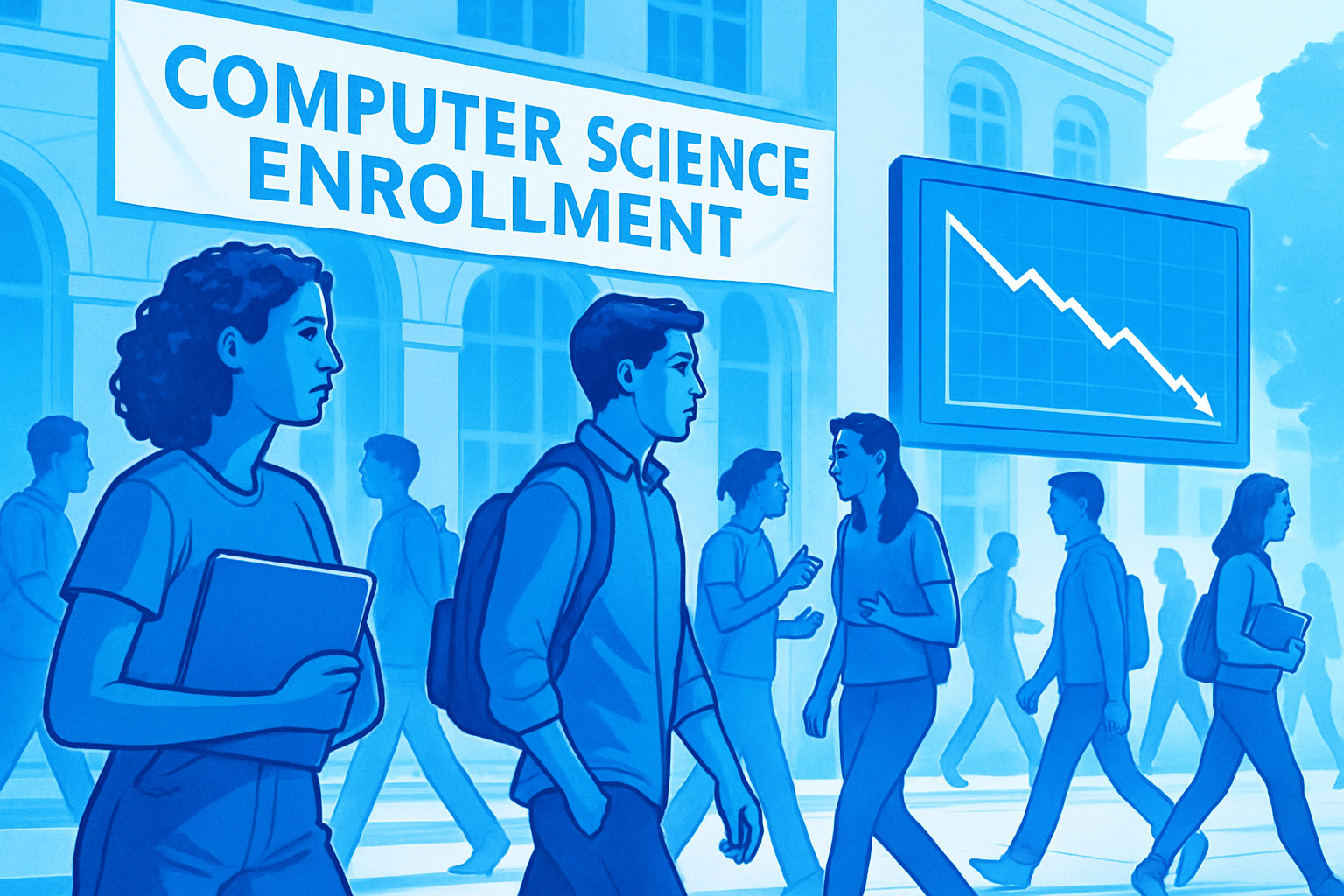
A Historic Decline in Computer Science Enrollments
For the first time in two decades, enrollments in computer science have seen a significant decline, according to a recent study conducted by Jacob Light, an economist at the Hoover Institution at Stanford University. While the study does not specify the exact magnitude of this decrease, separate data from the National Student Clearinghouse Research Center indicates an 8.1% drop in undergraduate enrollments in computer science and support services at four-year U.S. universities for the fall of 2025.
This decline in enrollments coincides with the rapid adoption of generative artificial intelligence. However, Jacob Light emphasizes that the data does not allow for a definitive claim that AI is the direct cause of this phenomenon. By analyzing a vast dataset comprising over 50 million course sections offered since 1996 at 1,019 U.S. universities, Light observed long-term enrollment trends in parallel with the evolution of large language model capabilities.
Light explained to Business Insider that, on average, enrollments in computer science courses at the institutions in his sample decreased by 4.6% year-over-year. Additionally, the share of computer science within total course enrollments fell by 6.3 percentage points.
"The most notable recent development is the leveling off and reversal of the trend in computer science enrollment share," Light wrote. "In 2025-26, the share of enrollment in computer science decreased for the first time in about two decades, interrupting a period of sustained and exceptionally rapid growth."
AI: A Descriptive Factor, Not Causal
The field of computer science has long been booming, fueled by a growing demand for software engineers and other technology professionals. The number of bachelor's degrees awarded in computer science and information sciences has more than doubled over the past decade, rising from around 56,000 in 2014 to approximately 122,000 in 2024, according to data from the National Science Foundation's National Center for Science and Engineering Statistics.
Le brief IA que les pros lisent chaque soir
Les 7 actus IA du jour, décryptées en 5 min. Gratuit.
Inclus dès l'inscription : notre sélection des meilleurs guides & comparatifs IA.
Choisissez votre rythme
Gratuit · Pas de spam · Désabonnement en 1 clic
However, the emergence of AI assistants capable of coding, debugging, and performing technical tasks has raised questions about the relevance of computer science studies. Light identified five main reasons that could explain the decline in enrollments:
- A less favorable job market for entry-level software engineers
- Uncertainties regarding the value of computer science degrees in the age of AI
- Weaker academic preparation among new students
- Demographic changes in universities related to immigration policies
- The emergence of competing fields such as data science
Light clarified that current data do not allow for determining which of these reasons is predominant.
"Therefore, I consider enrollment trends as descriptive evidence rather than an estimate of the causal effect of ChatGPT or exposure to AI on student demand," he wrote.
This observation is supported by data from the National Student Clearinghouse Research Center. Their enrollment report for fall 2025 shows that undergraduate enrollments in computer science and support services at four-year universities decreased by 8.1% compared to the previous year, dropping from approximately 659,700 students in 2024 to 606,100 in 2025.
A Trend to Watch
Despite this decline, the number of enrollments remains higher than the levels of 2022, which were at 574,333 students, suggesting that the recent decrease follows a period of rapid growth. The question remains whether this slowdown is temporary or marks a lasting change in student attitudes toward computer science.
"Computer science has historically been a field of boom and bust; a decline in computer science enrollments would not be a new phenomenon for universities," he told Business Insider. "While I believe there are reasons to think that computer science enrollments may decrease in the short term, many graduates can still find significant value in a computer science degree," he added.
Light concluded that it will be easier to understand this trend "as other cohorts make course and major choices."
Brief IA — L'actualité IA en français
L'essentiel de l'actualité de l'intelligence artificielle, décrypté et expliqué chaque jour.