Cisco and OpenAI Launch Shirudo to Counter Vulnerabilities
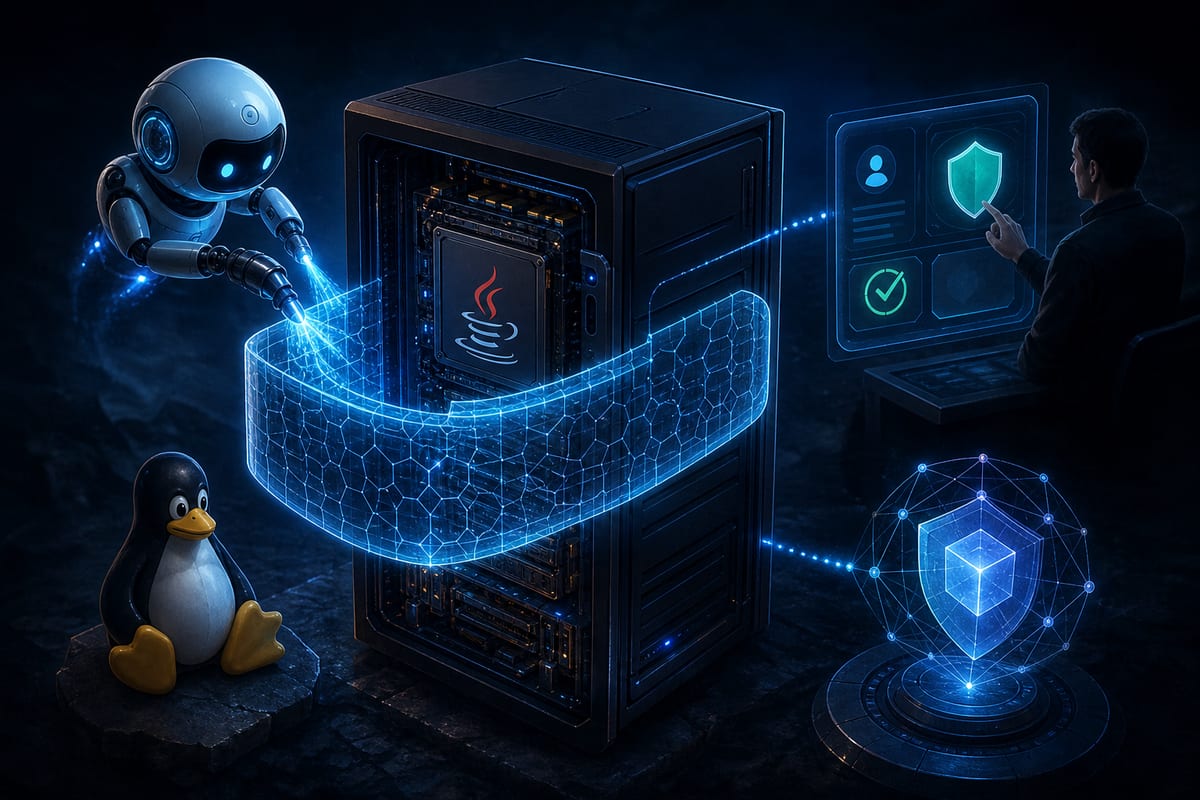
Cisco and OpenAI have launched Shirudo, an open-source project that applies temporary protections before patches are installed. By combining Cisco's infrastructure with OpenAI's models and research, it employs AI agents while maintaining human oversight.
An Experiment Blocks Java4Shell Without Disrupting Elasticsearch
In a controlled experimental environment, researchers provided Shirudo with information about Java4Shell. The system automatically generated a protection in Java bytecode, injected into a Java application to validate base64 inputs. An exploitation attempt targeting Elasticsearch, a search and analytics platform, was halted while the site continued its normal operation.
Thomas Graf, co-founder of Isovalent, and Liz Rice, head of open source, explain that the agents can autonomously search for vulnerabilities or use external information, including recent disclosures. They can then write a protective measure, reproduce an exploit, verify its functionality, and compare fixes. Testing continues until an effective response is found, which is then signed and installed on the affected nodes; it disappears once the patch is applied.
Graf and Rice describe a continuously monitored and repeated process aimed at improving the security score without losing sight of the state of applications. Its autonomy can be adjusted. They also emphasize the agents' ability to produce code, quickly integrate large contexts, and conduct reverse analysis of millions of lines of assembly.
Teams Maintain Control Over Protections
The agents can substitute corrected code for faulty code without a complete reset. Teams can test these changes, accept or reject them, and then proceed with deployment, all while retaining control and imposing limits. The agents are tasked with detecting vulnerabilities, creating protections, and testing their effectiveness without disrupting service.
The technical foundation is eBPF, or Extended Berkeley Packet Filter: small isolated programs run in the Linux kernel without modifying the source code or loading additional modules. OpenAI states that this approach allows for the detection of suspicious activity and precise intervention on a functioning system. Protections must be cryptographically signed and deemed safe before loading; the eBPF verifier checks their compliance with the rules, while kernel mechanisms restrict unauthorized changes.
The AI brief the pros read every evening
The 7 best AI stories, the essentials in 5 min. Free.
Included when you join: our pick of the best AI guides & comparisons.
Choose your rhythm
Free · No spam · Unsubscribe in 1 click
A Trusted Platform Module, called TPM, helps maintain a verifiable record of installed or removed protections. These mechanisms can operate even after an attacker gains access to the system. The evidence associated with the controls circulates within the system.
The agents can track false positives, performance, and the overall state of the system, then incorporate results from red teams as well as other feedback and signals to improve protections. After installation, a counter logs active exploitation attempts, which can be reviewed on demand.
Cisco Describes Attacks Within Hours
For Jeetu Patel, President and CPO of Cisco, the agents are advancing in vulnerability discovery but also pose a risk and adversarial threat. The startup Calif has used AI to help uncover PHP2Shell and a major bug affecting Java. Patel asserts that attackers employ swarms of agents and that campaigns targeting PHP2Shell and Java4Shell began within 24 hours of their disclosure, if not earlier.
He describes threats evolving in minutes or hours rather than days or weeks. However, designing, testing, and deploying a permanent fix takes time. Therefore, Patel advocates for protections that allow teams the necessary time to apply these patches.
The executive contests a historical practice of adding security after building infrastructure, which he believes is ill-suited for AI. Cisco and OpenAI, on the other hand, want a secure infrastructure by default. OpenAI aims to strengthen the kernel and core services, restrict workload permissions, and secure updates like recoveries to enable large-scale deployment.
From Tetragon to Live Protect, an Open License Project
Shirudo, which means "shield" in Japanese, originates from Tetragon, an eBPF security platform created and open-sourced by Isovalent. Cisco acquired this company in 2024. Shirudo is already part of its Live Protect capability.
Tetragon has been rewritten for the agents: its previous version directed them to consoles, configuration files, and policy languages designed for humans. The process required converting machine code into a human-readable representation and then back to machine code. With Shirudo, agent communications occur in code.
Graf and Rice present the project as nascent, attributing potential to it and hoping to see it evolve within the open-source ecosystem. They believe that securing infrastructure for AI concerns the entire industry. Developers, security specialists, and infrastructure operators are invited to examine the code, verify results, and participate in development.
The chosen license is the BSD 2-Clause, which is permissive and approved by the Open Source Initiative. It allows for the use, modification, and redistribution of the software with limited restrictions, including within proprietary or commercial products. BPF programs, on the other hand, are under a dual license of GPL and BSD.
Brief AI — AI news in French
The essentials of artificial intelligence news, decoded and explained every day.