Claude Agent Revolutionizes Debugging with Its SDK: A Guide
Le brief IA que les pros lisent chaque soir
Les 7 actus IA du jour, décryptées en 5 min. Gratuit.
Inclus dès l'inscription : notre sélection des meilleurs guides & comparatifs IA.
Choisis ton rythme
Gratuit · Pas de spam · Désabonnement en 1 clic
Understanding the Harness Concept with Claude Agent
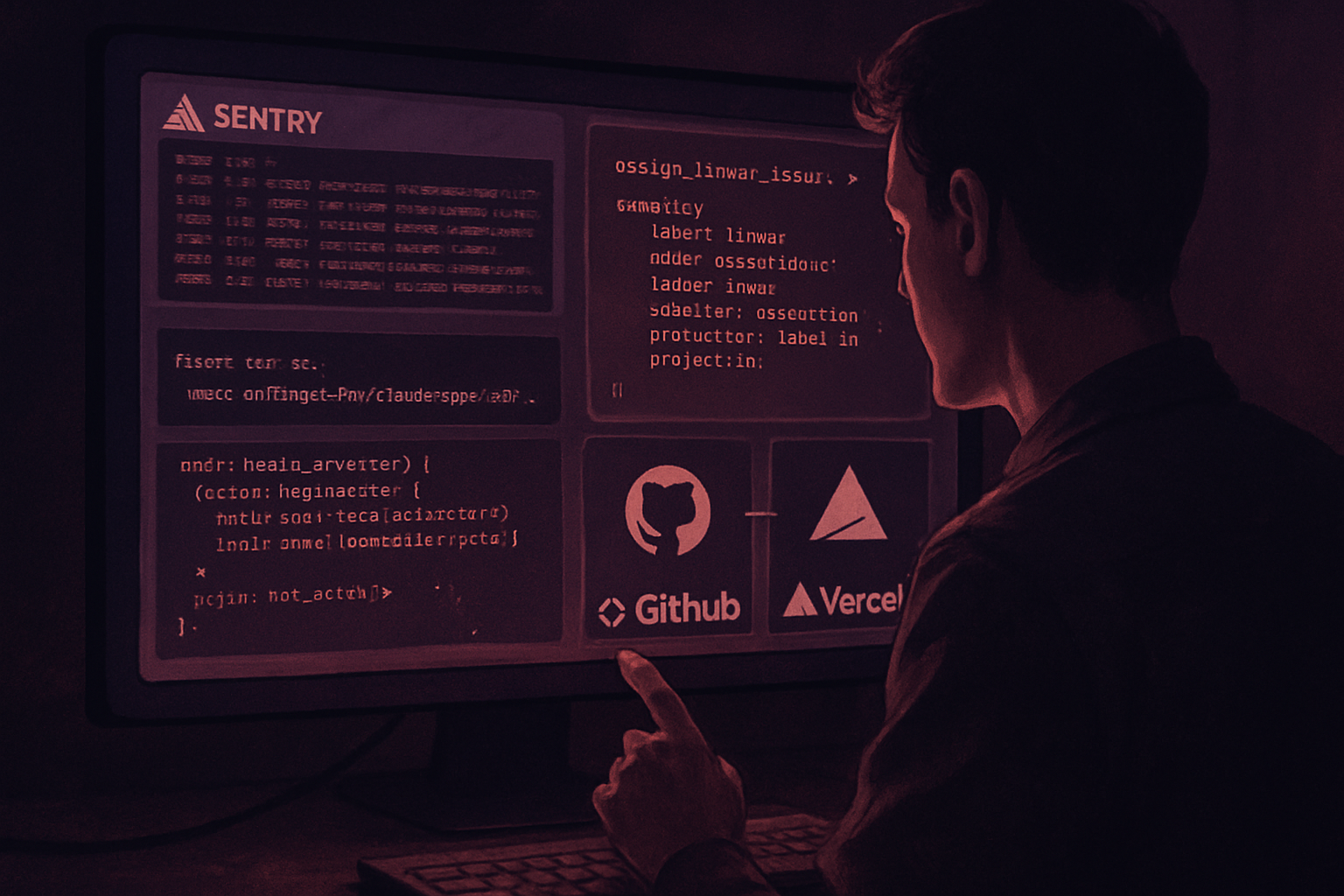
In the tech world, the phrase "It's not the model, it's the harness" is often heard but rarely explained. To clarify this concept, a concrete example was presented during a live show where a bug debugging harness was built for the company ChatPRD. This harness was developed using the Claude Agent SDK, accompanied by a custom terminal interface crafted with the Ink library. Specific adapters for Sentry, Linear, GitHub, and Vercel were integrated for effective bug management. This harness allows for the collection of evidence, analysis of root causes, and creation of tracking artifacts, thus eliminating the need for repetitive manual interventions.
Key Learnings
The article offers an in-depth exploration of what a harness is, explaining when it is relevant to build one, as opposed to using general-purpose tools like Claude Code or Codex. It also discusses how to encode specific permissions within a harness and describes the three essential components that every harness must possess. The use of GPT-5.5 and Claude Opus for developing the harness code is detailed, highlighting the initial challenges encountered. Finally, the article explains how to structure the artifacts produced by the harness so that they are usable by the entire team.
Episode Overview
The episode begins with a clear definition of what an AI harness is, followed by a discussion on the opportune moments to build one. Claire, the host, explains why she chose to focus on bug triaging. She then addresses the question of why not simply use Claude Code. A demonstration of the custom harness interface is then presented, followed by a detailed explanation of the architecture involving executions, tasks, tools, and artifacts. The construction of the harness with Codex and Claude is also covered, including a code map and file layout. The episode concludes with an overview of the code and the results of the live investigation, along with instructions on how to build your own harness.
Tools Used
Several tools were referenced throughout the article, including the Claude Agent SDK from Anthropic, the Claude Sonnet 4.6 model used in the harness, and Claude Opus for harness construction. GPT-5.5 (Codex) was also utilized in this process. The Ink library was used to create the terminal interface for Node.js. For error monitoring, Sentry was employed, while Linear was used for project management. GitHub and Vercel also played a crucial role in integrating the various features.
Where to Follow Claire Vo
For those interested in learning more about Claire Vo and her projects, several resources are available. The ChatPRD website, accessible at chatprd.ai, offers detailed information about her initiatives. Claire Vo is also active on her personal website clairevo.com, as well as on LinkedIn at clairevo and on X at clairevo.
Brief IA — L'actualité IA en français
L'essentiel de l'actualité de l'intelligence artificielle, décrypté et expliqué chaque jour.