Claude Code: Align Your Intentions with Coding Agents
Le brief IA que les pros lisent chaque soir
Les 7 actus IA du jour, décryptées en 5 min. Gratuit.
Inclus dès l'inscription : notre sélection des meilleurs guides & comparatifs IA.
Choisis ton rythme
Gratuit · Pas de spam · Désabonnement en 1 clic
Gaining speed with Claude Code or Codex is not enough if the agent does not implement exactly what is intended. Pragmatic techniques exist to reduce back-and-forth communication and clarify expectations, ranging from a planning mode that asks questions before acting to highly contextual prompts. The most effective method involves having the agent validate its own understanding, a loop that can be repeated 10 to 20 times a day. An example from a Vercel application also demonstrates how to monitor more than 15 agents, detect those that require input, and respond through predefined options generated by a LLM.
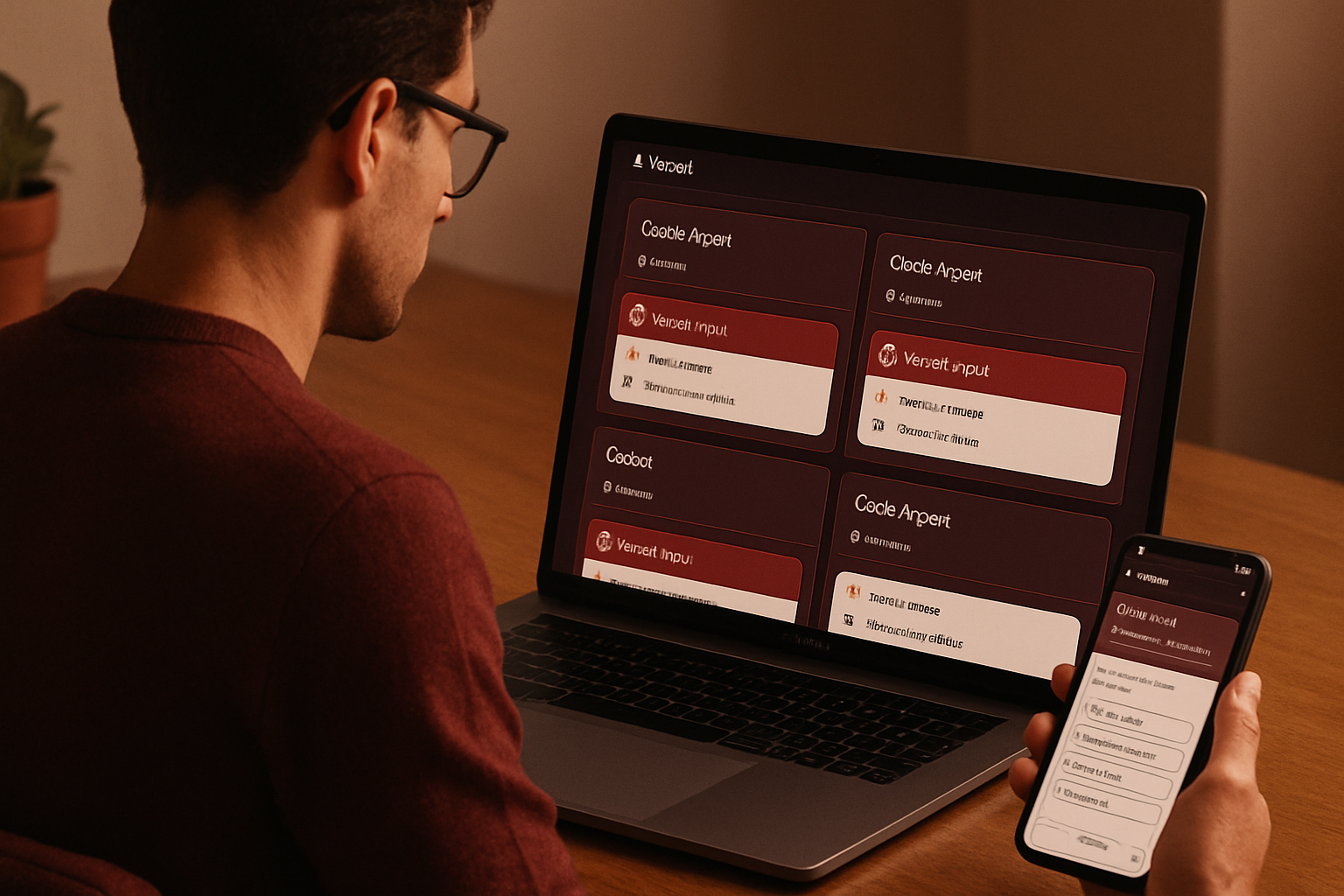
Supervising More Than 15 Agents via a Vercel Application
The need for coordination increased when more than 15 agents were operating in parallel. To address this, a web application in the form of a Vercel site was designed to access coding agents from a phone or Mac. This setup simplifies the identification of agents that can continue independently and those that are waiting for input, and it adds a scanning feature to quickly browse all agents. The idea serves a single purpose: to make interaction more efficient when the volume of agents makes it difficult to maintain an overview.
An implementation plan outlined clear requirements. The application must be accessible and optimized for mobile and PC, display all agents, whether based on Codex or Claude Code, and facilitate the detection of autonomous agents or those awaiting input, with alerts to support this. It should also leverage a LLM to simplify queries and, most of the time, provide responses through predetermined alternatives. An agent was tasked with establishing the plan and describing the construction of the application. Subsequently, clarifications were requested regarding how the LLM functions, particularly in identifying pending tasks and generating multiple-choice questions from the relevant threads, with an explicit request for validation of understanding.
Having the Agent Validate Its Understanding, in a Loop
The central technique involves presenting one’s understanding and asking the agent if it is correct. Used iteratively, this loop can be repeated 10 to 20 times a day, or even more on very active days, to remain strictly aligned. It shifts the burden of questions to the agent, preventing the human from having to formulate them and enhancing the efficiency of the dialogue.
Two benefits arise from this approach. On one hand, the human closely follows all the topics addressed by the agent. On the other hand, the agent reads the proposed perspective and indicates whether it is incorrect, completely correct, or partially correct, which facilitates targeted correction of misunderstandings. This approach contrasts with the alternative where the agent explains all the work done before verification and manual testing: this route does not guarantee either the completeness of understanding or its verifiability.
Allowing the Agent to Plan and Question Before Writing Code
Activating the planning mode prompts the agent to audit the repository in read-only mode and propose an implementation plan. In this context, the agent asks clarifying questions, which improves alignment and speeds up exchanges, as it is quicker to respond to targeted questions than to query the agent about its understanding. Allowing the agent to lead the questioning proves to be more effective for aligning intentions.
However, this mode is not essential for small tasks when the initial prompt is sufficiently clear. It is particularly relevant for broader topics, where prior planning and questioning prevent costly iterations.
Writing Context-Rich Prompts, Without Length Limitations
Detailed prompts that accumulate context improve the accuracy of implementations. Length is not a barrier: adding text is not an issue when the context makes the intention clearer. This context can be reformulated by the prompt author or aggregated from heterogeneous sources.
Useful contributions include Slack messages with screenshots or Notion knowledge base pages. It is recommended to ensure the agent has access to these resources and to ask it to actively utilize them during implementation and research. An effective variant involves mobilizing a separate coding agent to prepare a very detailed prompt, acting as a pre-work agent and integrating answers to questions that the main agent would otherwise have to ask.
Measuring the Cost of Misalignment and Securing Intent
Misalignment manifests as unwanted design choices or faulty logic in the implemented functionality. It necessitates successive cycles of review and feedback and increases the human time required to complete the task. The cost is significant and justifies a methodical investment to clarify intent before and during implementation.
As coding accelerates with agents like Claude Code or Codex, the value of time increases, and even minor approximations weigh more heavily. Hence, the importance of practices that secure understanding of what needs to be done and reduce revisions: defining the alignment objective, clarifying intent to limit the agent's erroneous assumptions, and treating alignment as a priority bottleneck to manage alongside the choice of topics to work on.
Brief IA — L'actualité IA en français
L'essentiel de l'actualité de l'intelligence artificielle, décrypté et expliqué chaque jour.