Claude Code: Mastering Multi-Step Tasks with Five Methods
Le brief IA que les pros lisent chaque soir
Les 7 actus IA du jour, décryptées en 5 min. Gratuit.
Inclus dès l'inscription : notre sélection des meilleurs guides & comparatifs IA.
Choisis ton rythme
Gratuit · Pas de spam · Désabonnement en 1 clic
On May 28, Claude Code expanded its toolkit for executing multi-step tasks by introducing a fifth method. However, even seasoned engineers can make mistakes when choosing the appropriate method. Contrary to what one might think, the number of agents created is not the primary criterion for selecting among Claude Code's multi-step primitives.
The Five Available Methods
Claude Code offers five distinct approaches to successfully carry out complex tasks:
- Single Agent
- Sub-Agents
- Skills
- Agent Teams
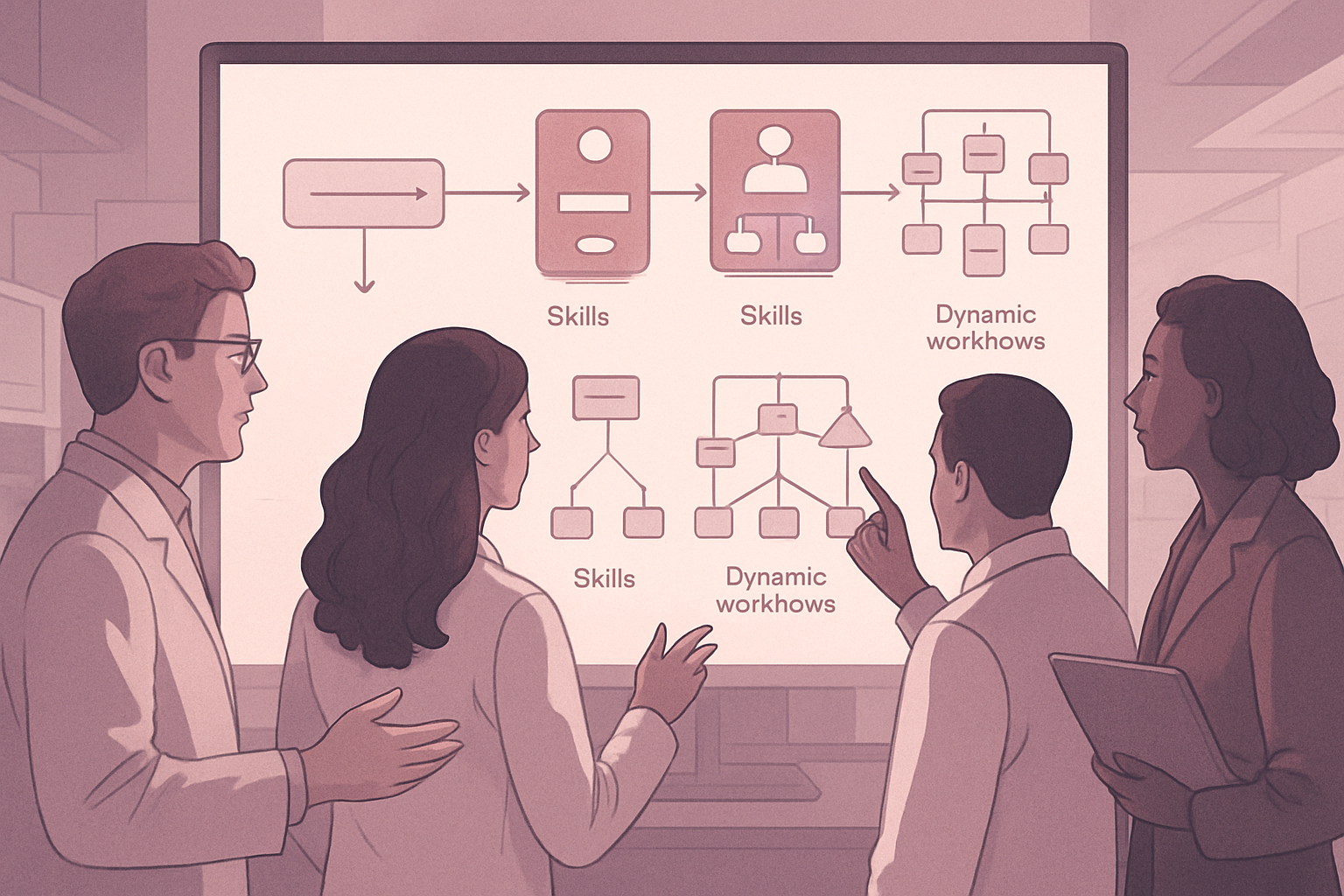
- Dynamic Workflows
It is important to note that skills, while encapsulating know-how, are not intended to orchestrate or create agents.
Key Questions for Effective Orchestration
To determine the most suitable orchestration method, two crucial questions must be considered:
-
Who holds the plan?
- The plan can be held by the model or by the code. In the case of dynamic workflows, the plan is transferred to JavaScript to ensure determinism, repeatability, and verifiable coordination.
-
How many memories or contexts are needed?
- This can range from a single context to isolated sub-agent contexts, up to coordination by agent teams using shared codebases.
Practical Tips to Avoid Pitfalls
It is advisable to use these questions in order, opting for the simplest solution that meets the needs. Special attention should be paid to the first execution to avoid the "thirty times tax," which occurs when overly complex orchestration is used for tasks that do not require it.
Brief IA — L'actualité IA en français
L'essentiel de l'actualité de l'intelligence artificielle, décrypté et expliqué chaque jour.