Claude Code: Master the 4 Essential Types of Loops
Claude Code: Master the 4 Essential Types of Loops
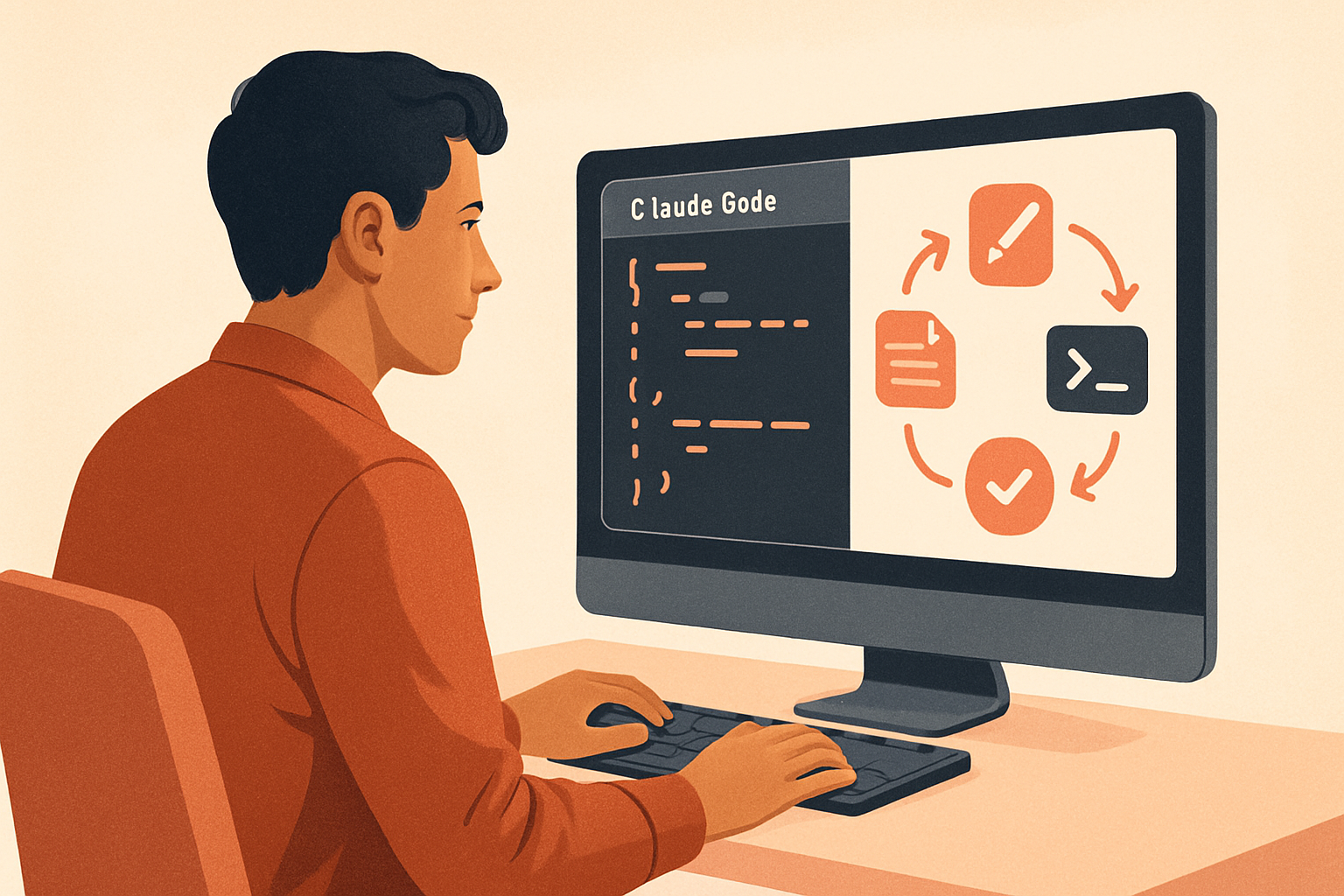
When we interact with Claude Code, we generally go through repeated cycles while accomplishing a task, also known as loops. These cycles can be managed by us (in which case it is a typical turn-based loop) or by Claude himself (in which case it is an automated loop). But regardless of the approach we use, the fundamental logic remains the same: at each iteration, Claude examines the current state of the task, decides on the next action to take, executes that action, and then evaluates the result.
Le brief IA que les pros lisent chaque soir
Les 7 actus IA du jour, décryptées en 5 min. Gratuit.
Inclus dès l'inscription : notre sélection des meilleurs guides & comparatifs IA.
Choisis ton rythme
Gratuit · Pas de spam · Désabonnement en 1 clic
There are 4 types of loops that you can use in Claude Code.
1. Turn-Based Loop
A turn-based loop is the standard way to work with Claude Code:
- You give an instruction → Claude acts → Claude returns the result → you review and issue a new instruction.
Claude can perform multiple actions during the same turn, such as reading files, modifying code, executing commands, checking output, but he does not start another turn until you have responded.
Example of a turn-based loop: designing a new page.
Brief IA — L'actualité IA en français
L'essentiel de l'actualité de l'intelligence artificielle, décrypté et expliqué chaque jour.