Claude Code: Measuring AI by Human Impact
A New Approach to Measuring AI Success
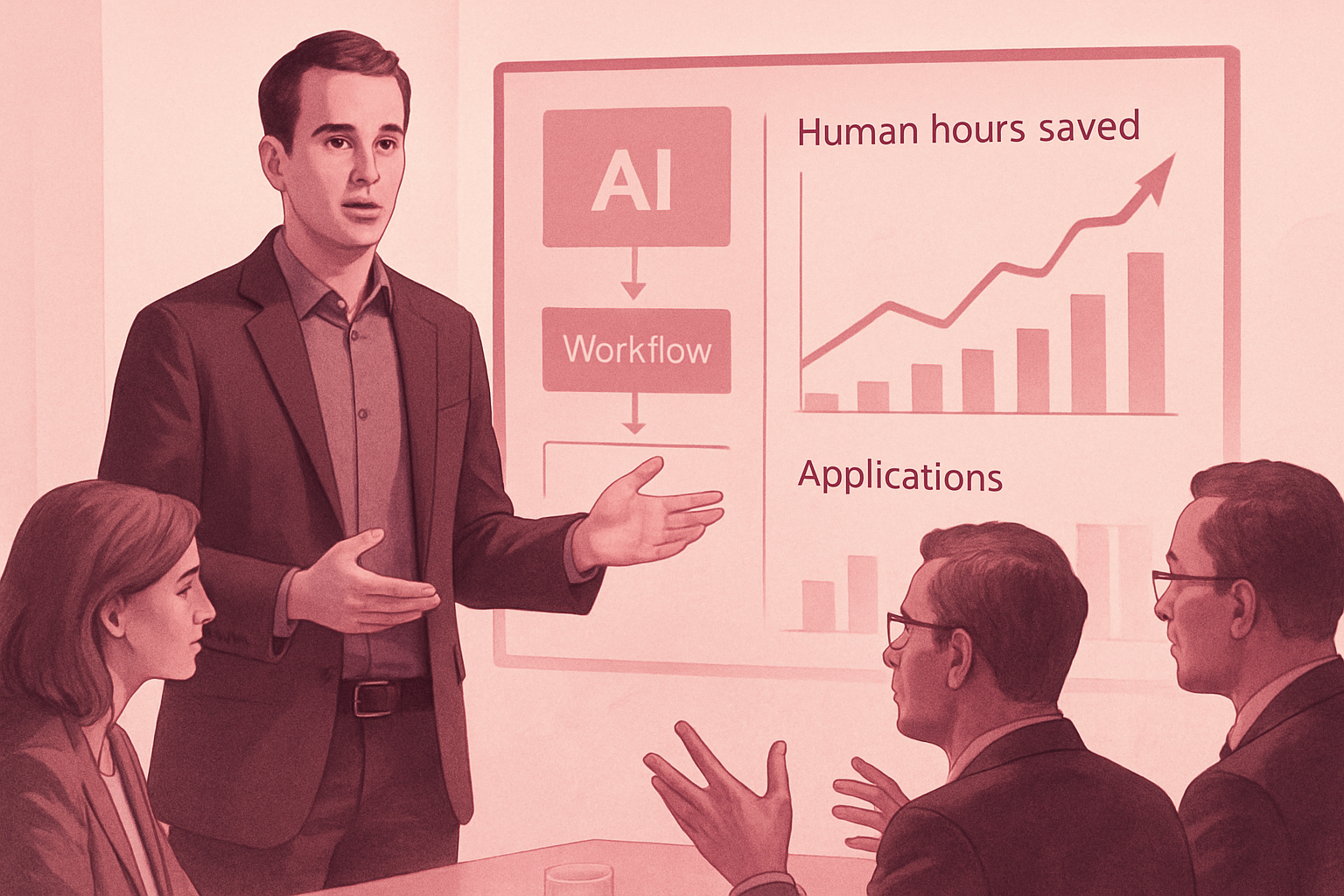
Boris Cherny, the mastermind behind Claude Code and designer of Anthropic's most important coding tool, proposes a new method for evaluating the effectiveness of artificial intelligence technologies. Instead of focusing on the number of tokens consumed, Cherny suggests that companies should measure the hours of human work saved through AI. This proposal comes as many businesses seek to optimize their rising expenditures on artificial intelligence. The return on investment (ROI) of AI has become a central topic in the business world.
A Four-Step Framework for AI Adoption
In a series of posts on X Thursday, Boris Cherny outlined a four-step framework for integrating AI into businesses. During the third step, he emphasized the importance of measuring returns once AI is integrated into employees' workflows. He explained that simply monitoring usage via a dashboard is insufficient, as it only reflects activity and not the actual return on investment.
Evaluating Saved Engineering Efforts
Cherny proposes asking the following question: if AI had not been used, how much engineering effort would have been required to accomplish the same task? By calculating the cost in hours of manual engineering, companies can better assess the return on investment of AI. He insists that this approach allows for a clearer understanding of AI's real impact on team efficiency.
Le brief IA que les pros lisent chaque soir
Les 7 actus IA du jour, décryptées en 5 min. Gratuit.
Inclus dès l'inscription : notre sélection des meilleurs guides & comparatifs IA.
Choisissez votre rythme
Gratuit · Pas de spam · Désabonnement en 1 clic
The Impact of AI on Innovation
In a subsequent post, Cherny stated that the true advantage of AI manifests when corrections and maintenance occur in the background, freeing teams to focus on creation. This paves the way for innovations that were previously unimaginable. Companies can thus explore new opportunities and push the boundaries of what is possible.
Thoughts on AI's Return on Investment
This is not the first time Cherny has addressed the topic of AI's return on investment. During a discussion with Scale AI, he emphasized that companies need to consider the added value provided by AI, which can manifest in various ways, such as accelerating code development by engineers.
The End of "Tokenmaxxing"
Cherny's comments come at a time when the trend of "tokenmaxxing" is fading. Companies are now looking to maximize the value obtained for every euro spent on AI. Firms like Coinbase and Vercel have shared strategies to reduce costs while maintaining AI usage, such as opting for more affordable Chinese models.
The Rising Cost of AI
The debate over AI's return on investment is intensifying, with influential figures in the business world taking a stand. Jamie Dimon, CEO of JPMorgan, recently stated to CNBC that AI-related costs are rising rapidly, prompting companies to adopt a rational approach. Sam Altman, CEO of OpenAI, also highlighted the importance of this issue during the Allen & Co. conference in Sun Valley, mentioning in an interview with CNBC at the Idaho event that reducing expenses and increasing value are major concerns for businesses.
Brief IA — L'actualité IA en français
L'essentiel de l'actualité de l'intelligence artificielle, décrypté et expliqué chaque jour.