Claude Code Revolutionizes AI: Loops Replace Prompts
Le brief IA que les pros lisent chaque soir
Les 7 actus IA du jour, décryptées en 5 min. Gratuit.
Inclus dès l'inscription : notre sélection des meilleurs guides & comparatifs IA.
Choisis ton rythme
Gratuit · Pas de spam · Désabonnement en 1 clic
Claude Code: A New Era for AI
Boris Cherny, the mind behind Claude Code, recently shared a vision that is transforming the way we interact with artificial intelligence. In June 2026, he stated: “I no longer ask Claude. I have loops that interact with Claude and determine what to do. My job is to write loops.” This statement highlights a fundamental shift in the approach to AI, where the focus is on creating autonomous systems rather than direct interaction through prompts.
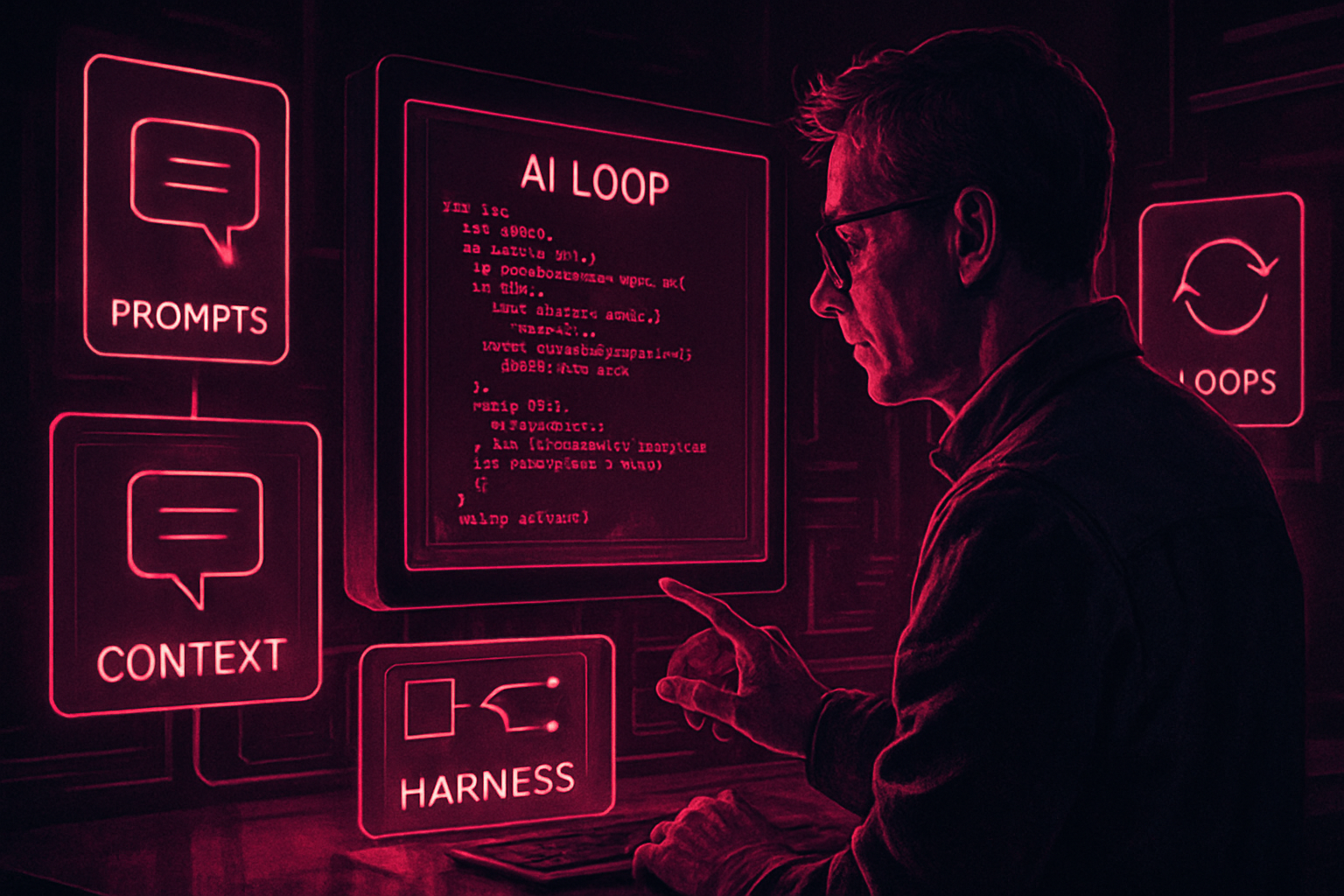
Over the past four years, the most valuable skill in applied AI has evolved through four distinct layers. Each step marked a shift towards a more systemic design, gradually replacing manual tasks with automated and sophisticated processes.
Prompt Engineering: The First Step
The first layer, known as prompt engineering, focuses on using a string of text as the main input. This method relies on the precise formulation of prompts to guide the AI model. Techniques such as few-shot learning, chain-of-thought, and ReAct are employed to structure these prompts. However, this approach has a certain fragility, as it assumes that the model already possesses all the necessary information to complete its task.
Context Engineering: A More Nuanced Approach
The second layer, context engineering, aims to optimize the use of an AI model's limited context window. This involves filling this window with the most relevant information through techniques of retrieval, memory, and synthesis. The goal is to avoid context degradation, but this method still requires human intervention to select the information to be integrated and determine the right moment to do so.
Harness Engineering: A Controlled Environment
The third layer, called harness engineering, creates an environment around the AI agent. This environment includes tools, permissions, sandboxing mechanisms, lifecycle hooks, retries, traces, and sub-agents. This approach shifts reliability concerns towards the configuration of the environment, thereby reducing the importance of the model's internal behavior.
Loop Engineering: Towards Complete Automation
Finally, the fourth layer, loop engineering, allows the system to be programmed to execute repeatedly without requiring constant manual prompts. This method includes the use of triggers, goal and state persistence, scouting tasks, invoking embedded agents, and output verification often performed by a second agent. Additionally, it allows for memory writing through iterations, making the system more autonomous.
The article concludes by proposing a diagnostic to identify the layer you are currently practicing and offers advice for advancing to higher levels. It suggests that the next step after loops could involve fleets of coordinated loops, further distancing the highest-paid skills from direct prompt writing.
Brief IA — L'actualité IA en français
L'essentiel de l'actualité de l'intelligence artificielle, décrypté et expliqué chaque jour.