Claude and Watermarking: Can AI Really Be Hidden?
Le brief IA que les pros lisent chaque soir
Les 7 actus IA du jour, décryptées en 5 min. Gratuit.
Inclus dès l'inscription : notre sélection des meilleurs guides & comparatifs IA.
Choisis ton rythme
Gratuit · Pas de spam · Désabonnement en 1 clic
Anthropic's Initiative: A Watermark for Claude
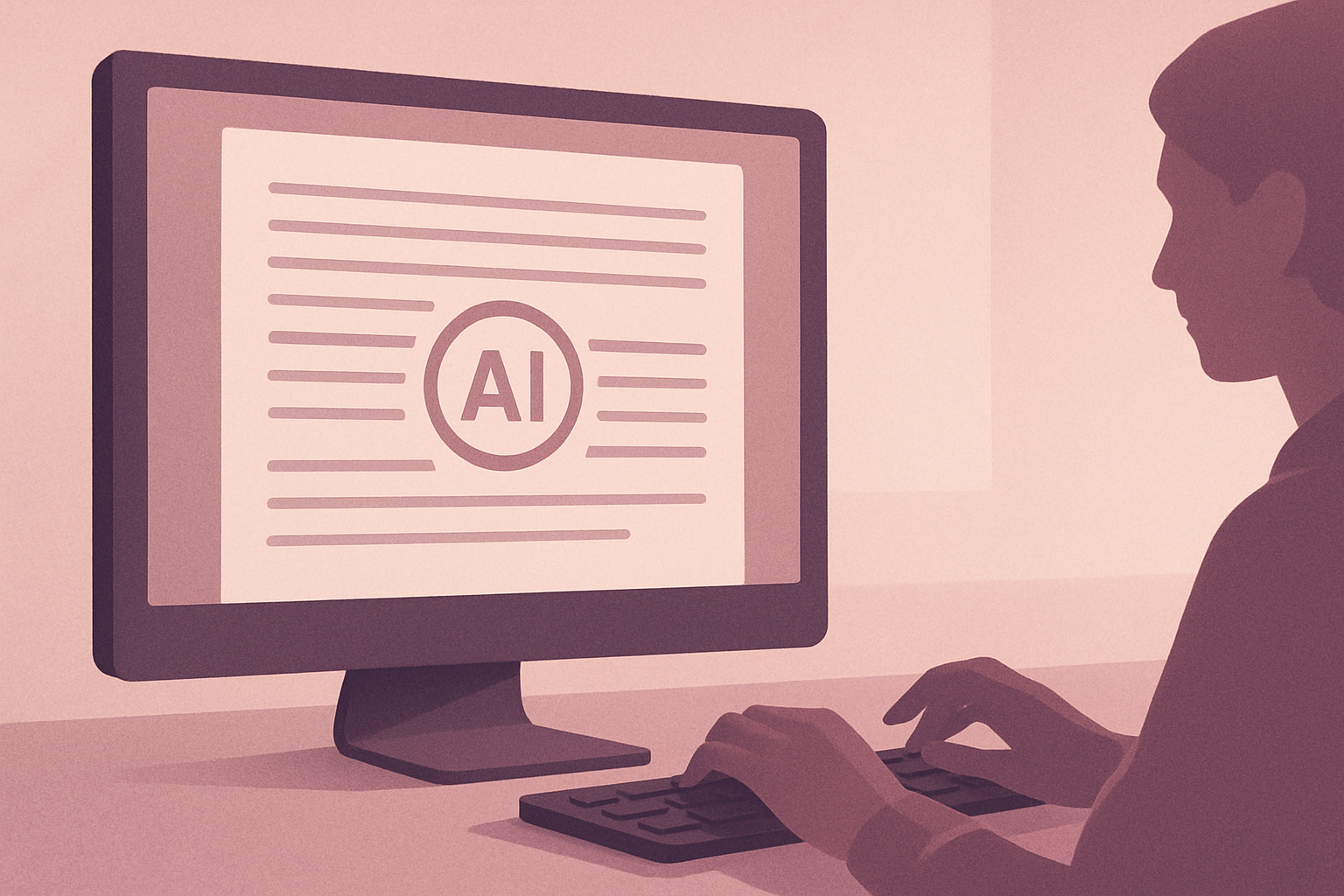
Anthropic, a company specializing in artificial intelligence, recently announced that it would add a watermark to its AI model, Claude. This initiative aims to make texts generated by Claude easily identifiable, thereby facilitating the detection of AI-produced content. This move could particularly concern students who use AI to write their assignments, as well as professionals who rely on these technologies to compose emails or social media posts without wanting to disclose it.
Pangram, another player in the sector, plans to launch a feature integrated into Gmail that will allow users to flag emails written by AI. This feature was discovered by journalist and researcher Jane Manchun Wong, and Pangram's CEO, Max Spero, confirmed that they hope to launch it soon, pending certain approvals with Google. This integration will analyze incoming emails to label those generated by AI, with an option to move them to the Spam or Trash folder.
The Impact on AI Users
The implementation of these watermarks could have a deterrent effect, especially for students using AI to write their assignments. Similarly, professionals who rely on these technologies to compose emails or social media posts might hesitate to continue if their usage becomes public. However, for many users, the idea of being "caught" using AI is not necessarily embarrassing.
Using AI for everyday tasks such as drafting emails, internal documents, or meeting notes is widespread and often perceived as a simple efficiency tool. Y Combinator's CEO, Garry Tan, even proudly claimed his status as an AI writer by stating, "I’m well caught, you got me," in response to those who believe that only humans should write content intended for other humans.
Common Uses of AI in Writing
AI-generated writing is not limited to public or creative content. It is often used for less visible but essential tasks, such as drafting research reports, internal messages, or meeting summaries. In these contexts, the use of AI is often accepted, even encouraged, as it saves time and improves productivity.
Thus, while using AI for academic or literary work may be controversial, its application in everyday professional contexts is generally well accepted. Users may therefore continue to utilize these tools, even if their usage is detectable.
The Reaction of Companies and Users
Some companies, like Pangram, are betting on the need to detect AI-generated content. Their integration with Gmail, which analyzes emails to identify those written by AI, is an example of this. This feature could allow users to better manage their electronic communications by filtering automatically generated content.
However, this race for detection could turn into an endless game between AI creators and detection tool developers. The potential errors of these tools raise questions about their reliability and impact on users. Anthropic and other AI detection tools have warned that these systems are designed to occasionally make mistakes.
Towards Normalization of AI Writing?
The increasing integration of AI detectors and watermarks into digital tools raises questions about the evolution of standards surrounding AI writing. While certain uses, such as academic writing, will likely remain controversial, others could become the norm.
For many users, the acceptance of AI in daily writing could translate into greater transparency regarding the use of these technologies. Thus, watermarking could become just another tool to enhance the quality and efficiency of writing, without stigmatizing those who choose to use it.
Brief IA — L'actualité IA en français
L'essentiel de l'actualité de l'intelligence artificielle, décrypté et expliqué chaque jour.