Claude Amazes by Creating SVG Illustrations with Code
Le brief IA que les pros lisent chaque soir
Les 7 actus IA du jour, décryptées en 5 min. Gratuit.
Inclus dès l'inscription : notre sélection des meilleurs guides & comparatifs IA.
Choisis ton rythme
Gratuit · Pas de spam · Désabonnement en 1 clic
Claude Amazes by Creating SVG Illustrations Through Code
Everyone says Claude can't create images. That's partly true. Here’s the type of art he produces autonomously, without plugins or connectors: the sun rays rotate and the clouds drift. Drawn by Claude in SVG, with no image model nearby. No pixels, just code: shapes and coordinates that remain sharp at any size and redraw themselves when you ask.
How It Works, in One Minute
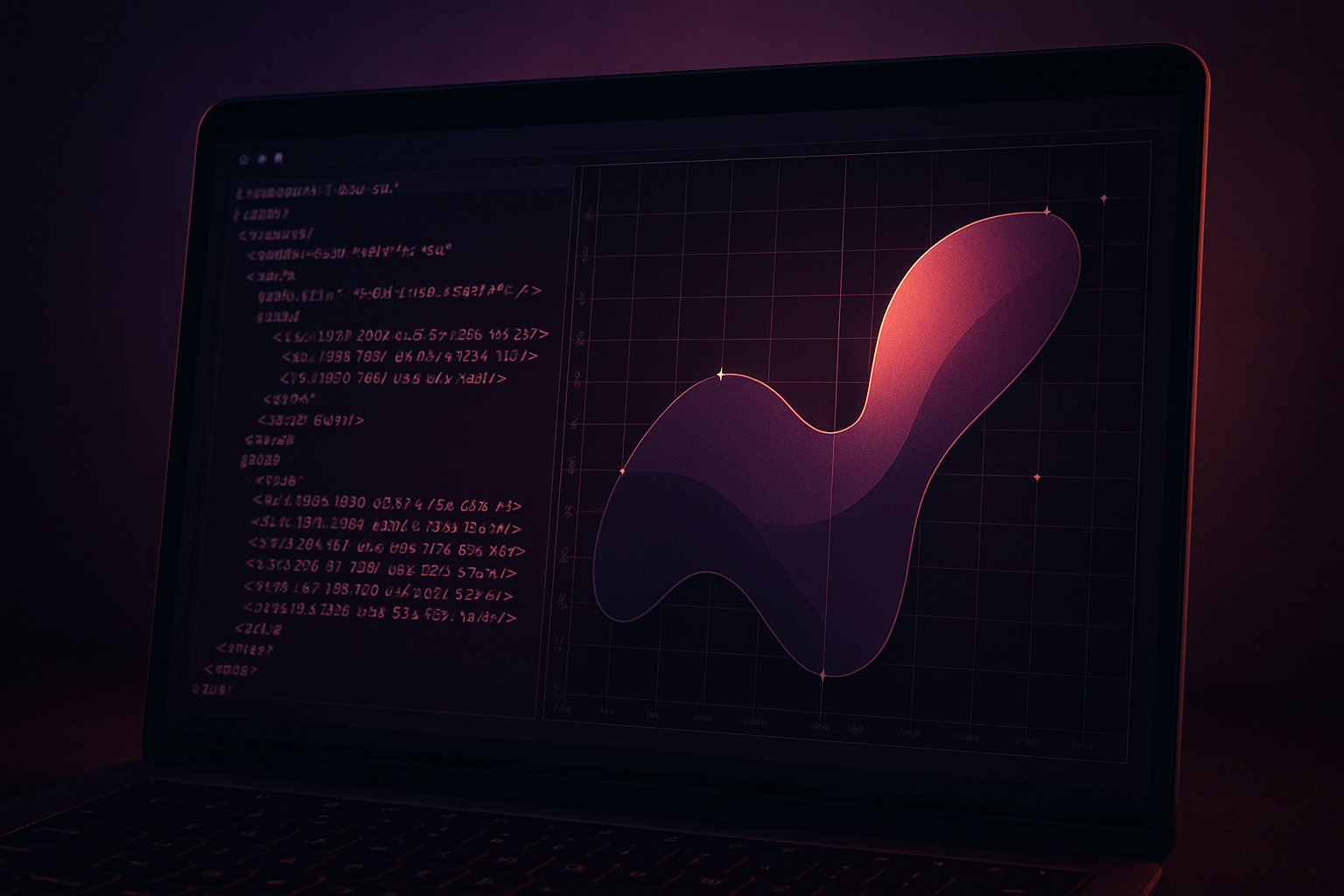
When Claude creates a visual, he writes in SVG. Instead of painting a grid of colored dots, SVG describes an image through shapes and coordinates: a circle here, a line there, this color, that angle. It’s a recipe for a drawing rather than a photograph.
Two useful things follow from this. First, the art remains incredibly sharp at any size because the shapes are recalculated instead of being stretched. Second, and this is the most important part, you can change the image by modifying the words, which is the trick we’ll come back to.
The Range (Practical)
Here are five pieces, each created from a single request in plain English. The prompt is below each so you can try it yourself.
-
Single Weight Line Art
- Draw a potted plant as minimalist single weight line art. Black lines only, no fill, rounded ends.
-
Isometric Three-Faced Shadows
- Create a small isometric house. Three shaded faces, warm windows, a small flag on top.
-
A Set of Icons in a Consistent Style
- Give me a set of flat weather icons: sun, cloud, rain, snow, lightning. Keep a consistent style.
-
A Small Data Panel
- Turn this into a clean bar chart: Mon 7, Tue 11, Wed 9, Thu 15, Fri 20. Highlight the best day.
-
A Flat Character Illustration
- Draw a cute sitting fox in a flat illustration style, warm palette, simple shapes.
The Trick That Image Generators Don’t Have
Here’s the part that’s worth the price of admission. With a normal image generator, a small change means rolling the dice again and hoping the next render keeps everything you loved. With Claude's drawings, you just say what to change, and he modifies the image you already have.
Watch a regular cup receive a few requests, one phrase at a time.
- Starting image on the left. After 3 modifications on the right.
- make it coral instead
- add steam rising from the top
- give it polka dots and a small saucer
Three phrases, three modifications, and the cup never lost its shape between steps. Try doing that neatly with a text-image model.
How to Get Good Results
The difference between a "meh" flat and something you’d publish usually depends on how you ask. Here are some habits that help:
-
Name the Style: Say the words out loud: "flat vector," "single line art," "isometric," "editorial illustration." Claude engages much more with a named look than with a vague one.
-
Define the Mood: Give him a palette and a feeling. "Warm sunset colors, calm" beats "make it pretty" every time.
-
Ask for SVG: Request it as SVG to get the sharp, editable version rather than a one-off render.
-
Modify Little: Change one thing per message. Small instructions keep the rest of the drawing intact.
-
Ask for a Set: Need icons or a series? Ask for them together to keep the style consistent.
Where It Shines, Where It Doesn’t
Where It Shines:
- Logos, icons, and icon sets
- Diagrams and explanatory graphics
- Charts and small data panels
- Blog headers and supporting illustrations
- Anything flat, graphic, or geometric
- Anything you’ll continue to modify
Where It Doesn’t Shine:
- Photorealism and realistic people
- Pictorial or textured artwork
- Detailed, organic, and busy scenes
- A photo of my product on a table
- Anything requiring realistic lighting
Being clear about expectations is essential. Promising a pictorial portrait will disappoint. Show them a clean set of icons, a chart, or the fox above, and they’ll often be surprised that it came from a chat window.
Claude won’t paint you a photo. But he will draw you something good, for free, as soon as you ask, and then let you redirect it with a phrase. For a large part of daily visual work—headers, icons, diagrams, small illustrations that make a page livelier—it’s more than enough.
The quickest way to believe it is to open a conversation and ask for one thing. Try "draw me a flat vector mountain scene at sunset in SVG," then tell him to warm up the sky. Watching the image change on command is the moment everything becomes clear.
Frequently Asked Questions
Q1. Can Claude create images without an image generator?
A. Yes. Claude draws in SVG—shapes and coordinates instead of pixels: producing logos, icons, diagrams, and flat illustrations without plugins, connectors, or credits required.
Q2. What type of art can Claude create in SVG?
A. Flat, graphic, vector-style work: single line art, isometric drawings, icon sets, charts, and flat character illustrations. No photorealism, pictorial texture, or busy organic scenes.
Q3. Why is SVG art better than regular images?
A. SVG describes images as shapes, so the art remains incredibly sharp at any size. The best part is that you can edit it by changing the words, without regenerating.
Q4. How is Claude better than other image generators?
A. You can continue directing the same image. Instead of rolling the dice and hoping, you just say what to change, and Claude directly modifies the existing drawing.
Q5. How to get the best results from Claude's SVG drawings?
A. Name the style, define a palette and mood, ask for an SVG, modify one thing per message, and request sets together to keep the style consistent.
Brief IA — L'actualité IA en français
L'essentiel de l'actualité de l'intelligence artificielle, décrypté et expliqué chaque jour.