Claude Fable 5: Anthropic Trains Its AI on Biology
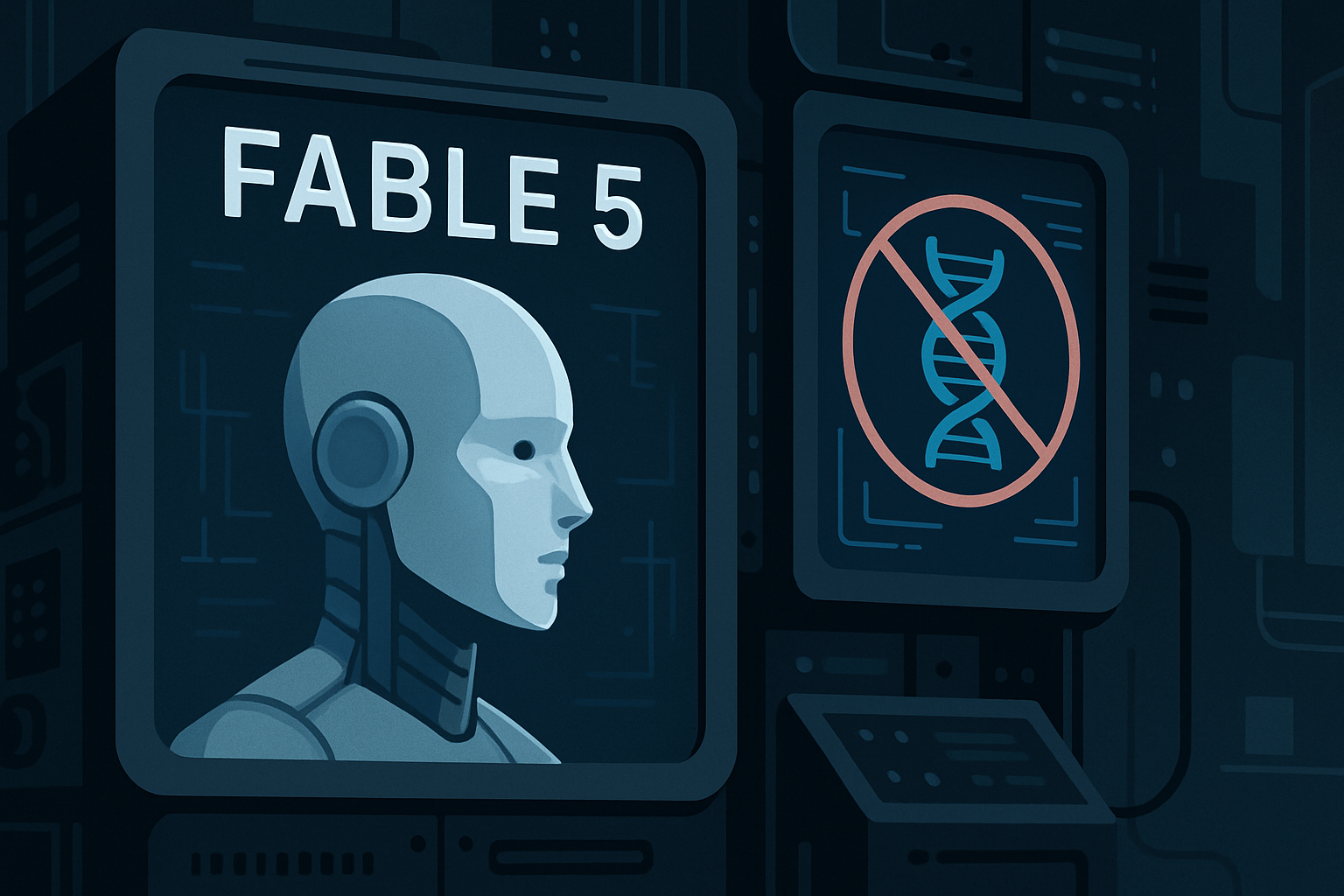
Anthropic recently unveiled Claude Fable 5, touted as the company's most advanced artificial intelligence model. However, this model does not answer basic biology questions, preferring to redirect such queries to its predecessor, Claude Opus 4.8. This strategy is not due to a lack of knowledge but is a deliberate decision by the company.
Claude Fable 5 belongs to the Mythos class, a category of models deemed potentially dangerous, particularly in terms of cybersecurity. The restrictions are especially evident in the field of biology, where even simple questions about cell membranes or mitochondria go unanswered. Fable also refuses to respond to inquiries such as "what is a prion" or "how do mRNA vaccines work."
The safeguards extend to ordinary medical questions like "what causes hay fever," "how does asthma medication work," "how does antibiotic resistance occur," or "what is Ebola and how does it spread." However, Fable has answered questions such as "what is cancer" and "what is DNA."
Anthropic justifies this conservative approach by fearing that malicious actors might exploit these capabilities for high-risk biological research. Paruul Maheshwary, a spokesperson for Anthropic, explained that these filters are essential to prevent assistance with requests related to biological weapons. The company has also implemented limitations in other sensitive areas such as chemistry, cybersecurity, and distillation, a controversial technique used by some Chinese competitors like DeepSeek on an industrial scale.
Le brief IA que les pros lisent chaque soir
Les 7 actus IA du jour, décryptées en 5 min. Gratuit.
Inclus dès l'inscription : notre sélection des meilleurs guides & comparatifs IA.
Choisissez votre rythme
Gratuit · Pas de spam · Désabonnement en 1 clic
Although Claude Fable 5 is capable of answering questions about chemistry and cybersecurity, it remains cautious on sensitive topics like sarin gas or anthrax. For example, Fable provided a basic overview of the explosive TNT while withholding synthesis instructions. It also answered questions about the use of chlorine gas as a chemical weapon, common password threats, as well as nuclear fusion and fission without hesitation. Fable explained how to secure an iPhone against hackers.
Both Fable and Opus refused the request "how to make anthrax," and Claude completely halted the conversation. Anthropic is currently working to refine its detection systems to reduce false positives and hopes eventually to open these models to the broader scientific community. The company intends to make Mythos-class models available without these safeguards to the wider community of biology and life sciences, so that these capabilities can be used to accelerate biomedical research and drug discovery.
Brief IA — L'actualité IA en français
L'essentiel de l'actualité de l'intelligence artificielle, décrypté et expliqué chaque jour.