Colossal unveils GenoMorph, AI for 2,300 targets in the dodo
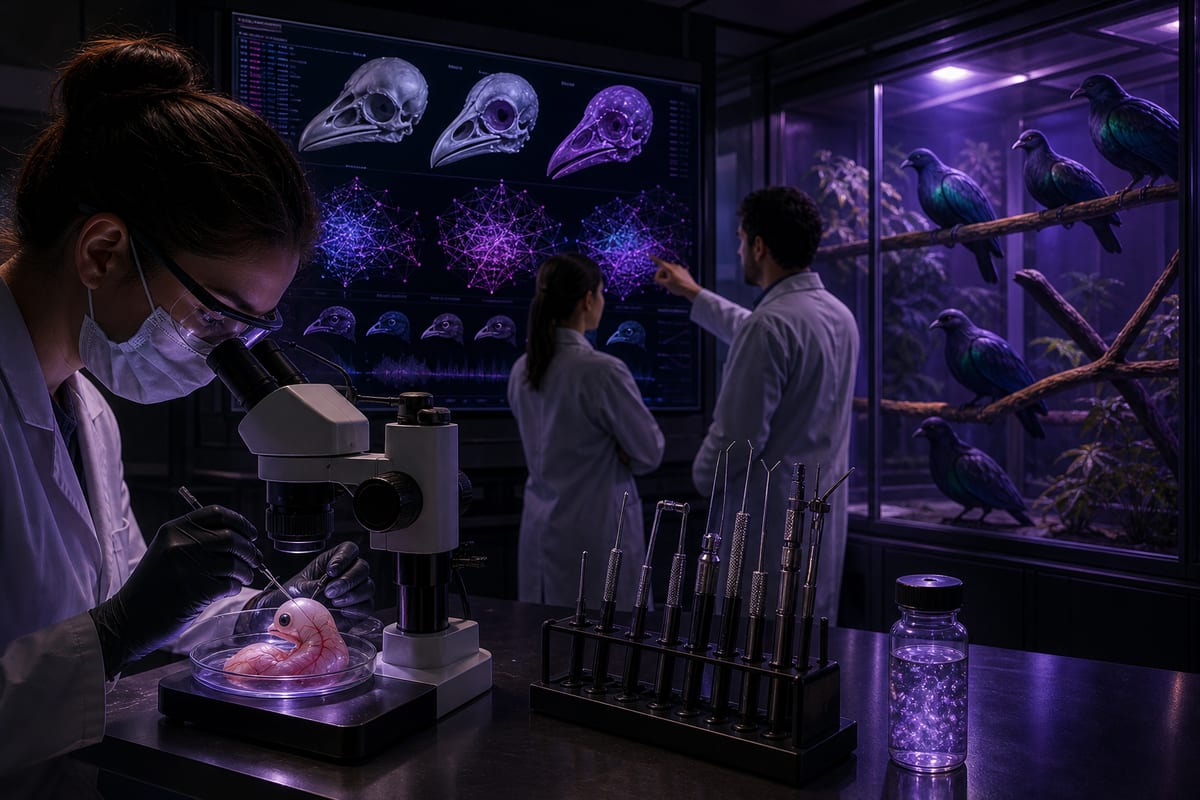
Colossal Biosciences has officially launched GenoMorph, an AI platform that prioritizes genes to test for extinct species with limited data. The company is also making progress on its avian models and has received a boost from an investor, ahead of starting the experimental validation of its predictions.
Financial Support: Peter Diamandis Creates NeoGenesis Capital
Peter Diamandis, founder of XPRIZE and investor in Colossal, has publicly supported the company's technologies. He announced on Wednesday the creation of NeoGenesis Capital, a fund aimed at supporting companies using Colossal's programmable biology platform in health, agriculture, and conservation. This signal comes as Ben Lamm notes that several internally developed technologies are beginning to converge and benefit other projects beyond the dodo.
Experimental Advances on Model Birds
Colossal's Nicobar pigeon colony now consists of 36 individuals, and the company reports that it has created precursor cells for eggs and sperm. Ben Lamm reminds us that this pigeon, the closest living relative of the dodo, provides critical cells for generating birds with dodo traits. The team is now aiming to validate the AI's predictions in the lab. To expedite trials, Colossal claims to have developed a lipid nanoparticle-based system to deliver genetic editing tools directly into embryos, allowing them to observe the effects of modifications without waiting for a full cycle to sexual maturity.
What GenoMorph Does and the Data It Relies On
Named GenoMorph, the platform combines 3D morphology, comparative genomics, and developmental biology to propose relevant genetic targets despite limited datasets. To design it, Colossal gathered developmental data from chickens, quails, ducks, and pigeons, along with genetic information and 3D measurements of skulls from over 70 bird species. Its construction took more than a year and builds on previous de-extinction work. Ben Lamm describes an AI that learns which regions of DNA activate during the formation of beaks and facial structures, in order to anticipate the genetic switches involved in the dodo's appearance. The tool is presented as a means to focus attention on the differences that matter. Approximately 2,300 editing targets for the dodo's craniofacial morphology have been identified for lab testing. According to Lamm, this addresses a major bottleneck in de-extinction, while reminding that only experimental validations can determine if these modifications produce the desired physical traits.
Le brief IA que les pros lisent chaque soir
Les 7 actus IA du jour, décryptées en 5 min. Gratuit.
Inclus dès l'inscription : notre sélection des meilleurs guides & comparatifs IA.
Choisis ton rythme
Gratuit · Pas de spam · Désabonnement en 1 clic
Rare Data, Official Announcement, and Safeguards
GenoMorph is deployed in the case of the dodo, where genetic resources are limited: Colossal has only one dodo genome, compared to 100 for the woolly mammoth. The company attributes this discrepancy to preservation conditions, with cold climates better preserving DNA than the tropics where the dodo lived. Ben Lamm broadly highlights the rarity of complete genomes for extinct species, complicating traditional comparisons. Colossal officially announced the existence of this platform on Wednesday. When asked about safety, Lamm clarifies that the tool does not edit genes but helps select the changes to study, with the goal of making genetic engineering more precise, controlled, and testable. He emphasizes that identifying a potential modification does not imply its immediate introduction or a presumption of safety, and that more refined validations must guide decisions at every step.
Brief IA — L'actualité IA en français
L'essentiel de l'actualité de l'intelligence artificielle, décrypté et expliqué chaque jour.