Combined Models: A Potential 5 to 10% Gain in Accuracy
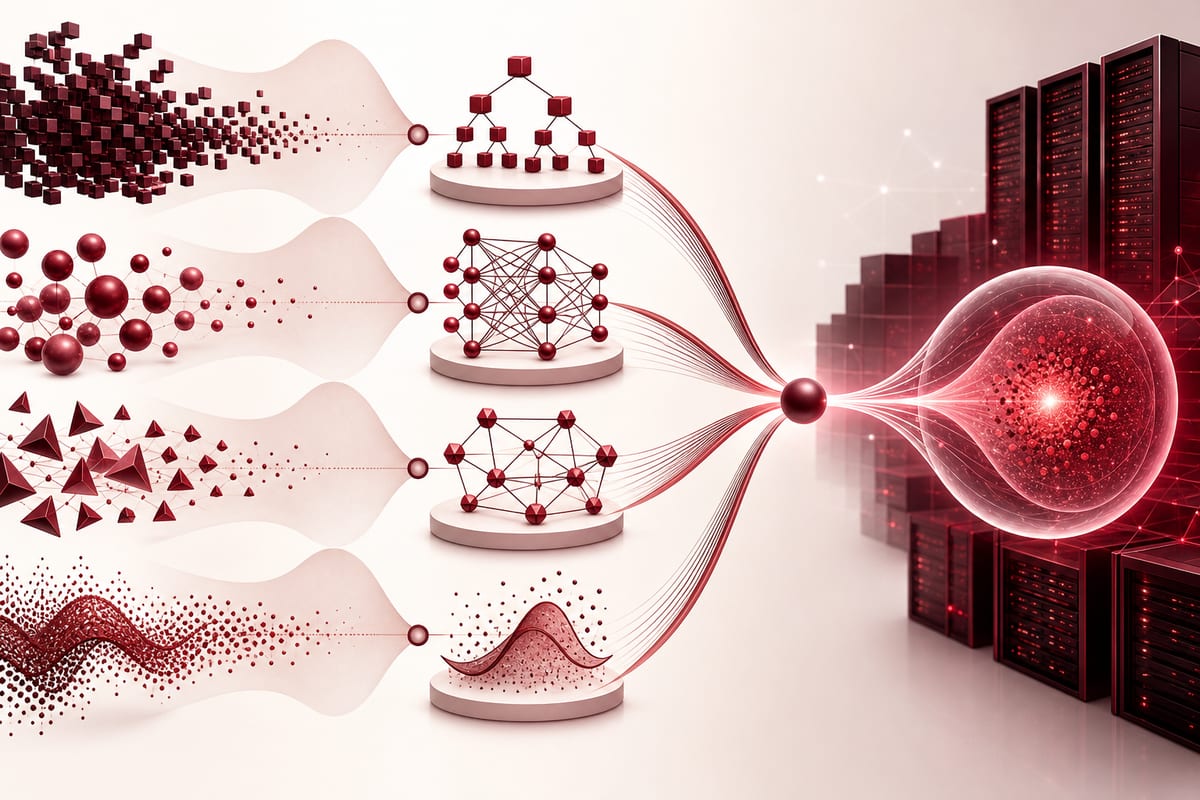
Companies are increasingly turning to ensemble models, which could improve prediction accuracy by 5 to 10% compared to individual models, according to a recent study. These methods combine several algorithms, but their large-scale execution can be costly.
Companies Monitor Their Computing Expenses
At scale, running these ensembles can consume a significant portion of budgets. Their deployment often requires more computing capacity and a strong mobilization of computing resources. These needs push companies to reassess their investment choices and the expected profitability.
Adoption remains cautious: companies seek to limit spending without sacrificing the quality of results. They also have to navigate the emergence of regulations concerning data and algorithms. Expectations for transparency and ethics are simultaneously becoming stronger.
Le brief IA que les pros lisent chaque soir
Les 7 actus IA du jour, décryptées en 5 min. Gratuit.
Inclus dès l'inscription : notre sélection des meilleurs guides & comparatifs IA.
Choisissez votre rythme
Gratuit · Pas de spam · Désabonnement en 1 clic
Bagging, Boosting, and Stacking: Distinct Methods
Now common in the development of intelligent systems, ensemble methods accompany the growth of data volumes. They aim for more accurate and robust predictions, as well as better algorithm efficiency in a competitive context. However, their properties depend on the chosen architecture and intended use.
Among the categories are bagging, boosting, and stacking, which refer to different ways of combining models. With bagging, multiple models learn from subsets of data, aiming to reduce the variance of predictions. Boosting addresses the errors made by preceding models and can achieve significantly better performance.
Experts Recommend Comparing Performance
In certain sectors, an additional point of accuracy can have a significant economic impact.
Industry experts recommend comparing open-weight models and proprietary models to assess actual performance and justify the expenses incurred. Techniques are becoming more sophisticated, while the pressure to justify technological investments increases.
Brief IA — L'actualité IA en français
L'essentiel de l'actualité de l'intelligence artificielle, décrypté et expliqué chaque jour.