Claude Code: The Key to Mastering Parallel Coding Agents
Why Parallel Management of Coding Agents is Complex
Before the advent of large language models (LLMs), software engineers and programmers typically focused on one task at a time. This approach was due to the complexity of software engineering tasks, which required full attention to avoid a drop in efficiency. Multitasking in this field often meant reduced performance, as complex tasks demand sustained concentration.
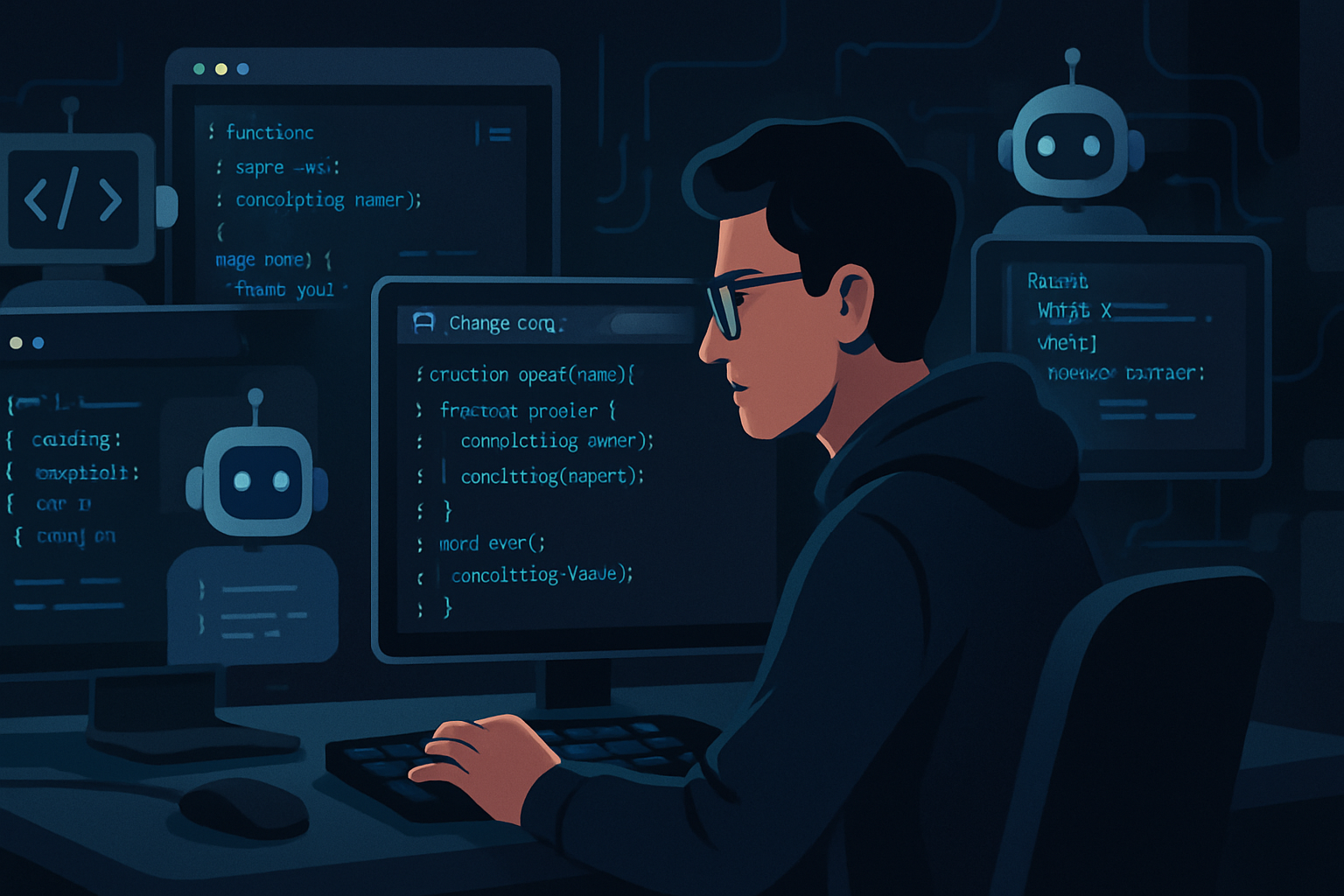
However, technological evolution has disrupted this dynamic. Programmers are no longer required to write every line of code themselves. Coding agents now automate a significant portion of the work, transforming the role of programmers into that of coding agent managers. This transition involves overseeing agents that perform various tasks, often in parallel.
To execute tasks effectively in parallel, it is crucial that these tasks are independent of one another. This presents a challenge similar to traditional multitasking: one must keep a large number of contexts in working memory and be ready to respond to questions from coding agents or test their implementations once completed.
Techniques for Effectively Managing Multiple Agents
Agent View in Claude Code
An effective method for supervising multiple agents is to use an agent view, such as that offered by Claude Code. This feature is also available from other providers, but Claude Code offers a unique approach. For example, the Warp terminal recently introduced a new way to visualize multiple agents simultaneously.
The agent view prevents cluttering the screen with each conversation in full screen. Instead, each agent appears as a simple line, and you just need to press "Enter" to get more details. As long as the agent does not require your intervention, it continues to operate in the background, alerting you only when necessary.
Le brief IA que les pros lisent chaque soir
Les 7 actus IA du jour, décryptées en 5 min. Gratuit.
Inclus dès l'inscription : notre sélection des meilleurs guides & comparatifs IA.
Choisis ton rythme
Gratuit · Pas de spam · Désabonnement en 1 clic
Alerts for Agent Input Needs
It is essential to be informed when coding agents require your input. Claude Code clearly indicates when an agent needs you, especially in agent mode. If this option is not used, other solutions are available.
In the provided example, several Claude Code sessions are running in different terminal tabs. An asterisk appears between the tab title and the Claude Code icon to signal that an agent requires your input. This allows for quick identification of tabs needing action.
Another method is to use sound alerts. Claude Code allows you to set up hooks, which are processes triggered at certain times. A hook can be activated whenever an agent needs your input, and you can link it to an audio signal to alert you.
The Importance of Summaries
Summaries are a valuable feature for effectively managing many coding agents in parallel. A common issue is the difficulty of remembering the context of a particular agent after some time.
Imagine you have five agents running. After interacting with the first agent, you move on to the others, and it may take some time before returning to the first. Without a summary, it can be challenging to remember what you were doing with that agent. The summary feature in Claude Code addresses this problem by providing a recap of your actions and objectives in a discussion thread.
Using New Tabs or Split Panes
Another recommended technique is to use new tabs or split panes. This allows you to visualize multiple coding agents simultaneously without having to click to switch between them. For instance, in the Warp terminal, you can split the display horizontally to work on two terminals at the same time.
Personally, I like to work with a new tab for each folder, and if I manage multiple agents in that folder, I split the panes. This gives me an overview of my coding agents across different repositories.
Conclusion
In this article, I discussed how to maintain an overview of parallel coding sessions. I covered various techniques I apply to effectively manage many agents in parallel while keeping a good overview. I believe the future of programmers lies in their role as orchestrators of coding agents. You will be an AI agent manager, and mastering the art of working with coding agents in parallel will become a crucial skill for the programmers of tomorrow.
Brief IA — L'actualité IA en français
L'essentiel de l'actualité de l'intelligence artificielle, décrypté et expliqué chaque jour.