Hacked AI Accounts: What ChatGPT, Claude, and Perplexity Allow
Le brief IA que les pros lisent chaque soir
Les 7 actus IA du jour, décryptées en 5 min. Gratuit.
Inclus dès l'inscription : notre sélection des meilleurs guides & comparatifs IA.
Choisis ton rythme
Gratuit · Pas de spam · Désabonnement en 1 clic
Accounts on AI platforms can, like any online service, be targeted. To limit the risk, using unique passwords stored in a password manager and enabling multi-factor authentication is recommended. This authentication adds a second piece of information and blocks a connection made with a stolen password.
Perplexity does not show sessions but cuts all connections
Perplexity does not provide a list of devices or browsers connected to the account. In case of suspected unauthorized access, the user can open the menu at the bottom left, select "All Settings," then "Log out of all sessions," and confirm the operation. Reconnection is then done via the email address: after entering it, an email is sent with a unique six-digit code. The code can be entered on the site to reopen the session, or one can click on the "Log in" button included in the message.
ChatGPT: check your devices and reset your password
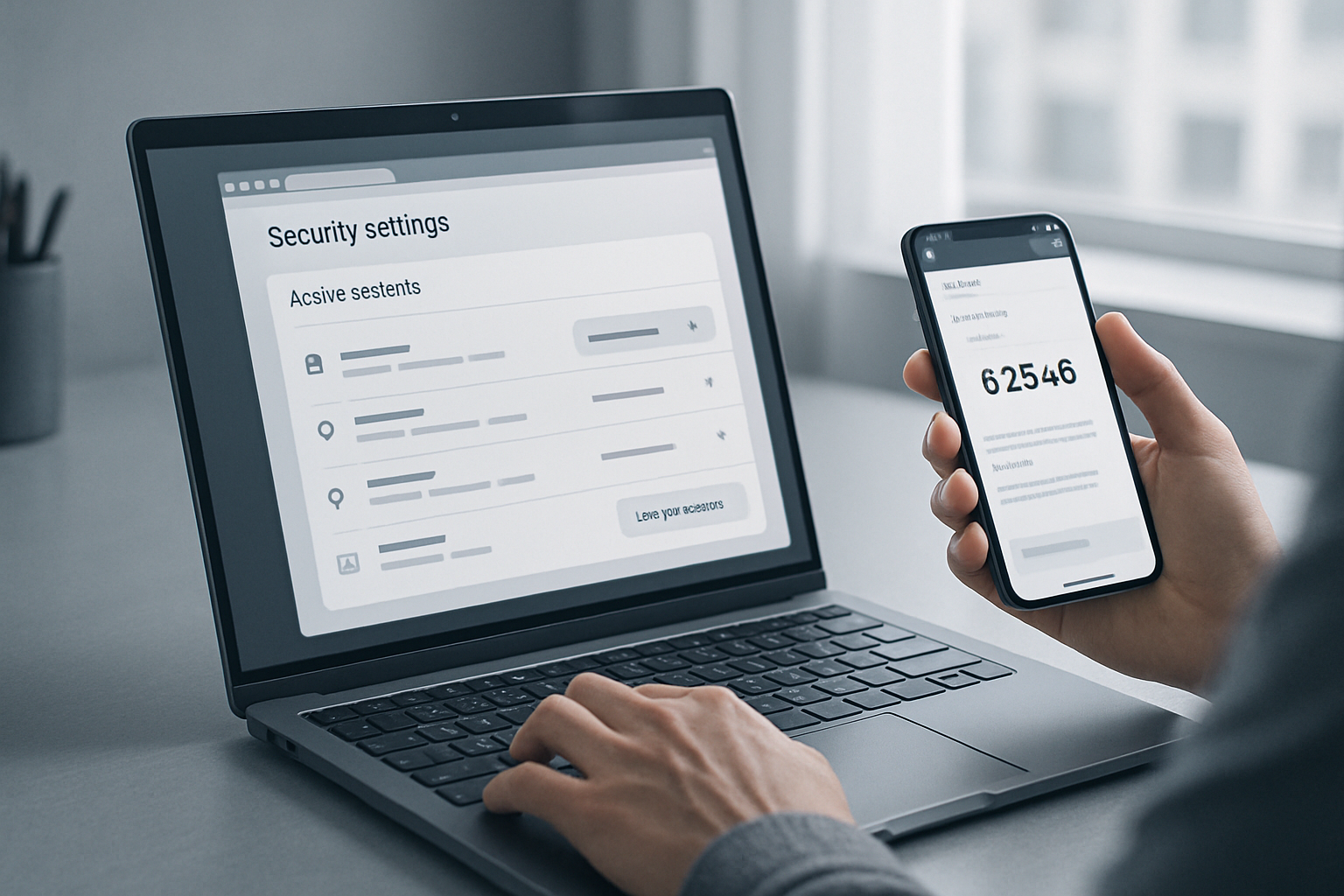
On a computer, the path goes through the username at the bottom left, then "Settings," "Security and Login," and "Active Sessions." The interface displays the locations where the account is open; it is possible to close a specific session if a device seems unfamiliar, or to choose "Log out of all." To change the password, one must first log out. The procedure involves clicking on "Log in," entering the email, selecting "Forgot Password," then "Continue"; an email is sent with a six-digit code. After entering this code and clicking "Continue," a new password can be set; the "reset your password" link in the message also directs to the official instructions.
Claude: manage "Active Sessions" and reconnect via email link
In the browser, click on the username at the bottom left, "Settings," then "Account" to access "Active Sessions." In case of suspicious access, hover over the relevant line, open the vertical three-dot menu, and choose "Log out" or "Terminate"; a command also allows "Log out of all devices." Reconnection is done via the email address, which receives a login link, and there is no password to change.
Enable MFA and know the options by platform
Among these services, ChatGPT and Perplexity offer multi-factor authentication, while Claude does not and uses a login link sent by email instead of a password. Generally, these platforms provide comparable features to verify or control access, even if their presentation differs.
Brief IA — L'actualité IA en français
L'essentiel de l'actualité de l'intelligence artificielle, décrypté et expliqué chaque jour.