Creating an AI Assistant: Personalization and Learning
Le brief IA que les pros lisent chaque soir
Les 7 actus IA du jour, décryptées en 5 min. Gratuit.
Inclus dès l'inscription : notre sélection des meilleurs guides & comparatifs IA.
Choisis ton rythme
Gratuit · Pas de spam · Désabonnement en 1 clic
Why Choose to Build a Custom AI Assistant?
In a world where virtual assistants are ubiquitous, the idea of creating a tailor-made AI assistant may seem bold. However, for some, the solutions available on the market are not sufficient. The need for customization is often the main driver: an assistant that precisely meets individual needs is invaluable. Commercial options, while powerful, do not always allow for such fine-tuning. Moreover, building a personal assistant offers complete control over the data processed and the features integrated, a crucial aspect for those who value privacy and security. Finally, the development process itself is a tremendous learning opportunity, allowing one to acquire valuable skills in artificial intelligence and programming.
The Technical Foundations of the AI Assistant
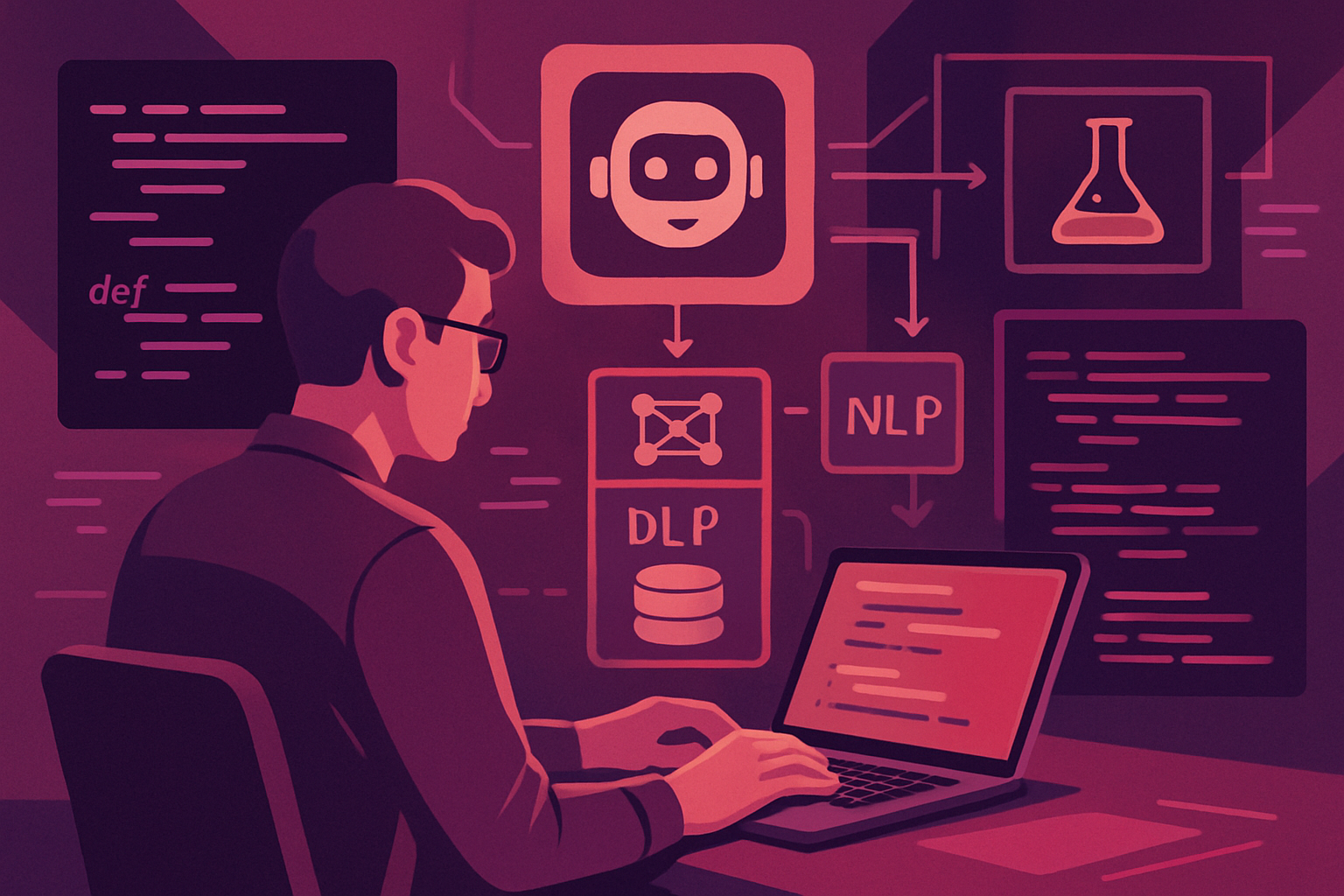
Creating an AI assistant requires a well-thought-out architecture, composed of several essential elements. The core of the system is a backend server, developed in Python, which manages requests and responses. To facilitate this process, frameworks like Flask are used, providing a robust and flexible structure. Natural language processing, a key component for understanding and responding to users, is handled by specialized libraries such as spaCy and NLTK. These tools enable advanced linguistic analysis, essential for smooth interactions. Additionally, an SQLite database is employed to store user information and preferences, ensuring ongoing personalization.
Code Development: Modularity and Integrations
The code for this AI assistant is designed to be modular, simplifying the addition of new features and updates. This approach allows for effective management of user requests and the generation of tailored responses. Furthermore, the integration of external APIs enriches the assistant's capabilities, enabling it to provide weather information or real-time news, for example. This modularity is crucial for maintaining a scalable system that adapts to the changing needs of users.
Challenges Encountered During Development
Like any technological project, the development of this AI assistant was not without its challenges. Bugs in the code required extensive debugging sessions to ensure smooth operation. Additionally, the initial performance was far from optimal, with slow response times necessitating rigorous optimizations. These challenges, while frustrating, provided opportunities for learning and continuous improvement of the system.
Current Capabilities of the AI Assistant
Today, the developed AI assistant is capable of performing several tasks efficiently. It can answer a variety of questions thanks to its advanced natural language processing, providing relevant responses on numerous topics. Furthermore, it assists in managing daily tasks, such as organizing appointments and reminding users of important events. Finally, it adapts to user preferences, learning from each interaction to offer an increasingly personalized experience.
In conclusion, creating this custom AI assistant has been a rewarding journey, allowing for the development of a tool that is truly tailored to personal needs while acquiring valuable skills in the field of artificial intelligence.
Brief IA — L'actualité IA en français
L'essentiel de l'actualité de l'intelligence artificielle, décrypté et expliqué chaque jour.