Dell and Microsoft Expand Their AI Offering to Nvidia HGX B300
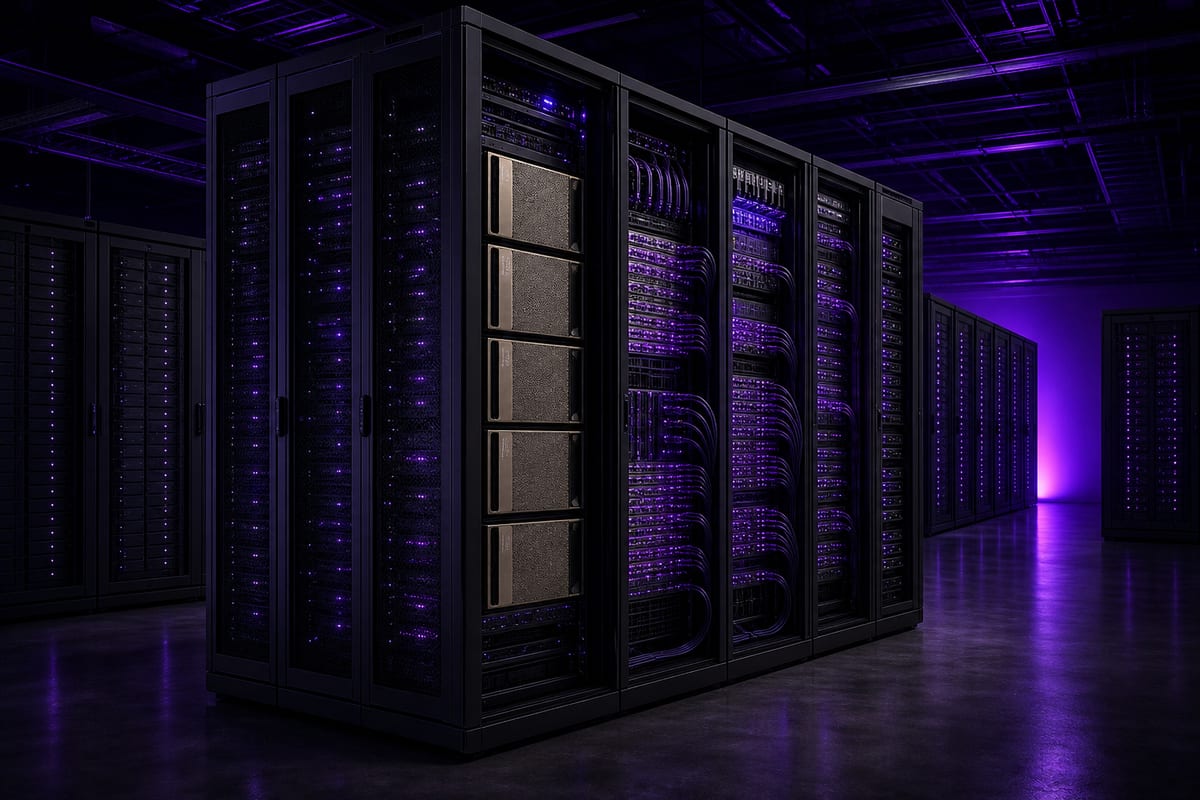
Dell Technologies and Microsoft are expanding their private cloud partnership to include Nvidia HGX B300 systems for enterprise AI. This set combines Dell's infrastructure with Nvidia's platform and the Azure Local and Foundry Local software to bring inference closer to sensitive data, outside of the public cloud. However, Microsoft has not specified any delivery timelines for the validated configurations.
Costs Depend on Anticipated Usage
Many companies are still trying to identify their future AI use cases and the necessary resources. The profitability of owned equipment depends on its utilization rate and anticipated demand. Holger Mueller, vice president and principal analyst at Constellation Research, doubts that reasonable sizing is always possible at the current stage of adoption.
Dave McCarthy, vice president of the cloud and data center group at IDC, believes that on-premises computing is justified for large, regular, and predictable inference volumes. For large cutting-edge models operating continuously, IDC observes that the total cost of ownership can potentially be much lower than that of the cloud, including electricity, cooling, and space expenses. Holger Mueller also considers that an organization aware of its needs can often spend less with its own equipment.
Companies Retain Responsibility for Equipment
The additional control provided by an on-premises installation comes with operational responsibilities. Companies must manage GPUs, storage, networks, electricity, and cooling, as well as the software driving the models and resources. According to Dave McCarthy, 73% of respondents surveyed by IDC in June attribute delays in their AI production to the complexity of AI infrastructures.
The same analyst believes that the Dell-Microsoft partnership alleviates lifecycle management, firmware coordination, and technical support. Holger Mueller attributes to integrated platforms a reduction in deployment work and the elimination of integration risks that clients would otherwise bear. Nevertheless, IT teams remain responsible for managing capacity, optimizing processing, and maintaining the infrastructure.
Le brief IA que les pros lisent chaque soir
Les 7 actus IA du jour, décryptées en 5 min. Gratuit.
Inclus dès l'inscription : notre sélection des meilleurs guides & comparatifs IA.
Choisissez votre rythme
Gratuit · Pas de spam · Désabonnement en 1 clic
Microsoft Validates Dell, HPE, and Lenovo
At Ignite on November 17, Microsoft announced that Foundry Local is available on Azure Local and confirmed the compatibility of this infrastructure with Nvidia HGX B300. Azure Local hosts workloads in client-controlled environments; Foundry Local allows for deploying and running models locally. The hardware extension supports large-scale inference and agent-based workloads utilizing multiple GPUs.
Dell, HPE, and Lenovo are among the manufacturers whose systems Microsoft has validated. In the expanded partnership with Dell, Nvidia's accelerated computing thus joins the Azure Local environment through a validated hardware provider.
Hybrid Demand Exceeds Sovereignty Alone
By June 2026, 85% of companies surveyed by IDC on global digital infrastructures report that their AI processing requires local resources alongside public cloud, according to Dave McCarthy. He notes that priorities are evolving without excluding the public cloud. Sovereignty and latency were important for 51% of respondents, compared to 42% for costs.
Steven Dickens, CEO and principal analyst at HyperFrame Research, attributes the hybrid orientation to concerns over sovereignty and token economy. He emphasizes that open-weight models multiply deployment possibilities, as organizations seek to better control their data and AI spending. In finance, healthcare, and government, obligations regarding data localization and processing can influence technical choices.
IDC predicts that sovereign private cloud will be among the most dynamic segments of private cloud until 2028. Dave McCarthy describes Azure Local as a platform that can support the scaling of sovereign inference on GPUs, particularly with Dell. However, Holger Mueller recommends not placing sovereignty at the top of the reasons for on-site transfer: public cloud providers also offer data controls. In his view, the business advantage related to the execution environment should take precedence.
Brief IA — L'actualité IA en français
L'essentiel de l'actualité de l'intelligence artificielle, décrypté et expliqué chaque jour.