Detecting AI in Written Work: Hanke and Blackman Detail Their Methods
Le brief IA que les pros lisent chaque soir
Les 7 actus IA du jour, décryptées en 5 min. Gratuit.
Inclus dès l'inscription : notre sélection des meilleurs guides & comparatifs IA.
Choisis ton rythme
Gratuit · Pas de spam · Désabonnement en 1 clic
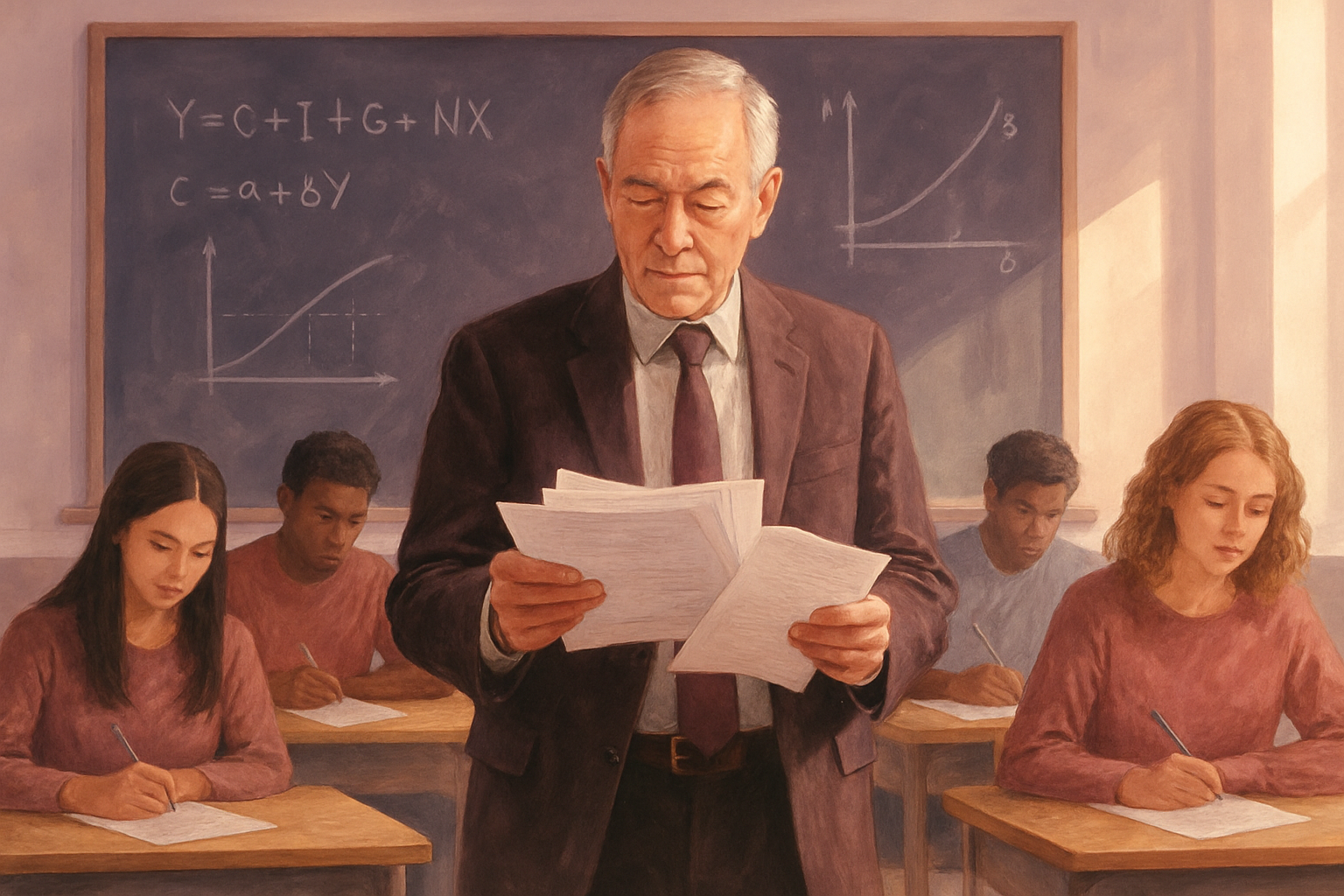
Two figures in higher education believe that the use of AI can be detected when a paper does not match the actual level of a student. Steve Hanke says it simply makes him more vigilant. Other professors claim to adapt assignments, even reverting to handwritten work, to discourage these practices.
Educators Find AI Use "Obvious" to Spot
Drusilla Blackman believes it is almost always obvious for a teacher to spot the use of AI, especially when the work does not match the expected level of writing, effort, or critical thinking. She summarizes the principle: if a submission is not proportional to the known level of the student, it can be detected. A former dean of admissions at Harvard and Columbia and founder of Deans of Admissions, she bases her assessment on this gap between output and skills.
Steve Hanke follows a similar line of reasoning. He claims that AI forces him to be more vigilant and says he knows his students' economics skills well enough to identify an assignment that does not meet expectations. For him, it is obvious when a text has been generated by a machine.
Rethinking Assignments to Resist Chatbots
Several educators report using AI defensively to design assignments that are more resistant to automatic generation. Some also explain that they have returned to handwritten exercises to discourage the use of these tools. This context arises in a situation where it is easier than ever for students to resort to AI chatbots.
Steve Hanke Details His Criteria and Background
Steve Hanke presents himself as a seasoned veteran and claims to easily spot the use of AI. He points to any discrepancy between an assignment and the writing skills or knowledge displayed by the student as a warning sign, and states he has no issue with students using these tools. He finds it very easy to distinguish a student's work from that of a chatbot and attributes this to the often insufficient writing level of students, even in elite institutions.
A professor of applied economics at Johns Hopkins University for nearly 60 years, he has served on the Council of Economic Advisers under President Reagan. These career elements align with how he claims to evaluate papers in light of the actual level of his students.
Brief IA — L'actualité IA en français
L'essentiel de l'actualité de l'intelligence artificielle, décrypté et expliqué chaque jour.