Dili Raises $21.7 Million for AI Compliance in Infrastructure
Le brief IA que les pros lisent chaque soir
Les 7 actus IA du jour, décryptées en 5 min. Gratuit.
Inclus dès l'inscription : notre sélection des meilleurs guides & comparatifs IA.
Choisis ton rythme
Gratuit · Pas de spam · Désabonnement en 1 clic
Dili Raises $21.7 Million for AI Compliance in Infrastructure
The rise of artificial intelligence (AI) necessitates a massive expansion of infrastructure, particularly through the creation of new data centers and energy systems. However, these ambitious projects must also comply with strict regulations, and this is where AI can play a crucial role.
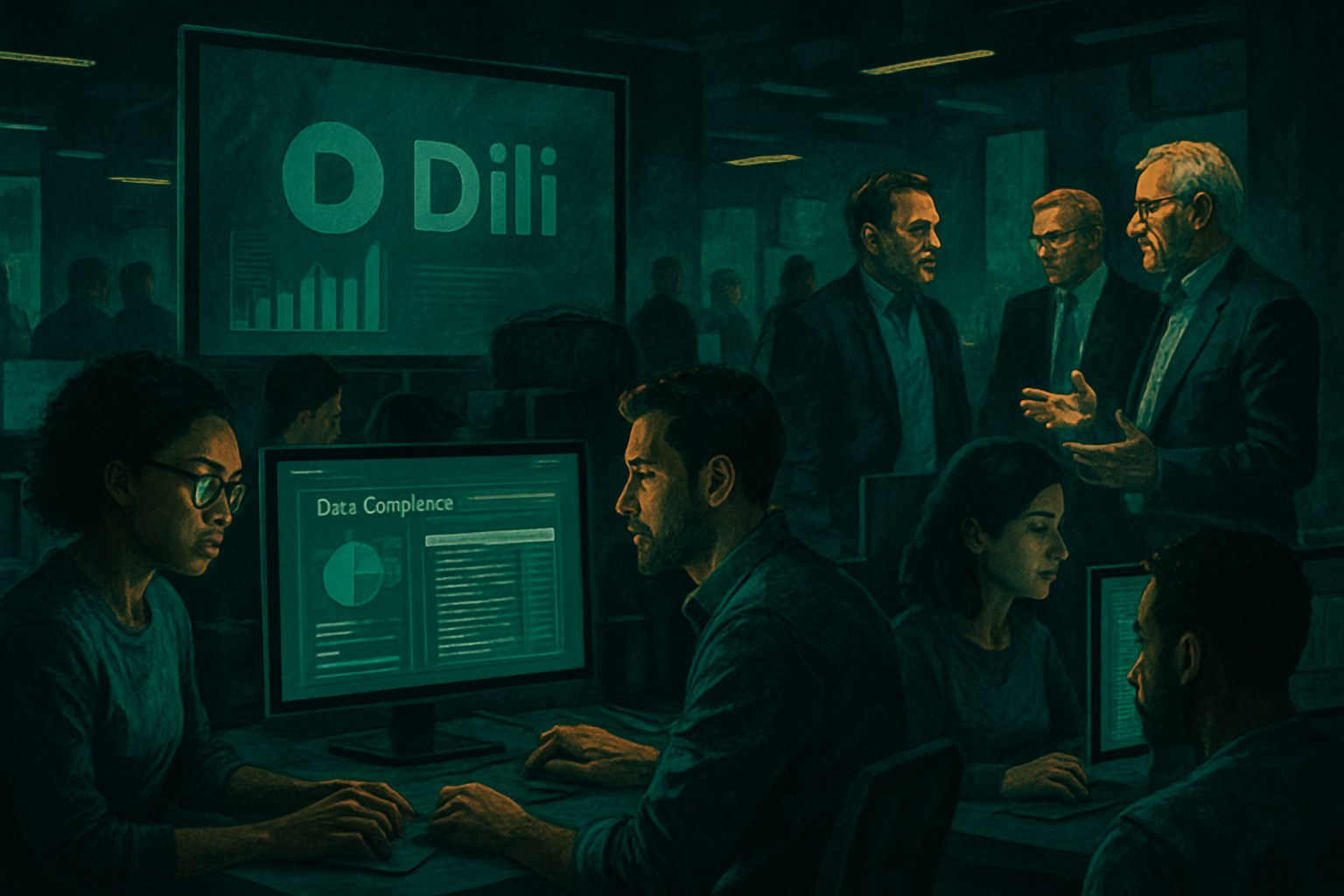
On Thursday, Dili, a startup specializing in AI compliance, announced that it has raised $15 million in a Series A funding round. This amount adds to an initial funding of $6.7 million, bringing the total to $21.7 million. This funding will enable Dili to target the new wave of infrastructure projects in the United States.
The Series A round was led by Khosla Ventures, with participation from notable investors such as Allianz, Rebel Fund, Darren Bechtel of Brick and Mortar Ventures, and Garry Tan of Y Combinator. Dili was also part of Y Combinator's Summer 2023 cohort, a prestigious incubator for startups.
An AI Dedicated to Infrastructure Compliance
The use of AI to ensure compliance is already a trend among startups, but Dili stands out with its targeted approach to rules specific to construction projects, particularly those benefiting from federal funding.
Anand Chaturvedi, co-founder and CEO of Dili, mentioned the Davis-Bacon rules, which allow the U.S. Department of Labor to set prevailing wages for certain projects. Similar rules apply to clean energy projects funded by the IRA, as well as other regulations from OSHA or the EPA, depending on the nature of the work.
These complex and often intertwined requirements can lead to high costs in the event of non-compliance. “Non-compliance can result in fines of millions of dollars,” explains Chaturvedi. Dili therefore offers a solution that allows for real-time verification of all information, thus avoiding costly mistakes.
A Reliable and Efficient AI Architecture
Reliability is at the core of Dili's concerns. Chaturvedi emphasizes that the company's architecture is designed to avoid the inaccuracies often associated with large language models (LLMs). AI models are used solely to transform unstructured documents into structured data, which is then processed by a deterministic system according to precise compliance rules.
This approach significantly reduces the time required to process data. A task that previously took an entire day can now be accomplished in just a few minutes. “Imagine being able to extract the necessary data for your reports or compliance from all internal documents and supplier information,” explains Chaturvedi.
Growing Adoption in Infrastructure Projects
Dili has already begun deploying its system. According to Chaturvedi, the software is currently being used in approximately 700 projects, ranging from manufacturing facilities to data centers.
About half of these projects use Dili as an internal software tool, while the other half outsource the entire compliance process to the company, operating on a contract model. Dili is capable of managing both types of contracts, although Chaturvedi anticipates a trend toward increased adoption of the software model.
“Software and AI will increasingly absorb these professional services workflows,” states Chaturvedi. It will be interesting to see how the market evolves and where customer needs will lie as AI continues to develop.
Brief IA — L'actualité IA en français
L'essentiel de l'actualité de l'intelligence artificielle, décrypté et expliqué chaque jour.