Disney Tests the "Gray Box" and AI for Set Design
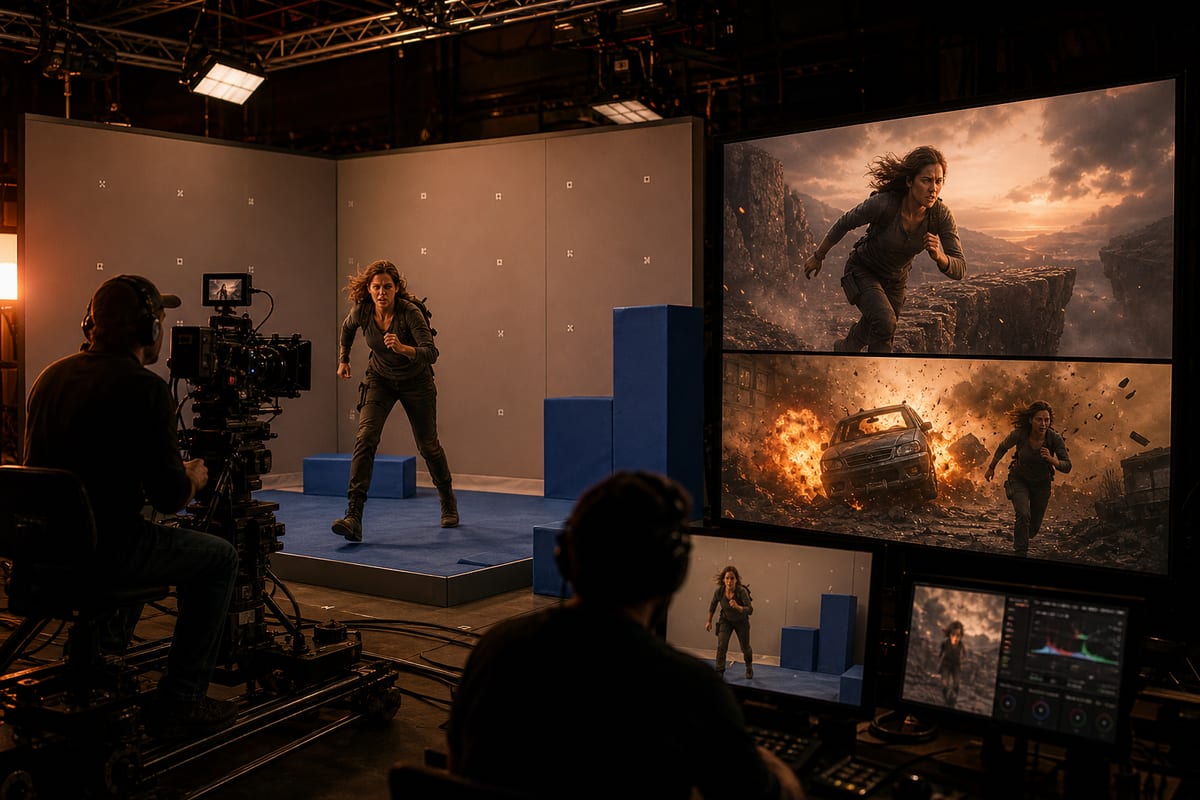
Disney hosted a shooting demonstration in a "gray box" associated with AI-generated or assisted backgrounds. Promise, a generative AI studio, has already tested the tool with Disney teams and produced a pilot elsewhere. Promoters highlight time and cost savings while emphasizing a process driven by human artists and maintained crafts.
Promise details its setup and conducts tests and pilot
Promise presents a four-part architecture: a studio capable of supporting feature films "at a fraction of the cost and schedule," the Muse AI workflow platform, the Curious Refuge AI academy to nurture a talent pool and refine professionals, and The Generation Company for AI visual effects. The company has already conducted trials with Disney teams and claims to have a series pilot in production with another studio. This setup was showcased during a demonstration day at the Walt Disney Studios in Burbank. Promise defines itself as a generative AI studio serving human art. At Disney, Rob Bredow dismisses the idea of an "AI button" that would make a film on its own, explaining that this is neither Disney's nor Promise's approach, which he believes has fostered their collaboration. Josh D’Amaro reminds us that technology is not an end in itself: Disney is actively exploring emerging technologies to put them in the hands of creators.
Less waiting and adjustments than green screen, say promoters
Dave Clark indicates that preparing a shot is faster in a gray box than with a green screen, mentioning the two to three hours often spent on reconfigurations. He asserts that it is easier to multiply shots without moving the crew or adjusting the lights, as the consistency of the set helps, allowing teams to save time both during shooting and in post-production. AI tools come into play to fill backgrounds and replace lighting and objects, while the lighting can instantly adjust to the generated scenery. In contrast, the green screen, used for over fifty years, can produce colored reflections on skin and props and requires background adjustments with every change of angle. In this context, Clark argues that the method allows for a greater focus on performance and storytelling.
Le brief IA que les pros lisent chaque soir
Les 7 actus IA du jour, décryptées en 5 min. Gratuit.
Inclus dès l'inscription : notre sélection des meilleurs guides & comparatifs IA.
Choisissez votre rythme
Gratuit · Pas de spam · Désabonnement en 1 clic
On set, a gray box and near-instantaneous renders
The demonstration takes place in a small space with neutral walls marked with reference points, featuring blue boxes serving as temporary props. A camera follows the actress, and a render appears almost in real-time with a cliff backdrop, lighting, and wind effects. On the screens, the same actress is also seen near a destroyed car, with explosions projecting debris, while she remains physically around the blue boxes. A screwdriver picked up from the ground transforms on screen into an adventure scroll.
AI as a tool for artists, not a substitute, says Promise
Promise describes AI as a tool in the hands of 3D and VFX artists, specifying that while some environments can be fully generated, most are still designed by humans assisted by these systems. Dave Clark emphasizes a classic workflow—script, storyboard, shooting—and the importance of expertise that is patiently acquired. He highlights the need for filmmakers, creative technologists, and artists skilled in using AI tools. According to him, using AI for backgrounds reduces production costs while maintaining the scale of quality projects, and lowers the capital required to create pilots.
Disney frames the use and addresses job concerns
As fears of automation affecting actors, animators, screenwriters, or set designers multiply, Disney clarifies the scope. David Min explains that the system is limited to filling backgrounds, a task already handled by other technologies like the green screen. He emphasizes a process made simpler and faster, including possible lighting adjustments in post-production, allowing on-set teams to focus on performance and direction. He also asserts that there will always be directors, screenwriters, and actors.
Brief IA — L'actualité IA en français
L'essentiel de l'actualité de l'intelligence artificielle, décrypté et expliqué chaque jour.