Disrupt 2026: The AI Compass for Founders
Le brief IA que les pros lisent chaque soir
Les 7 actus IA du jour, décryptées en 5 min. Gratuit.
Inclus dès l'inscription : notre sélection des meilleurs guides & comparatifs IA.
Choisis ton rythme
Gratuit · Pas de spam · Désabonnement en 1 clic
In San Francisco, three days of discussions promise to shed light on the trade-offs between open models, proprietary APIs, and hardware co-design. The agenda includes multi-models, customization, costs, differentiation, and a deep dive into chip optimization through AI.
A Massive Gathering to Make Technical Choices
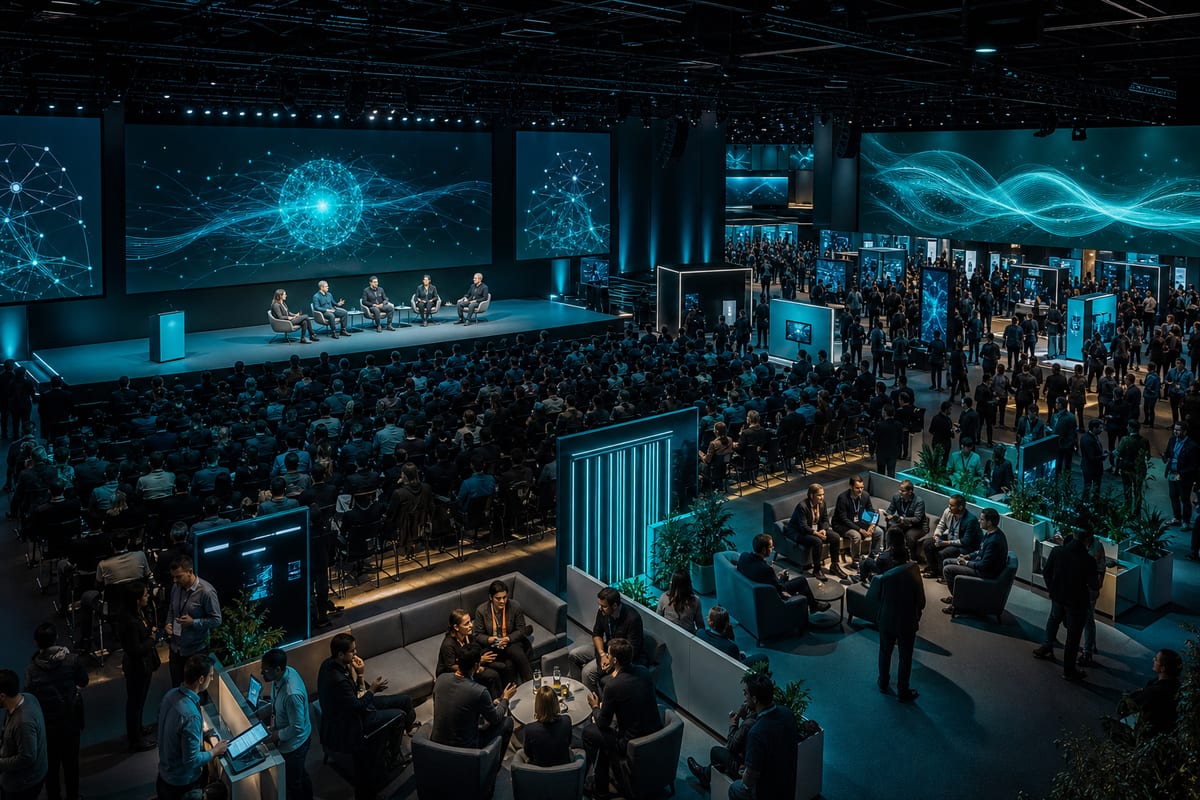
Disrupt is set to host over 200 sessions from October 13 to 15 at Moscone West in San Francisco. More than 10,000 founders, investors, operators, and tech industry figures are expected, along with over 250 speakers and 300 exhibiting startups. Discussions will take place across six thematic stages, in panel discussions, and during workshops. Networking, deal negotiation, and matchmaking initiatives are designed to help participants confront their technical and business decisions.
Model Decisions with Business Consequences
The choice of a model influences costs and infrastructure requirements, as well as the degree of control a startup retains over its product. It can also determine where and how easily hard-to-replicate differentiation can be created. Building more of one’s stack can offer control and differentiation, but often requires more time, talent, and resources than relying on existing models.
Deciding: Rent, Customize, or Build
On the Real World AI stage, Manos Koukoumidis, CEO and co-founder of Oumi, will explain when it makes sense to develop one’s own models, in what situations customization can provide a competitive edge, and how to choose between open or proprietary AI. The session will be based on surveys conducted with the audience, examples from startups, and a hands-on approach. Participants will analyze advanced APIs, adapted open weights, and full AI mastery, then leave with three decision-making principles to apply in their upcoming architectural choices.
Leveraging Multiple Models Without Lock-in
AI products increasingly utilize different models depending on the tasks. On the Builders stage, Mo Jomaa (CapitalG), Vipul Ved Prakash (Together AI), and Zuzanna Stamirowska (Pathway) will explain why using multiple models is beneficial, how to balance cost, performance, and flexibility, and in what cases open models can outperform proprietary alternatives. This flexibility impacts operating costs, product decisions, and the ability to quickly adopt better models. A startup might rely on a cutting-edge API today, customize an open model tomorrow, or shift workloads between multiple models later; maintaining flexibility could be as important as the immediate choice. More broadly, founders now have an expanded palette, navigating the advancements of open models, the continuous evolution of APIs, targeted customization, and multi-model products, with trade-offs on where to invest, what to own, and what level of flexibility to maintain.
AI Enhances Chip Design According to Anna Goldie and Azalia Mirhoseini
Performance depends on the underlying hardware, and advancements in AI are beginning to influence chip design. Anna Goldie (Ricursive Intelligence) and Azalia Mirhoseini will explore how AI optimizes chips and why models and hardware are becoming more interconnected, as well as the implications of a more open ecosystem for infrastructure. This connection could accelerate the arrival of new capabilities in the market and alter the infrastructure accessible to startups. On the Builders stage, Nvidia executives will examine the current trade-offs between cutting-edge APIs and open weights, and their effects on product strategy and long-term differentiation.
Brief IA — L'actualité IA en français
L'essentiel de l'actualité de l'intelligence artificielle, décrypté et expliqué chaque jour.