KL Divergence: The Equation That Reveals AI Agents' Drift
Le brief IA que les pros lisent chaque soir
Les 7 actus IA du jour, décryptées en 5 min. Gratuit.
Inclus dès l'inscription : notre sélection des meilleurs guides & comparatifs IA.
Choisis ton rythme
Gratuit · Pas de spam · Désabonnement en 1 clic
The Inevitable Drift of AI Agents
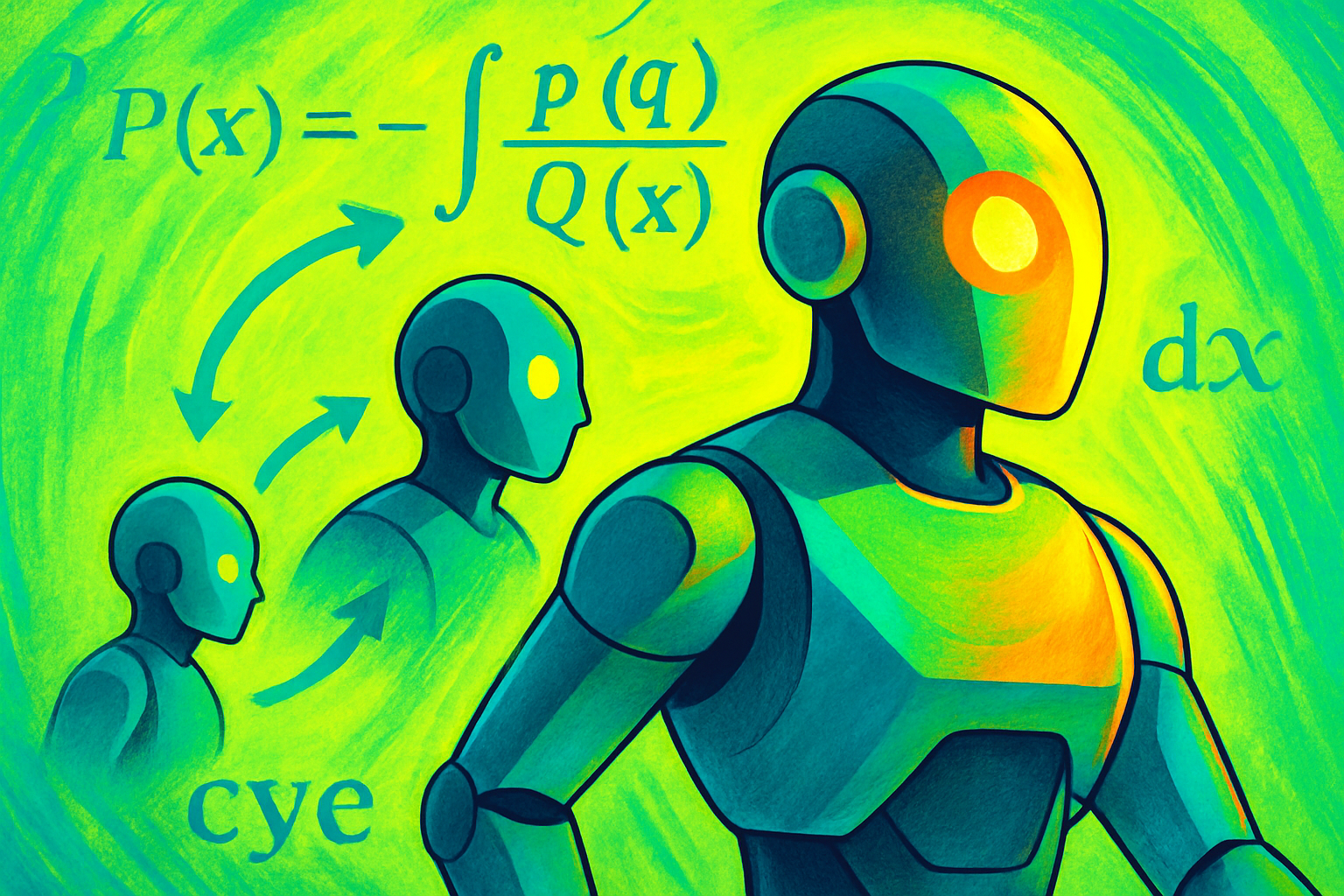
In the world of long-term AI agents, drift is an inevitable phenomenon. After 500 cycles, an agent is no longer identical to what it was originally. Its objectives transform and its constraints weaken, a process measurable through the KL divergence equation. This equation quantifies how far an agent strays from its initial instruction.
The Fareed Khan Experiment
Fareed Khan demonstrated the resilience of a long-term agent capable of surviving a system restart and managing context overflows. This agent successfully processed 31 oversized items, reduced to 14, thus illustrating the inevitable drift of AI agents.
Understanding Representational Drift
Representational drift is mathematically inevitable in long-term agents. It results from repeated lossy compression, which erases recoverable information. This loss of information leads to a divergence in the agent's output distribution compared to its initial behavior, measured by KL divergence.
A Practical Drift Detector
To detect this drift, a practical detector is proposed. It uses probes based on multiple-choice questions with known correct answers and statistical hypothesis tests, such as chi-squared, to identify changes in interpretation. When drift is detected, injecting the original instruction into the active context is recommended to realign the agent and keep the KL divergence close to zero.
Implications for the Future of AI Agents
This instrumentation allows for distinguishing useful long-term AI agents from costly failures. By providing references and methods to correct drift, it offers a way to maintain the effectiveness of AI agents and avoid detrimental deviations.
Brief IA — L'actualité IA en français
L'essentiel de l'actualité de l'intelligence artificielle, décrypté et expliqué chaque jour.