Doubao and ByteDance: 8 Million AI Agents Disabled
Doubao by ByteDance Disables Millions of AI Agents
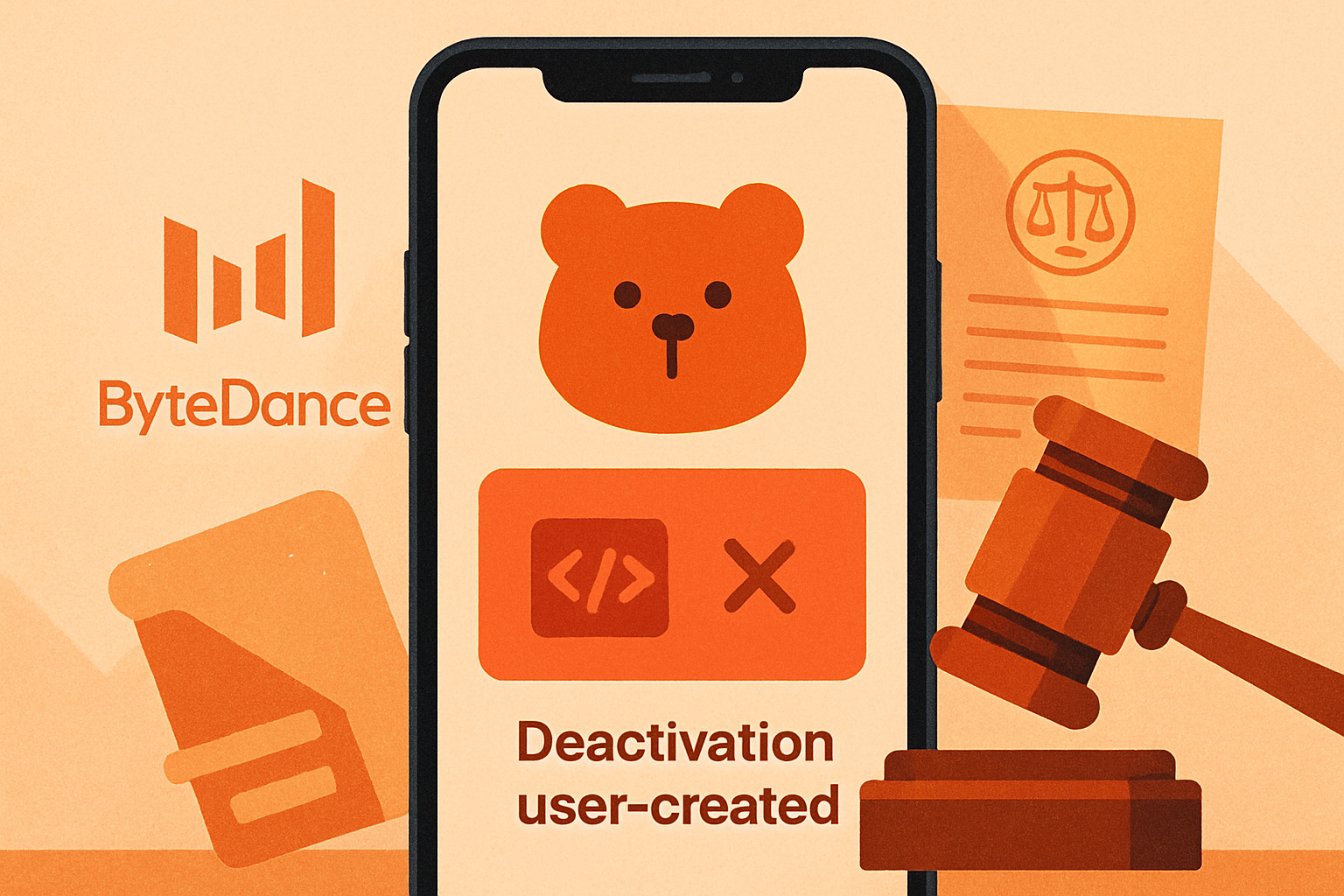
As of Beijing time, Doubao, an application developed by ByteDance, has made a radical decision that affects its 350 million monthly active users. This app, which ranks just behind ChatGPT in terms of global usage, has disabled its feature allowing users to create custom agents. As a result, over 8 million of these agents are now limited to read-only mode. Users have until October 15 to back up their conversations, after which all data will be irretrievably deleted.
Regulatory Context in China
This decision comes in the wake of new provisional measures implemented by China since July 15. These rules specifically target interactions with anthropomorphic AIs. In response, tech giants like Doubao, Tencent with Yuanbao, and Alibaba with Qwen have had to disable user-created "companion" agents. However, productivity-oriented agents are exempt from these restrictions. The main challenge lies in compliance: it is practically impossible for these platforms to audit millions of agents to ensure they do not provide prolonged emotional interactions. Thus, the adopted solution has been to completely disable this feature.
Le brief IA que les pros lisent chaque soir
Les 7 actus IA du jour, décryptées en 5 min. Gratuit.
Inclus dès l'inscription : notre sélection des meilleurs guides & comparatifs IA.
Choisis ton rythme
Gratuit · Pas de spam · Désabonnement en 1 clic
Regulatory Requirements for AI Services
The new regulations impose several requirements on the affected services. These include continuous disclosure of the AI's identity, reminders to take breaks, the ability to exit the app with one click, and crisis management measures that interrupt the agent's personality. Additionally, specific protections for minors and security deposits are required. These requirements can be implemented via middleware that surrounds an agent loop, without necessitating changes to the underlying model. This involves design choices such as performing output checks before engaging the personality, using crisis management that breaks character, and ensuring that the agent's memory is exportable and portable.
Global Impact and Outlook
The compliance issue is not limited to China. Similar regulations are emerging elsewhere, notably with SB 243 in California and the EU AI Regulation. These laws influence how AI products are developed, particularly for categories of agents deemed "useful." Persistent memory associated with a personality is becoming increasingly risky in this regulatory context. These developments highlight a global trend towards increased regulation of interactions with AIs, which could have significant repercussions for innovation and compliance among tech companies.
Brief IA — L'actualité IA en français
L'essentiel de l'actualité de l'intelligence artificielle, décrypté et expliqué chaque jour.