Schools: One-Year Moratorium on AI in New York Challenged
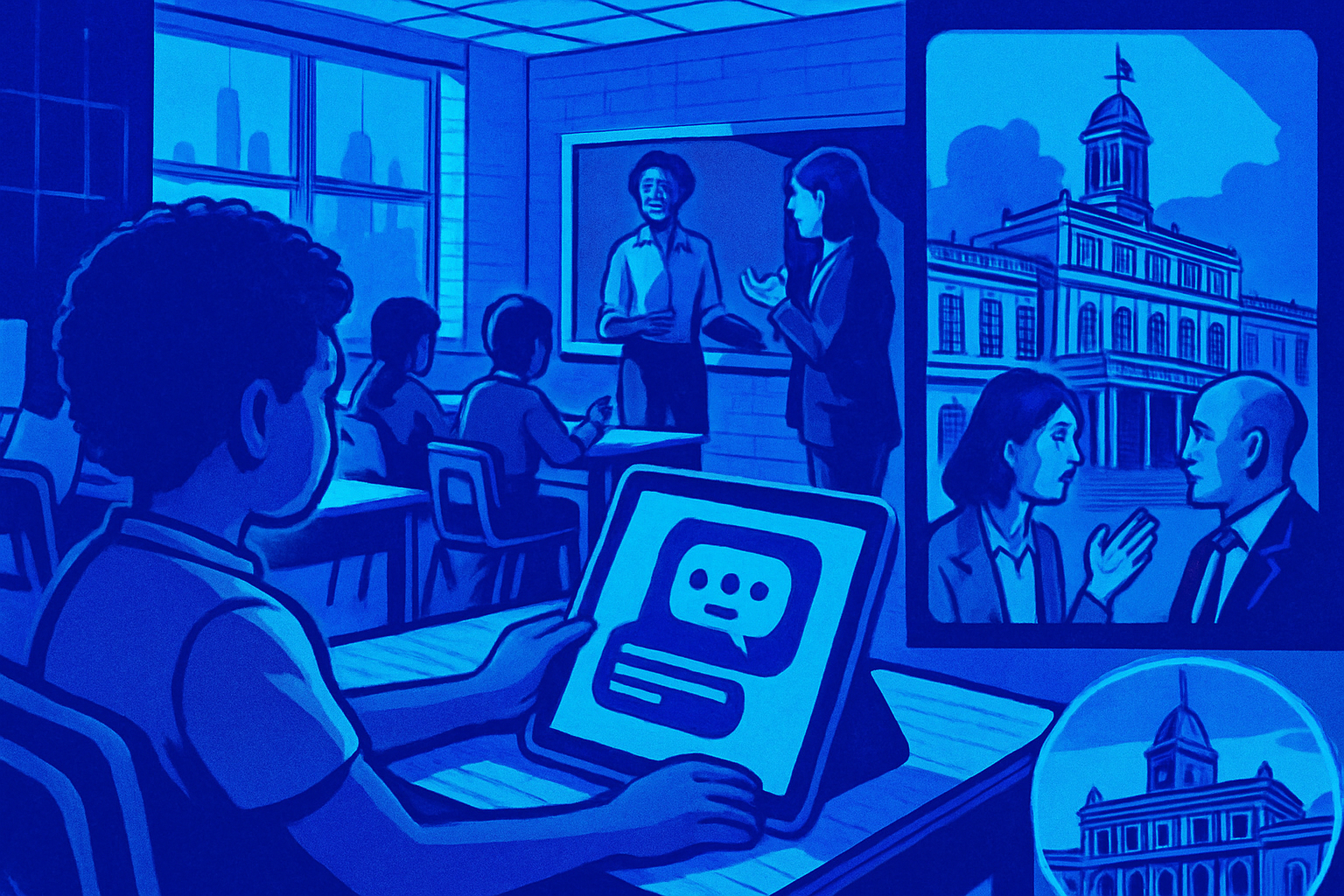
In New York, a one-year moratorium on AI in elementary and middle schools has been imposed under pressure from parents, while other families advocate for early exposure. Between these positions, a neuroscientist from Rutgers warns of risks to skill acquisition. The debate revolves as much around the timing of introducing these tools as it does about their effects on younger students.
A Neuroscientific Warning on Skill Acquisition
An associate professor of neuroscience at Rutgers University reports that studies suggest artificial intelligence tools could hinder the development of problem-solving skills in young children. According to him, these practices could lead children to delegate skills they have not yet acquired themselves. Critics also express concerns about negative effects on children's brains. Meanwhile, the White House envisions a future where a patient humanoid educator named Plato would be present in classrooms.
Le brief IA que les pros lisent chaque soir
Les 7 actus IA du jour, décryptées en 5 min. Gratuit.
Inclus dès l'inscription : notre sélection des meilleurs guides & comparatifs IA.
Choisissez votre rythme
Gratuit · Pas de spam · Désabonnement en 1 clic
Parental Pressure and the One-Year Moratorium Decided by Mamdani
Following the actions of AIM, a coalition of parents in New York, Mayor Zohran Mamdani has instituted a one-year moratorium on the use of AI in the city’s elementary and middle schools. AIM was not the only group involved; several collectives also pressured the mayor to regulate the use of these tools in the classroom.
In the Classroom, Daily Practices and Parental Divides
Some parents discovered late the extent of AI's use in their children's classrooms. Craig Garrett explains that he learned at a school meeting that his 5-year-old daughter was interacting daily with an AI chatbot, which shocked and disappointed him. He believes this meeting "radicalized" many of the parents present and motivated his involvement with AIM. Other families prefer that AI continue to be used in the classroom, believing it to be an asset and that early familiarity fosters the acquisition of AI skills, which are essential in an increasingly technology-driven professional world. All acknowledge that children will likely encounter AI in their future; the question remains whether schools should introduce it before students have learned to think independently.
Brief IA — L'actualité IA en français
L'essentiel de l'actualité de l'intelligence artificielle, décrypté et expliqué chaque jour.