United States at G20: Focus on Innovation, No Dedicated AI Agency
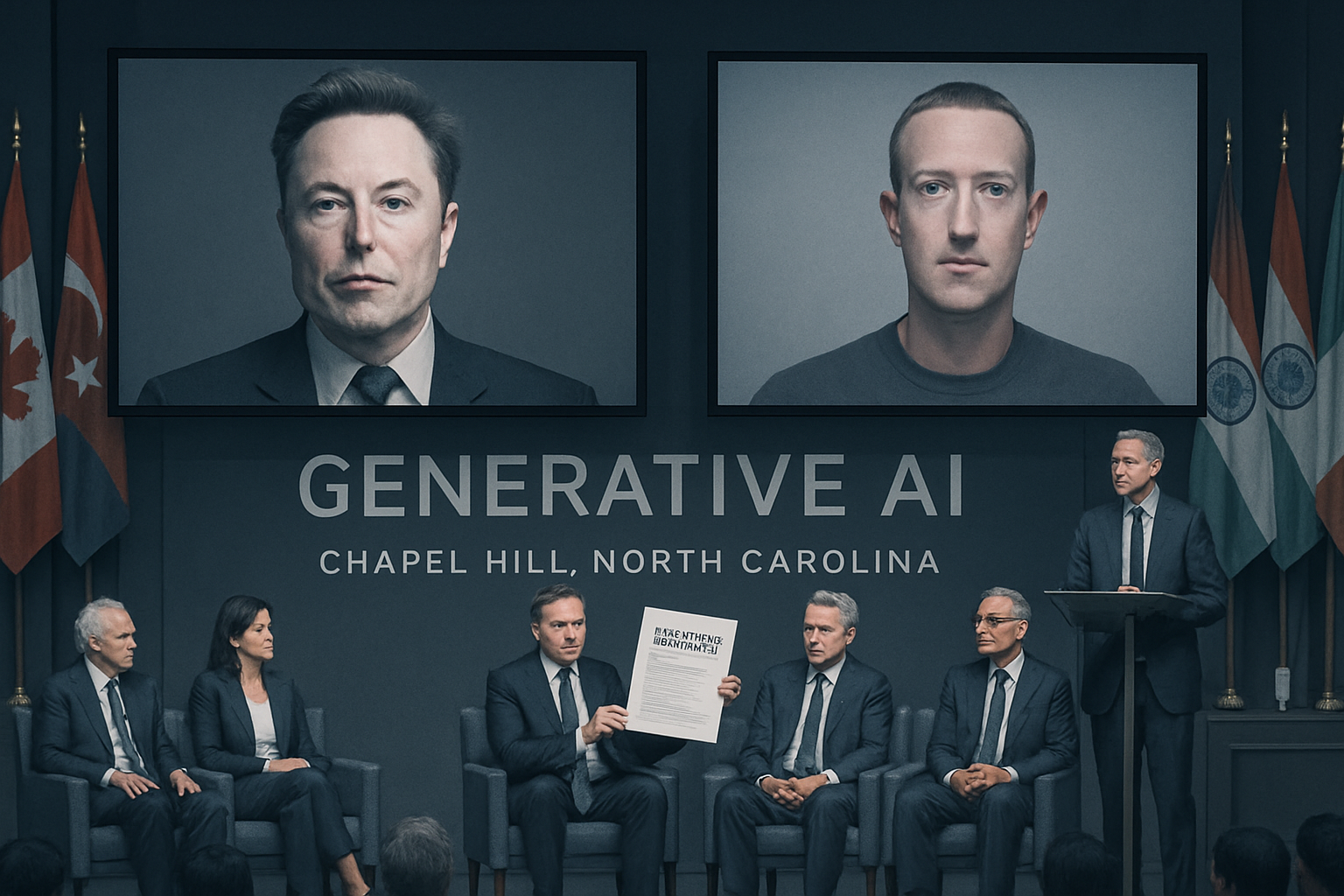
In Chapel Hill, Washington promotes "Carolina Principles" to accelerate AI research and industrialization, dismissing the idea of a dedicated approval agency. David Sacks rejects an "FDA for AI" model, while Dario Amodei (Anthropic) advocates for strict public testing. Elon Musk supports a laissez-faire approach, and Mark Zuckerberg calls for open-source dissemination. The compromises reached this week are expected to inform the G20 agreement in December in Miami.
Investigations, Bans, and Legal Disputes Shape the Context
The regulatory environment surrounding AI is marked by international tensions and disputes between companies and governments. The European Union has opened an investigation into X, while Malaysia and Indonesia have banned the application. Several global leaders have spoken out against the AI platform owned by Elon Musk. Relations between Anthropic and the U.S. government have also been contentious: after a failed agreement with the Pentagon, Anthropic was deemed a risk to the supply chain, a decision later blocked by a judge. During the launch of the Fable 5 model, the U.S. government required that access be restricted to foreign nationals, leading Anthropic to temporarily withdraw the model before relaunching it after an unofficial green light from the Trump administration. The political compromises arising from the forum are expected to feed into the agreement that will be discussed at the G20 Leaders Summit in Miami in December.
Washington Prioritizes Industry-Led Rules
The United States is highlighting the Carolina Principles, a framework presented as favorable to innovation. This initiative aims to bolster AI research, organize pathways to commercialization, and establish industry-developed standards for emerging technologies. Discussions at the forum include contributions from major figures in the sector. The American political message emphasizes that neither regulation, energy constraints, nor security concerns should hinder the development of AI.
An Explicit Rejection of an "AI FDA"
David Sacks, former AI lead for the Trump administration and co-chair of the President's Council on Science and Technology, believes that an agency tasked with approving AI products would be a disaster. He compares this model to a DMV, where new models would remain stuck awaiting approval. According to him, the sector evolves too rapidly for this type of regulation, and it is undesirable to stifle innovation. He also argues that existing laws already provide a sufficient framework and that current agencies can manage the risks associated with AI.
Le brief IA que les pros lisent chaque soir
Les 7 actus IA du jour, décryptées en 5 min. Gratuit.
Inclus dès l'inscription : notre sélection des meilleurs guides & comparatifs IA.
Choisissez votre rythme
Gratuit · Pas de spam · Désabonnement en 1 clic
Anthropic Advocates for Public Technical Testing of Models
In contrast to the American position, Dario Amodei, CEO of Anthropic, advocates for a government review process for AI models. He believes that cutting-edge models should undergo technical testing and audits, and their launch should be blocked or canceled if they do not meet high safety standards. He also anticipates that the increasing use of AI in research will raise the number of proposals to be reviewed by agencies like the FDA, testing the regulators' capabilities.
Musk Advocates for Laissez-Faire, Zuckerberg Calls for Openness
Elon Musk, CEO of SpaceX and xAI, defended a non-interventionist approach at the forum, calling for more support for startups and for innovation to be legally permitted by default. According to a report from the Washington Post, his companies received $38 billion in public funding last year. Mark Zuckerberg, who also spoke virtually, highlighted the benefits of publicly accessible AI models for learning new software or managing small businesses, and called for policies that facilitate the creation and evolution of systems. He argues that the broad dissemination of technology, particularly through open-weight models, expands access and establishes checks and balances. Meta recently promised to release its new AI models. It has been reported that the Trump administration considered banning open-source models, an option that many industry leaders believe would be detrimental to global AI innovation and cybersecurity.
American Direction: From Non-Intervention to Involvement
In his opening remarks, Michael Kratsios emphasized that outdated rules hinder the adoption of innovations and create uncertainty, which can lead to project abandonment and delays for nations. Over the past year, however, the Trump administration has shifted its previous non-intervention stance and appears to want to become more involved, as public and private officials view generative AI as both a threat and an asset for national security and cybersecurity. The policy frameworks emerging from forums like the G20 Innovation Ministerial could have a significant impact on the limits of power for large tech companies and AI firms globally.
Brief IA — L'actualité IA en français
L'essentiel de l'actualité de l'intelligence artificielle, décrypté et expliqué chaque jour.