Etched: The AI Startup That Challenges Skeptics
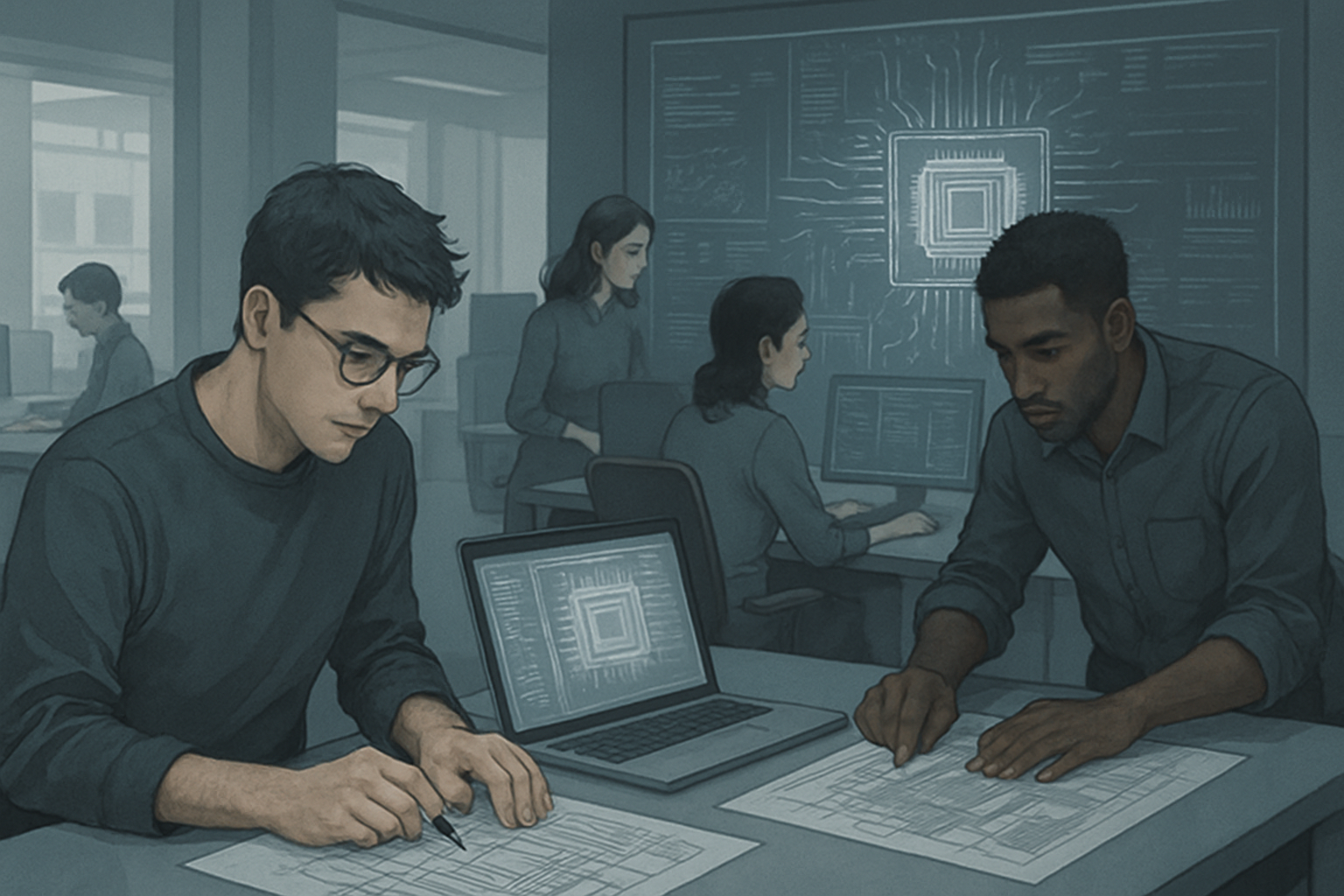
A Meteoric Rise for Etched
Etched, an emerging company in the field of artificial intelligence chips, was founded by three former Harvard students in 2022. Recently, the startup successfully raised an impressive $300 million in a Series C funding round, propelling its valuation to $10.3 billion. This information was confirmed by Robert Wachen, co-founder and Chief Operating Officer, during an interview with TechCrunch.
Prestigious Investors Behind the Success
The funding round was primarily led by the renowned investment firm Sequoia, with participation from other heavyweights such as Andreessen Horowitz, SK Hynix, Jane Street, and Diffusion Capital. Among the notable supporters of the startup are influential figures like Peter Thiel, Andrej Karpathy, Dylan Field, and Amjad Masad.
Valuation Doubled in Just a Few Months
Last December, Etched was already valued at $5 billion after raising $500 million. In just seven months, the company managed to double its valuation. According to the company's statements, this is the highest valuation ever achieved for a Series C funding round led by Sequoia. The previous month, Etched announced the successful manufacturing of its own chips, with complete systems currently being tested by clients, and had already recorded orders worth $1 billion.
A Bold Bet on AI Chips
Etched was founded at a time when the idea of designing a chip dedicated to AI models based on transformer technology was seen as bold, even unrealistic. The company continues to combat the perception that its products, sold as complete systems, are designed solely to run specific large language models (LLMs).
Claimed Technological Flexibility
Robert Wachen specifies that Etched's systems can run any AI model, including Mixture of Experts models like DeepSeek and Qwen, which distribute tasks among specialized sub-models. They can also handle non-transformer designs like Mamba, which relies on a different architecture called state-space model. The idea of integrating parts of an AI model directly into silicon to enhance performance is no longer considered far-fetched, an approach that Google is also exploring with its Frozen v2 chip for Gemini.
Le brief IA que les pros lisent chaque soir
Les 7 actus IA du jour, décryptées en 5 min. Gratuit.
Inclus dès l'inscription : notre sélection des meilleurs guides & comparatifs IA.
Choisissez votre rythme
Gratuit · Pas de spam · Désabonnement en 1 clic
Significant Technical Innovations
Etched's current reputation is based on the design of two new components to accelerate inference, the computational process that follows a user's query submission. “Inference occurs in two stages,” explains Wachen, “pre-filling and decoding.” The pre-filling phase involves understanding the query, which is computationally intensive. Decoding generates the output tokens, requiring less computation but a lot of memory.
Advances in Performance and Cost
Etched has developed a pre-filling chip that operates “dramatically faster” using a much lower voltage than other AI chips, an approach they call low-voltage inference. This low voltage reduces the heat generated, allowing for more transistors to be integrated into the chip.
For decoding, Etched has created a new type of memory and an interconnection technology called cluster-scale memory, enabling many chips to connect and use a shared high-speed, low-latency memory pool. This promises high speeds at reduced costs.
A Rocky Path
Launched before most of the tech industry, except for Nvidia, understood the specific needs of AI, Etched faced many skeptics. The founders, including CEO Gavin Uberti, Wachen, and CTO Chris Zhu, encountered doubts even after successfully manufacturing their first batch of silicon by TSMC.
Private Demonstrations to Convince
Access to Etched's systems has been limited to investors and early clients, allowing the startup to attract prestigious investors by offering private demonstrations. Figures like Andrej Karpathy from Anthropic, Noam Brown from OpenAI, and Geoffrey Hinton have been able to test the hardware and have shown great enthusiasm.
A Long Road Ahead
Despite the successes, the path remains challenging. The founders left Harvard to launch Etched without prior experience in fundraising or recruitment. Wachen recalls arriving in the Bay Area without an office or housing, sleeping on the floor of an empty house.
Impressive Growth
Today, Etched employs 400 people and operates a 2-megawatt data center. “We are running tokens in our lab today, working with some of the largest AI companies in the world,” asserts Wachen.
Unwavering Determination
Despite the challenges, Wachen and his co-founders have never let doubts stop them. “We have come a long way. It's a very, very different world. But I think that when you truly believe something is possible, and you work on it for a long time, you can make it happen.”
Brief IA — L'actualité IA en français
L'essentiel de l'actualité de l'intelligence artificielle, décrypté et expliqué chaque jour.