Eugenia Kuyda Warns: AI Could Spark Protests
Le brief IA que les pros lisent chaque soir
Les 7 actus IA du jour, décryptées en 5 min. Gratuit.
Inclus dès l'inscription : notre sélection des meilleurs guides & comparatifs IA.
Choisis ton rythme
Gratuit · Pas de spam · Désabonnement en 1 clic
Eugenia Kuyda Anticipates Social Tensions Related to AI
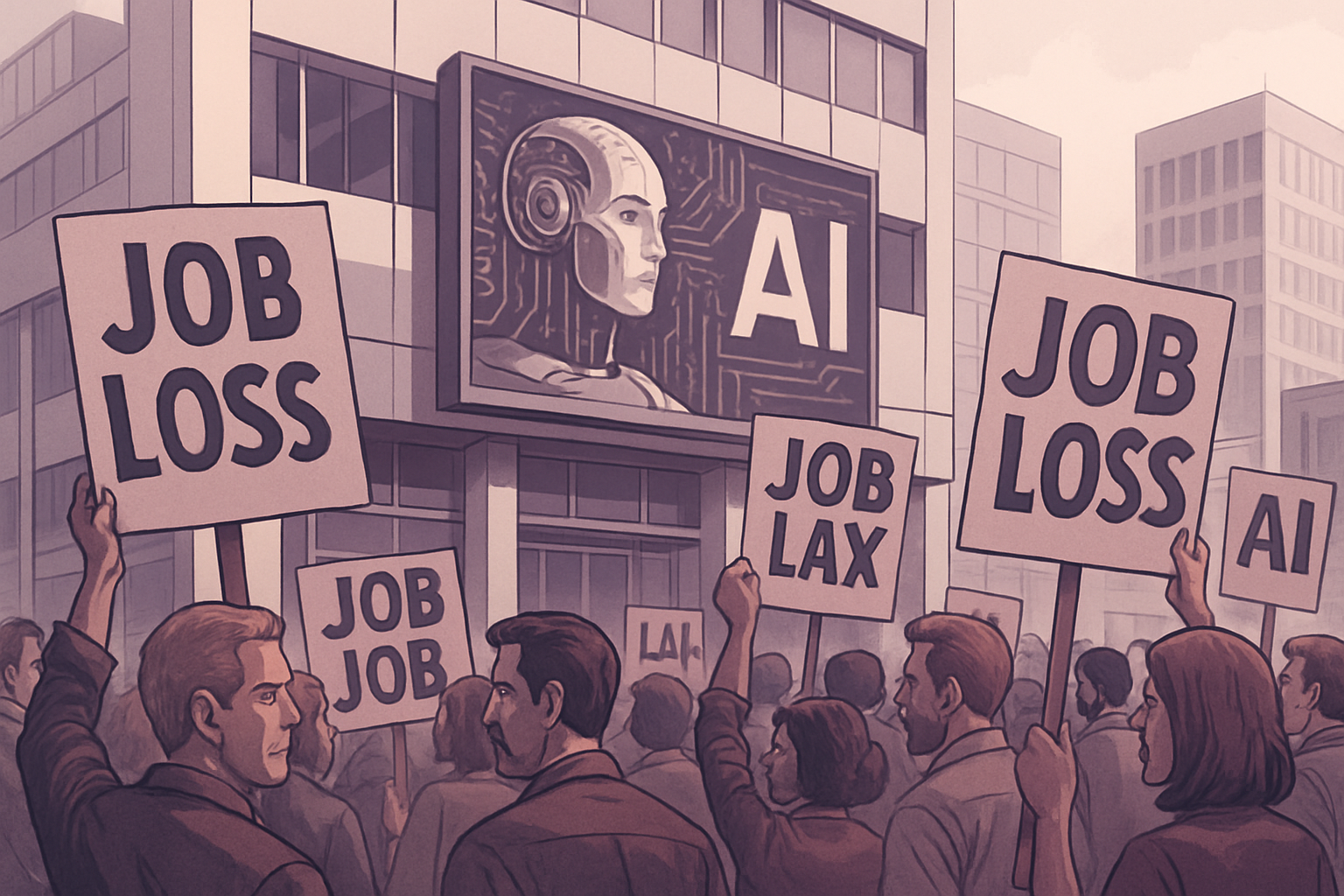
Eugenia Kuyda, founder of Replika, has expressed her concerns about the consequences of artificial intelligence on the job market. She predicts that the impact of AI could lead to "crazy protests" as many workers may lose their jobs due to this technology. This statement was made during a discussion on the Platformer podcast, where Kuyda emphasized that concerns about job displacement by AI are well-founded.
Kuyda described a contrasting vision between an optimistic city focused on the future and the more troubling reality outside. She stated, "We will live in this very optimistic city where everything revolves around the future, but as soon as you step outside, it's quite scary." She added that "people are really struggling to find jobs, and I think it can only get worse."
Despite these fears, Kuyda, who also leads Wabi, a miniature app platform powered by AI, sees positive potential in AI to encourage creativity and innovation. She believes that AI could enable more people to engage in software and product creation.
An Uncertain Future for Employment
During her remarks, Kuyda questioned the widely held belief that AI, like previous technological revolutions, would create new jobs to offset those it eliminates. She noted that many companies, including her own, have already begun to reduce hiring for entry-level positions. According to her, it has become too costly and unsustainable for startups to hire less experienced individuals, complicating the job market entry for recent graduates.
Kuyda expressed skepticism about the prevailing optimism surrounding AI, stating that the technology needs to provide a more compelling narrative about its future impact. She highlighted that, unlike other technologies, AI may not offer the same job opportunities in certain sectors, citing the example of radiologists who continue to exist despite automation.
AI as a Catalyst for Creativity
Despite her concerns, Kuyda remains optimistic about AI's potential to transform how individuals can create and innovate. She sees this technology as a means to democratize creation, allowing anyone to develop software and products without the traditional constraints imposed by the need for specialized developers or designers.
Kuyda also mentioned the possibility that AI could pave the way for new operating systems, challenging the current dominance of Apple's iPhone. She suggested that for the first time, the iPhone could be seen as vulnerable, and that AI could offer alternatives that serve users better than companies.
In conclusion, while AI presents significant challenges for employment, it also offers unprecedented opportunities for creativity and innovation. However, companies and policymakers will need to navigate this transition carefully to avoid potential social and economic tensions.
Brief IA — L'actualité IA en français
L'essentiel de l'actualité de l'intelligence artificielle, décrypté et expliqué chaque jour.