Everyday AI: Contested CEO Visions
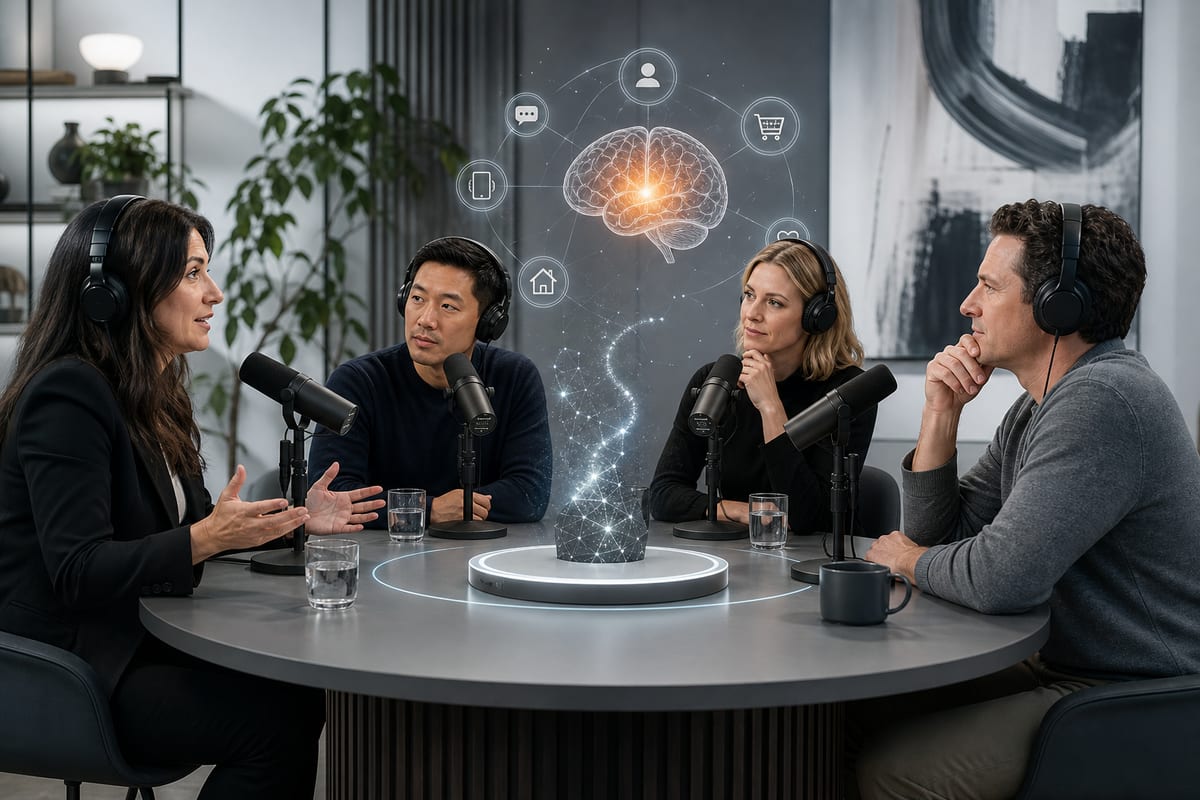
AI leaders are promoting highly personal uses, from children's podcasts to AI-assisted dating concierges. Journalists and observers see a mix of marketing disconnect and a risky product bet, as signs of caution grow among investors and a counter-movement towards simpler uses emerges.
Users Demand Less Optimization and More Autonomy
People are expressing their reluctance to have every aspect of their lives optimized by technology, preferring to raise their children themselves. A return to flip phones or the purchase of CDs illustrates a fatigue with automated recommendations. This dynamic reflects a cultural tension between the benefits of optimization and the preservation of human interactions. Amanda Silberling believes that the tech industry is heading towards a future where human interactions are increasingly avoided, while she considers direct conversation an asset for society. She also notes that current society reacts differently to the promises of technology.
Proposals from Leaders: From Education to AI-Assisted Dating
Sam Altman has suggested that parents create personalized podcasts for their children's school commutes and stated that he cannot imagine being a parent without ChatGPT. Mark Zuckerberg mentioned the possibility that using AI to meet social and romantic needs could become more common. Marissa Mayer used an AI tool to write a school description for her daughter and considered that her AI could coordinate with her husband's. Whitney Wolfe Herd from Bumble proposed the concept of AI concierges, where two AIs would meet before introducing the individuals if the virtual exchange goes well.
A Discourse Perceived as Disconnected from the Everyday Lives of Most
Marissa Mayer has been criticized for comments deemed disconnected, and Amanda Silberling questions the alignment between AI leaders and the needs of ordinary users. Kirsten Korosec believes that the promise of tools that facilitate personal life can sometimes complicate simple actions, like watching one's child. Scenarios where AI takes over human conversations give the impression of over-optimization of basic situations. Amanda Silberling observes that the habit of avoiding phone calls to order takeout is becoming widespread, and anticipates an increase in situations where human interaction is reduced.
Le brief IA que les pros lisent chaque soir
Les 7 actus IA du jour, décryptées en 5 min. Gratuit.
Inclus dès l'inscription : notre sélection des meilleurs guides & comparatifs IA.
Choisissez votre rythme
Gratuit · Pas de spam · Désabonnement en 1 clic
Marketing or Product: The Two Sides of a Misunderstanding
Kirsten Korosec questions the nature of the problem: is it a communication failure or poor product targeting? Amanda Silberling believes both aspects are at play, noting that leaders often discuss tasks like booking a flight or a table, which are neither frequent nor central for most people. She acknowledges that some users find value in ChatGPT and Claude, but argues that the majority do not seek automation for these tasks. This dissonance fuels the impression of marketing and product design focused on niche needs.
Romantic Efficiency and Perceived Limits of Agents
Sean O’Kane questioned the profitability of real conversations, a difficult area to monetize. Amanda Silberling considers dating to be inefficient and frustrating, which may explain the interest in delegating to AI. However, she expresses strong reservations: entrusting a computer with the choice of a partner implies it has a superior understanding of the individual, which she does not find justified. These limits illustrate the hesitations to automate intimate decisions with systems that would not understand personal preferences better than a human.
The Bet on Anticipating the "Future Consumer" is Not Validated
Anthony Ha reminds us that services like Uber initially targeted tech-savvy adopters in San Francisco before expanding, and that technology often bets on anticipating the future consumer. He believes this bet has not yet materialized for the highlighted AI uses, partly due to a more skeptical social context. Amanda Silberling connects this issue to the upcoming IPO of Anthropic, as Wall Street shows signs of caution regarding significant investments in AI. Anthony Ha also emphasizes the strong financial incentive to promote AI in all aspects of life, a discourse that may seem dystopian.
Brief IA — L'actualité IA en français
L'essentiel de l'actualité de l'intelligence artificielle, décrypté et expliqué chaque jour.